Language evolves quickly, especially in the digital age where slang terms spread across social media platforms overnight. One such term that has gained popularity is “ate.” Many people search for its meaning because they encounter it in comments, captions, and conversations but may not fully understand its context.
In modern slang, “ate” doesn’t always refer to food. Instead, it often carries a figurative meaning tied to performance, confidence, and impact. Whether seen on TikTok, Instagram, or messaging apps, the term has become a staple in online culture. Understanding this slang helps users better interpret conversations and participate naturally in digital spaces.
This article breaks down the meaning of “ate,” its origins, and how it’s used today. It also clears up misconceptions and explains when it’s appropriate to use. By the end, you’ll have a clear understanding of how this simple word has taken on a powerful new meaning.
Definition & Meaning
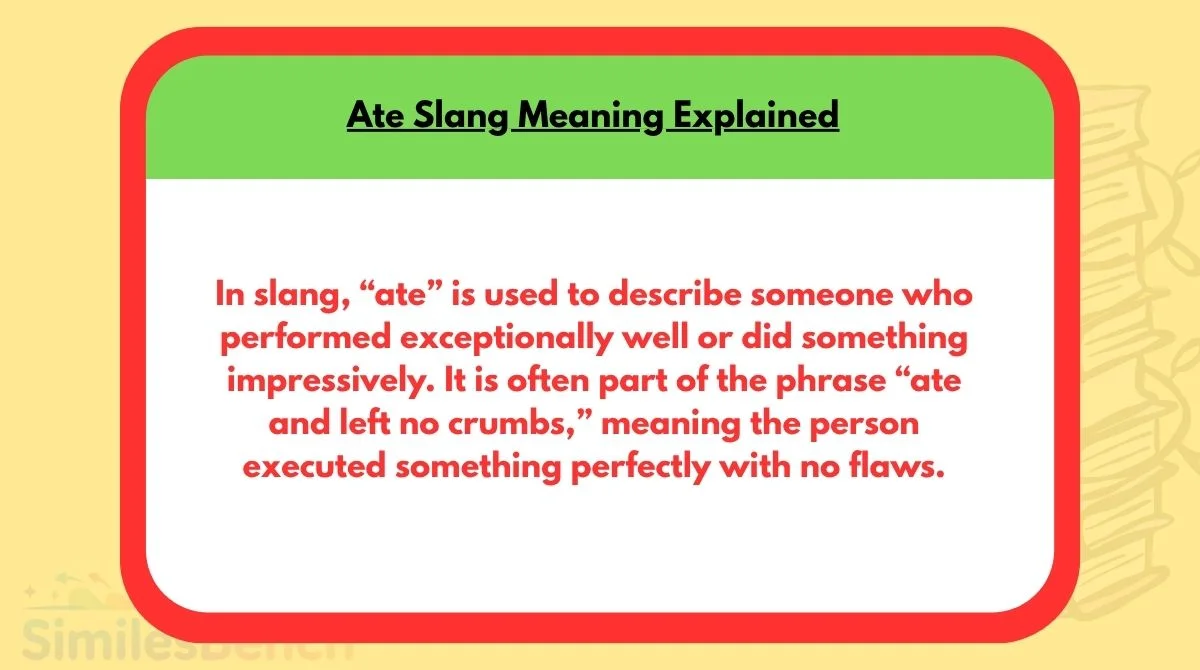
In slang, “ate” is used to describe someone who performed exceptionally well or did something impressively. It is often part of the phrase “ate and left no crumbs,” meaning the person executed something perfectly with no flaws.
For example, if someone posts a stylish outfit or delivers a strong performance, comments may say, “You ate!” This indicates admiration and approval. The term reflects confidence, excellence, and success.
Unlike its literal meaning of consuming food, the slang version is metaphorical. It suggests that someone “devoured” a situation or task, leaving nothing behind in terms of competition or mistakes.
The tone is typically positive and celebratory. It’s commonly used among younger audiences and in informal communication, especially online.
Background & History
The slang use of “ate” originates from African American Vernacular English (AAVE) and LGBTQ+ ballroom culture. In these communities, expressive language has long been used to celebrate performance, style, and individuality.
The phrase gained traction through drag culture and performance spaces, where judges and audiences would praise participants for outstanding acts. Over time, it spread to mainstream audiences through pop culture, music, and social media platforms like TikTok and Twitter.
As influencers and celebrities adopted the term, it became widely recognized. Today, it is no longer limited to specific communities and is used globally. However, its roots remain important, as they highlight the cultural origins of many popular slang terms.
Understanding this background helps users appreciate the depth and history behind what may seem like a simple expression.
Usage in Various Contexts
“Ate” can be used in many different situations, depending on the context.
In fashion, it’s often used to compliment someone’s outfit. For example, “She really ate that look.” In entertainment, it may refer to a performance, such as singing, dancing, or acting.
On social media, the term is frequently seen in comment sections. Users might write “ATE 🔥” or “You ate that!” to express admiration quickly and enthusiastically.
It can also be used in everyday conversations among friends. For instance, if someone gives a strong presentation or delivers a clever comeback, others might respond with “You ate.”
Despite its versatility, the tone remains informal. It’s best suited for casual conversations rather than formal settings.
Common Misconceptions & Clarifications
One common misunderstanding is taking “ate” literally. People unfamiliar with slang may think it refers to food, which can lead to confusion.
Another misconception is that it always implies arrogance. In reality, it’s usually used as praise, not criticism. It celebrates achievement rather than mocking others.
Some also believe the term is universally appropriate, but it’s not. Using it in formal or professional contexts may come across as unprofessional or unclear.
Additionally, the phrase “ate and left no crumbs” is sometimes shortened to just “ate,” but both carry the same meaning of excellence.
Similar Terms & Alternatives
Several slang terms carry similar meanings to “ate.” Words like “slayed,” “nailed it,” or “killed it” are often used interchangeably.
“Slayed” is particularly close in tone, emphasizing style and confidence. “Nailed it” is more widely accepted and slightly more neutral. “Killed it” also conveys strong performance but may sound more intense.
Each term has its own nuance, but all express admiration and success. Choosing the right one depends on the tone and audience.
How to Respond to This Term
When someone says “you ate,” the appropriate response is usually appreciative. A simple “thank you” works well.
You can also respond playfully with phrases like “I tried!” or “You already know!” depending on your personality.
In online settings, emojis are often used, such as a fire emoji or sparkles, to match the tone. The key is to keep the response light and confident.
Regional or Cultural Differences
While “ate” is widely used online, its popularity varies by region. It is most common in Western social media spaces but has spread globally due to internet culture.
Different regions may interpret or use it slightly differently. In some areas, it may still be unfamiliar, leading to confusion.
Cultural awareness is important, especially considering its origins. Recognizing where the term comes from helps avoid misuse and shows respect for its roots.
Comparison with Similar Terms
Compared to terms like “slayed” or “killed it,” “ate” often feels more modern and trend-driven. It is especially popular among Gen Z users.
“Slayed” has a similar origin and tone but may sound slightly more dramatic. “Nailed it” is more neutral and widely accepted across age groups.
“Ate” stands out because of its brevity and strong association with internet culture. It’s quick, expressive, and easy to use in comments or messages.
Usage in Online Communities & Dating Apps
On social media platforms, “ate” is commonly used in comments to show appreciation. It’s especially popular on TikTok and Instagram, where visual content encourages quick reactions.
In online communities, it helps build a sense of shared language and belonging. Users who understand the term feel more connected to current trends.
On dating apps, it may appear in profiles or messages as a playful compliment. However, it’s less common in serious conversations and should be used carefully to avoid misunderstandings.
Hidden or Offensive Meanings
Generally, “ate” is not offensive. However, tone and context matter. If used sarcastically, it could imply the opposite of praise.
Additionally, overusing slang without understanding its origins may be seen as insensitive. It’s important to use such terms respectfully and appropriately.
Suitability for Professional Communication
“Ate” is not suitable for professional or formal communication. In workplaces, emails, or academic writing, it may appear unprofessional or unclear.
Instead, more formal expressions like “well done” or “excellent work” should be used. Understanding when to switch between informal and formal language is key to effective communication.
FAQs
What does “ate” mean in slang?
It means someone did something very well or impressively.
Is “ate” a compliment?
Yes, it’s used to praise performance or style.
Where did this slang come from?
It originated from AAVE and ballroom culture.
Can I use “ate” in formal writing?
No, it’s best for informal conversations only.
What does “ate and left no crumbs” mean?
It means someone performed perfectly with no flaws.
Is “ate” used worldwide?
Yes, but it’s more common in online and Western cultures.
Conclusion
The slang term “ate” has transformed from a simple past-tense verb into a powerful expression of praise and admiration. Its rise highlights how language evolves through culture, creativity, and digital interaction.
While it’s widely used in casual and online settings, understanding its meaning, origin, and appropriate usage ensures clear and respectful communication. By learning how and when to use it, you can confidently engage in modern conversations and stay connected with evolving language trends.