The phrase “aura meaning” has gained attention in modern slang, especially across social media platforms, online communities, and casual conversations.
People often search for this term to understand what others mean when they describe someone as having a “good aura” or “bad aura.” Unlike its traditional spiritual roots, the slang version of “aura” has evolved into a more casual, expressive way of talking about someone’s vibe, energy, or overall presence.
In today’s digital culture, where communication is fast and expressive, slang terms like “aura” help people convey emotions and impressions quickly.
Whether it’s used in with modern language trends. This article breaks down its meaning, origins, and usage in a simple, clear, and engaging way so you can confidently understand and use it in everyday conversations.
Definition & Meaning
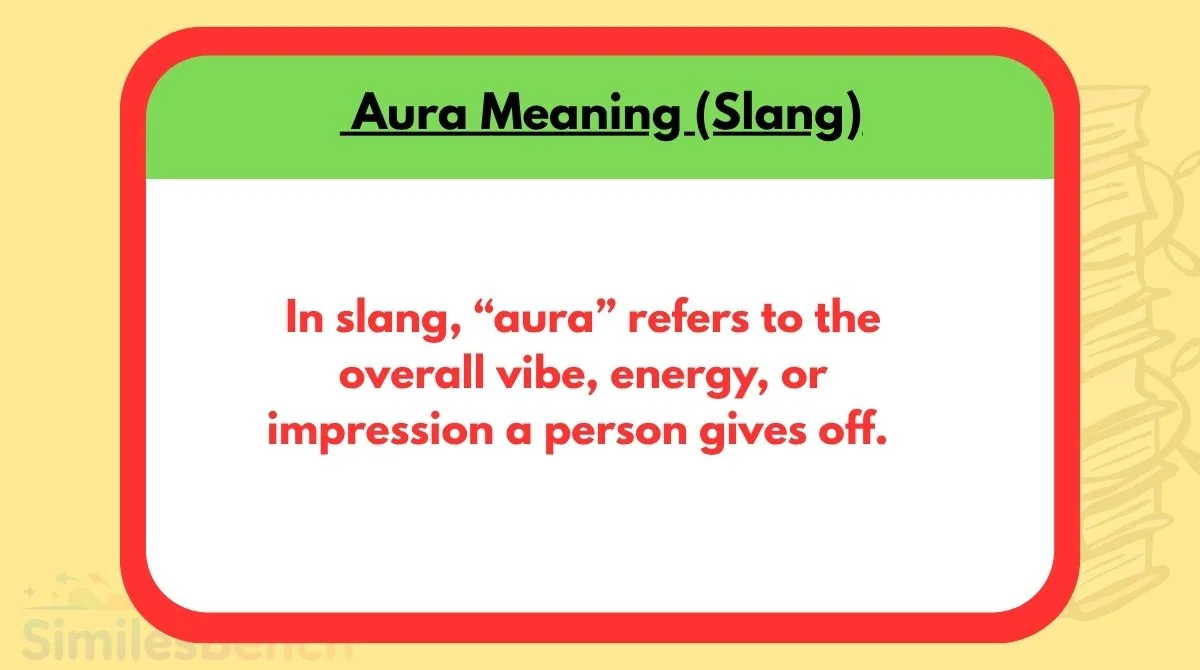
In slang, “aura” refers to the overall vibe, energy, or impression a person gives off. It’s not something you can physically see, but rather something you feel when interacting with someone. When people say someone has a “good aura,” they usually mean that person feels positive, calming, attractive, or confident. On the other hand, a “bad aura” suggests negative, uncomfortable, or off-putting energy.
Unlike its literal or spiritual meaning—which relates to invisible energy fields—slang usage focuses more on personality and presence. It’s a quick way to describe how someone makes others feel without going into long explanations.
For example:
- “She has such a calm aura” implies she makes people feel relaxed.
- “His aura feels off today” suggests something seems unusual or negative about him.
In short, slang “aura” is about perception and emotional impact rather than anything mystical.
Background & History
The word “aura” originally comes from ancient Greek, meaning “breeze” or “breath.” Over time, it became associated with spiritual and metaphysical beliefs, where it described an energy field surrounding living beings. This concept has been popular in various belief systems, including meditation and alternative healing practices.
However, its transition into slang is relatively recent. With the rise of social media platforms like TikTok, Instagram, and Twitter, users began adopting “aura” in a more casual, relatable way. Instead of discussing spiritual energy, people started using it to describe personality traits, mood, and social presence.
Memes and viral trends also played a role in reshaping the term. Influencers and content creators often used “aura” humorously or dramatically, which made it more appealing to younger audiences. Over time, the meaning shifted from something mystical to something expressive and emotional.
Today, the slang version is widely understood, even by people who don’t believe in spiritual concepts, showing how language evolves with culture.
Usage in Various Contexts
The slang “aura” is flexible and can be used in many different situations. In casual conversations, it often appears as a compliment or subtle critique. For example, saying someone has a “positive aura” is a friendly way to praise their personality.
On social media, it’s frequently used in captions, comments, and memes. Users might describe celebrities, influencers, or even fictional characters based on their “aura.” This adds a layer of emotional interpretation to how people perceive others.
In friendships, the term can express intuition. If someone says, “I don’t like his aura,” they are usually referring to a gut feeling rather than a specific reason. This makes the term useful for describing emotions that are hard to explain.
In humor, “aura” can be exaggerated for effect. People might jokingly say, “My aura is gone today,” to express tiredness or low energy.
Overall, its versatility makes it a popular slang term across different communication styles.
Common Misconceptions & Clarifications
One common misunderstanding is that slang “aura” always relates to spirituality. While it has spiritual origins, its modern use is mostly symbolic and not tied to beliefs about energy fields.
Another misconception is that “aura” is always positive. In reality, it can be both positive and negative depending on context. Saying someone has a “bad aura” is not uncommon and is often used to express discomfort or suspicion.
Some people also think “aura” is a scientific concept, but in slang, it is purely subjective. It reflects personal feelings rather than measurable facts.
Clarifying these points helps avoid confusion and ensures proper usage in conversations.
Similar Terms & Alternatives
There are several slang terms that carry a similar meaning to “aura.” Words like “vibe,” “energy,” and “presence” are often used interchangeably.
- “Vibe” is the closest alternative and is widely used.
- “Energy” feels slightly more intense or emotional.
- “Presence” sounds more formal but conveys a similar idea.
Each term has its own nuance, but they all revolve around how someone feels to others.
How to Respond to This Term
If someone comments on your “aura,” your response depends on the context.
If it’s positive, a simple “thank you” works well. You can also respond playfully, like “I try to keep it positive.”
If it’s negative, you might ask for clarification or respond calmly. For example, “What do you mean?” helps keep the conversation open without being defensive.
In casual settings, humor can also be effective. Responding lightly keeps the interaction friendly and relaxed.
Regional or Cultural Differences
The slang use of “aura” is more common in Western and global online cultures, but it has spread worldwide through social media.
In some cultures, the term may still carry stronger spiritual meaning, while in others, it is purely casual. Younger generations tend to use it more frequently, regardless of location.
In regions like South Asia, including Pakistan, the slang meaning is gaining popularity among social media users, especially those influenced by global trends.
Comparison with Similar Terms
While “aura,” “vibe,” and “energy” are similar, they are not identical.
“Aura” often feels slightly more descriptive and personal, while “vibe” is more casual and widely used. “Energy” can sometimes sound more intense or emotional.
Understanding these subtle differences helps you choose the right word for the situation.
Usage in Online Communities & Dating Apps
On dating apps and online platforms, “aura” is often used to describe first impressions. Profiles might mention having a “good aura” to attract attention.
In comments and chats, people use it to quickly express attraction or hesitation. For example, saying “You have a great aura” can be a compliment without sounding too direct.
It adds a layer of personality-based judgment that goes beyond physical appearance.
Hidden or Offensive Meanings
Generally, “aura” is not offensive. However, saying someone has a “bad aura” can feel judgmental or vague, especially if no explanation is given.
In some cases, it may be used indirectly to criticize someone’s personality or behavior without being specific. This can lead to misunderstandings.
Being mindful of tone and context helps avoid unintended negativity.
Suitability for Professional Communication
Using “aura” in professional settings is not recommended. It is considered informal and may sound unclear or unprofessional.
In workplace communication, it’s better to use words like “attitude,” “behavior,” or “professional presence.” These are clearer and more appropriate for formal environments.
However, in creative or casual industries, it may occasionally be acceptable in informal discussions.
FAQs
What does aura mean in slang?
It means someone’s vibe or the energy they give off.
Is aura always positive?
No, it can be positive or negative depending on context.
Is aura a spiritual term?
Originally yes, but slang use is mostly casual.
Can I use aura in formal writing?
No, it’s better suited for informal communication.
Is aura the same as vibe?
They are similar, but “aura” feels slightly more personal.
Why do people use aura in dating apps?
To describe attraction based on personality and presence.
Conclusion
The slang meaning of “aura” reflects how language adapts to modern communication styles. What once had a spiritual background is now a simple, expressive way to describe someone’s vibe or presence. Its popularity continues to grow, especially in online spaces where quick, relatable expressions are valued. Understanding this term helps you connect better with current trends and communicate more naturally in casual settings.