Autumn is a season full of color, feeling, and quiet beauty. Leaves change, air cools, and the world feels softer somehow. Similes help us explain these changes in a way readers can see and feel.
In this guide, you’ll explore 14+ autumn similes that make writing warmer and more vivid. Whether you’re a student, teacher, or creative writer, these examples will help you describe autumn with confidence and heart.
What Is a Simile?
A simile is a comparison using “like” or “as.”
It helps readers imagine something more clearly.
Similes make writing colorful, emotional, and easy to picture.
Full List of Autumn Similes
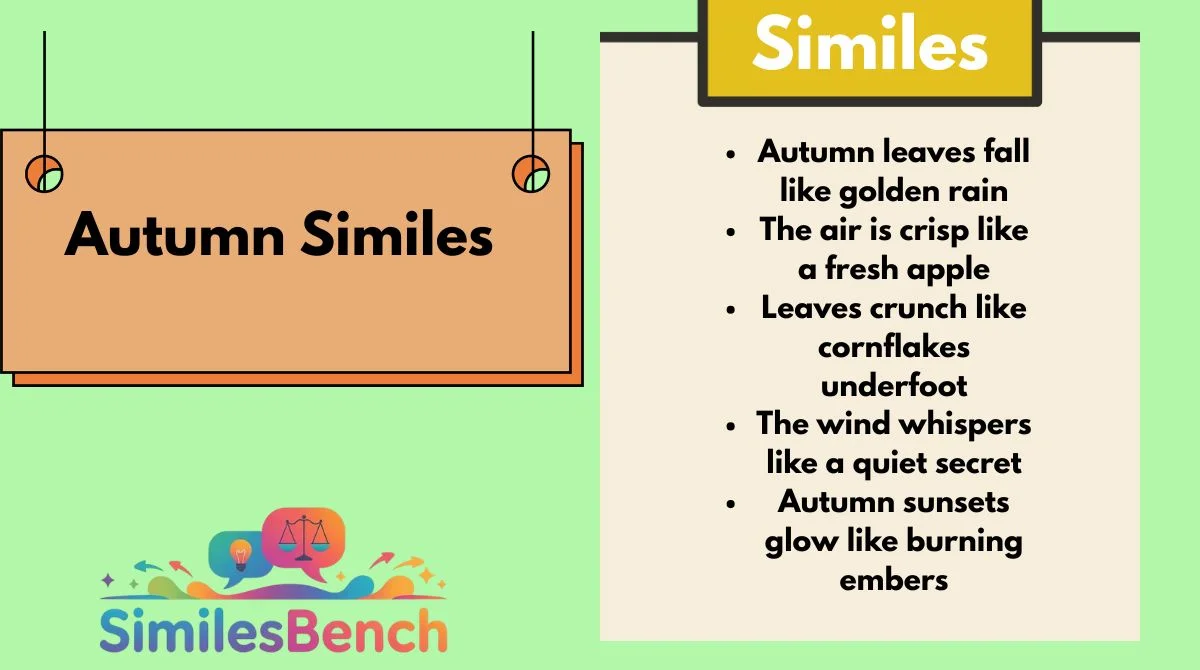
- Autumn leaves fall like golden rain
- The air is crisp like a fresh apple
- Leaves crunch like cornflakes underfoot
- The wind whispers like a quiet secret
- Autumn sunsets glow like burning embers
- Trees stand bare like old storytellers
- Pumpkins sit like sleepy cats on porches
- Fog rolls in like a soft blanket
- The sky turns gray like a tired smile
- Autumn mornings feel cold as ice water
- The moon shines like a pale lantern
- Fallen leaves gather like forgotten letters
- The season moves slowly like a gentle sigh
- Autumn smells sweet like warm cinnamon
1. Autumn leaves fall like golden rain
Meaning: Leaves drop gently and beautifully from trees.
Explanation: This simile compares falling leaves to shining rain.
Example sentences:
The autumn leaves fell like golden rain, covering the sidewalk in color.
I watched the leaves fall like golden rain outside my classroom window.
2. The air is crisp like a fresh apple
Meaning: The air feels cool, clean, and sharp.
Explanation: A fresh apple is cool and refreshing, just like autumn air.
Example sentences:
The air was crisp like a fresh apple when I stepped outside that morning.
She took a deep breath, enjoying air crisp like a fresh apple.
3. Leaves crunch like cornflakes underfoot
Meaning: Dry leaves make loud sounds when stepped on.
Explanation: Cornflakes crunch loudly, just like fallen leaves.
Example sentences:
Leaves crunch like cornflakes underfoot as we walk to school.
I love how the path sounds when leaves crunch like cornflakes underfoot.
4. The wind whispers like a quiet secret
Meaning: The wind blows softly and gently.
Explanation: A whisper is soft, just like a light autumn wind.
Example sentences:
The wind whispered like a quiet secret through the trees.
At dusk, the wind whispers like a quiet secret around the house.
5. Autumn sunsets glow like burning embers
Meaning: The sky turns deep orange and red.
Explanation: Embers glow warmly, similar to autumn sunsets.
Example sentences:
Autumn sunsets glow like burning embers behind the hills.
We stopped walking just to watch sunsets glow like burning embers.
6. Trees stand bare like old storytellers
Meaning: Trees lose their leaves and look wise or aged.
Explanation: Old storytellers stand quietly, full of memories.
Example sentences:
The trees stood bare like old storytellers in the park.
In November, trees stand bare like old storytellers waiting to speak.
7. Pumpkins sit like sleepy cats on porches
Meaning: Pumpkins rest quietly and peacefully.
Explanation: Sleepy cats sit still and relaxed.
Example sentences:
Pumpkins sit like sleepy cats on porches across the street.
At night, the pumpkins sit like sleepy cats under the porch light.
8. Fog rolls in like a soft blanket
Meaning: Fog covers the land gently.
Explanation: A blanket spreads softly and evenly.
Example sentences:
Fog rolled in like a soft blanket over the fields.
By morning, fog rolls in like a soft blanket around our town.
9. The sky turns gray like a tired smile
Meaning: The sky looks dull and quiet.
Explanation: A tired smile lacks brightness, like gray skies.
Example sentences:
The sky turned gray like a tired smile before the rain.
Some autumn days feel calm when the sky turns gray like a tired smile.
10. Autumn mornings feel cold as ice water
Meaning: Mornings are very chilly.
Explanation: Ice water is extremely cold.
Example sentences:
Autumn mornings feel cold as ice water on my hands.
I zipped my jacket tighter as mornings felt cold as ice water.
11. The moon shines like a pale lantern
Meaning: The moon glows softly in the night sky.
Explanation: Lanterns give gentle light in darkness.
Example sentences:
The moon shines like a pale lantern above the trees.
On autumn nights, the moon shines like a pale lantern guiding us home.
12. Fallen leaves gather like forgotten letters
Meaning: Leaves pile up quietly and unnoticed.
Explanation: Forgotten letters sit unused and silent.
Example sentences:
Fallen leaves gather like forgotten letters near the fence.
In the corners of the yard, leaves gather like forgotten letters.
13. The season moves slowly like a gentle sigh
Meaning: Autumn feels calm and unhurried.
Explanation: A sigh is slow and peaceful.
Example sentences:
The season moves slowly like a gentle sigh after summer ends.
Autumn moves slowly like a gentle sigh through our days.
14. Autumn smells sweet like warm cinnamon
Meaning: The season has comforting, cozy scents.
Explanation: Cinnamon smells warm and inviting.
Example sentences:
Autumn smells sweet like warm cinnamon in the kitchen.
Walking past the bakery, autumn smelled sweet like warm cinnamon.
Creative Writing Tips
Similes bring writing to life when used with care. In stories, use them to show feelings instead of telling them. In poems, choose similes that match the mood, soft for calm moments, bold for strong emotions. Essays benefit from similes that clarify ideas without overdoing them. Even songs can feel richer when similes paint clear pictures. Always pick comparisons your reader understands, and don’t crowd every sentence with one. Let similes breathe.
FAQs
What makes a good autumn simile?
A good autumn simile uses familiar autumn images and clear comparisons. It should help readers feel the season.
Are similes good for student writing?
Yes. Similes improve description and help students express ideas more clearly and creatively.
How many similes should I use in a paragraph?
One or two is enough. Too many can distract the reader.
Can similes be used in essays?
Absolutely. When used naturally, similes make essays more engaging and easier to understand.
What’s the difference between a simile and a metaphor?
A simile uses “like” or “as.” A metaphor compares directly without those words.
Conclusion
Similes turn simple words into powerful pictures. Autumn, with its colors and moods, is perfect for this kind of writing.
These 14+ autumn similes give students and writers tools to describe the season with warmth and clarity. Try using them in your next poem, story, or essay. With practice, your writing will feel more alive, more personal, and more memorable.