Language on the internet evolves quickly, and slang terms often appear and spread across social media, gaming communities, and online forums. One such term that has become extremely popular in recent years is “based.” Many people search for the meaning of this word because it frequently appears in memes, comment sections, and online discussions, yet its meaning can seem confusing depending on the context.
Originally, the word “based” had a completely different meaning in everyday language, but online communities reshaped it into a slang expression used to praise someone’s opinion, attitude, or authenticity. Today, the term can express approval, agreement, or admiration when someone confidently expresses a viewpoint without worrying about what others think.
However, because slang changes depending on culture, community, and context, “based” can sometimes carry different interpretations or even controversial undertones. Understanding its meaning helps people avoid confusion and communicate more effectively in digital spaces. This article explores the definition, history, usage, misconceptions, and cultural variations of the slang term “based.”
Definition & Meaning
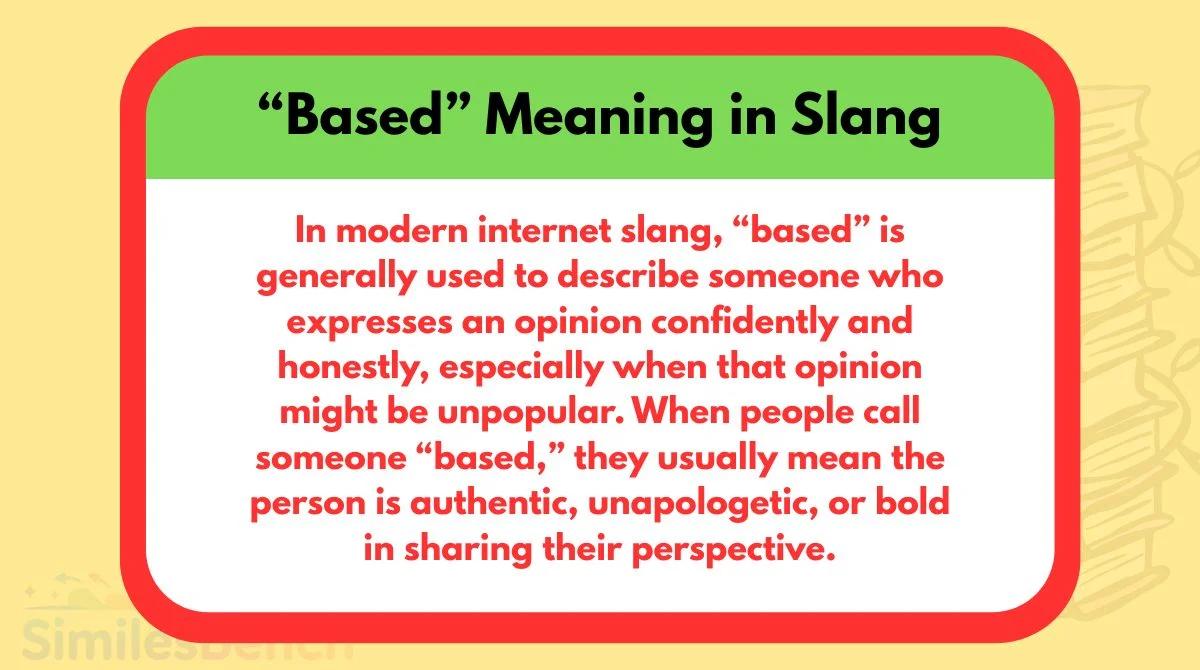
In modern internet slang, “based” is generally used to describe someone who expresses an opinion confidently and honestly, especially when that opinion might be unpopular. When people call someone “based,” they usually mean the person is authentic, unapologetic, or bold in sharing their perspective.
For example, if someone posts a strong opinion online and another user comments “based,” it often signals approval. The commenter is essentially saying that the opinion is admirable because it is expressed without fear of criticism.
The meaning can vary slightly depending on context, but most uses revolve around a few core ideas:
- Authenticity: Being true to yourself and your beliefs.
- Confidence: Speaking openly without worrying about social pressure.
- Approval: Others recognizing and praising that attitude.
In many cases, the term appears as a short response in online discussions. Instead of writing a long comment agreeing with someone, people simply reply “based.”
However, context is important. In some communities, the word can also imply that someone has expressed a controversial or politically strong opinion. Because of this, its tone may range from lighthearted praise to ideological support.
Despite these variations, the most common interpretation remains positive: someone who stays genuine and fearless in expressing their views.
Background & History
The slang use of “based” did not originate from traditional dictionaries or formal language. Instead, it developed through internet culture and music communities before spreading across social media platforms.
The term gained popularity in the early 2010s through online discussions and hip-hop culture. At that time, the word was associated with a mindset of self-confidence and individuality. Over time, internet users adopted the term and began using it in comment sections and memes.
As meme culture expanded, the word gradually shifted in meaning. Online communities started using “based” as a quick way to signal approval of bold statements. Because internet communication often favors short, punchy expressions, “based” became a convenient one-word response.
During the late 2010s and early 2020s, the term spread across platforms such as forums, gaming chats, and social media. Memes accelerated its popularity, and the phrase “based and…” also became common in humorous posts.
However, the internet’s decentralized nature means slang evolves differently in various communities. Some groups use the term casually for jokes, while others apply it in serious debates. This flexibility allowed “based” to remain popular and adaptable across different online spaces.
Today, the term has become part of mainstream internet slang, appearing in memes, comment sections, and digital conversations around the world.
Usage in Various Contexts
The slang term “based” appears in many types of online conversations. Its meaning stays generally positive, but the context can change how it is interpreted.
Social Media Conversations
On social media platforms, users frequently comment “based” when they agree with a statement or admire someone’s confidence. It functions almost like saying “respect” or “well said.”
Meme Culture
Memes often use the term humorously. For example, a meme might show a character making a bold statement followed by captions praising them as “based.”
Gaming Communities
In gaming chats or forums, the word can describe a player who confidently expresses opinions or strategies that others respect.
Political Discussions
Sometimes the term appears in political conversations. In these contexts, calling someone “based” might signal strong agreement with their stance. Because of this, interpretation may vary depending on the topic being discussed.
Casual Conversations
Friends may also use the term jokingly in chats or messages to compliment someone for saying something bold or funny.
Overall, the term’s meaning depends heavily on tone and context. While the core idea of authenticity remains, its emotional impact changes depending on where and how it is used.
Common Misconceptions & Clarifications
Because “based” is an internet slang term, many misconceptions surround its meaning.
One common misunderstanding is that the word always refers to political views. While it sometimes appears in political discussions, it is not inherently political. In many cases, it simply means someone expressed a confident opinion.
Another misconception is that “based” always indicates agreement. Sometimes people use it ironically or humorously rather than as a serious endorsement.
Some also assume the word is negative or offensive. In most everyday uses, it is actually meant as praise or admiration.
Clarifying the context helps avoid confusion. If someone uses the term casually among friends, it likely carries a lighthearted tone. In more serious debates, it might signal stronger approval.
Understanding these nuances helps people interpret the word correctly and prevents misunderstandings during online communication.
Similar Terms & Alternatives
Several other slang expressions share similar meanings with “based.” These words often appear in online communities and serve similar purposes.
Some commonly used alternatives include:
- Respect – expressing admiration for someone’s honesty or courage
- Facts – agreeing strongly with a statement
- Real – acknowledging authenticity
- Valid – confirming that an opinion makes sense
- Legend – praising someone for admirable behavior
Each of these terms highlights a slightly different aspect of approval. For example, “facts” emphasizes agreement with the statement itself, while “based” often praises the speaker’s confidence.
Understanding these alternatives can help people interpret online conversations more easily.
How to Respond to This Term
If someone calls your statement “based,” it usually means they appreciate your honesty or agree with your viewpoint.
You can respond in several ways depending on the tone of the conversation:
- Simple acknowledgment: “Thanks!” or “Appreciate it.”
- Humorous reply: Responding with a joke or meme.
- Continuing the discussion: Expanding on the topic you mentioned.
In casual internet conversations, people often do not respond at all because the comment itself already shows support.
The key is to recognize the tone. If the discussion is lighthearted, a playful reply works well. In serious debates, acknowledging the comment respectfully keeps the conversation constructive.
Regional or Cultural Differences
Although the term “based” originated in English-speaking online communities, its use has spread internationally through social media and internet culture.
Different regions may interpret the word slightly differently:
- North America: Often used casually in memes and social media comments.
- Europe: Common in gaming communities and online forums.
- Asia and other regions: Adopted mainly through internet culture and translated discussions.
Because internet slang crosses cultural boundaries quickly, many users understand the term even if English is not their first language. However, the tone may vary depending on local online culture.
Comparison with Similar Terms
Comparing “based” with other slang words helps clarify its unique meaning.
- Based vs. Facts: “Facts” emphasizes agreement with the statement itself, while “based” praises the person expressing it.
- Based vs. Respect: Both show admiration, but “respect” is broader and less tied to internet culture.
- Based vs. Real: “Real” focuses on authenticity, while “based” highlights bold honesty.
These subtle differences explain why internet communities continue to use multiple expressions instead of relying on just one.
Usage in Online Communities & Dating Apps
The term “based” occasionally appears in dating profiles, chat messages, and online communities focused on relationships.
In these environments, it usually signals appreciation for someone’s personality or viewpoint. For example, if a person expresses a confident opinion in their profile or chat conversation, another user might respond by calling it “based.”
However, tone matters in dating apps. Because not everyone is familiar with internet slang, using the term casually may confuse some users. In more formal interactions, clearer language is often better.
Hidden or Offensive Meanings
While “based” is usually positive, some communities use it in controversial or ideological discussions. In these situations, the term may signal support for strong or divisive viewpoints.
Because of this possibility, context is extremely important. A word that seems harmless in a meme may carry deeper implications in a political debate.
Most everyday uses remain harmless and humorous, but understanding the broader context helps avoid misinterpretation.
Suitability for Professional Communication
In professional settings such as workplaces, academic writing, or business emails, slang terms like “based” are generally not appropriate.
Professional communication typically values clarity and formality. Instead of using slang, it is better to express agreement using phrases like:
- “I agree with this perspective.”
- “That’s a strong point.”
- “Well explained.”
Using standard language ensures that everyone understands the message and maintains a professional tone.
FAQs
What does “based” mean in slang?
It usually describes someone who confidently expresses their opinion without worrying about others’ approval.
Is “based” a compliment?
Yes, in most contexts it is used as praise for authenticity or boldness.
Can the word be offensive?
Generally no, but it may appear in controversial discussions depending on context.
Why is the term popular online?
Its short, expressive nature makes it perfect for quick responses in internet conversations.
Should you use it in professional communication?
No, it is better suited for casual online conversations and social media.
Conclusion
The slang term “based” has become a widely recognized expression in modern internet culture. While its meaning may vary slightly depending on context, the core idea revolves around authenticity, confidence, and admiration for bold opinions. From memes and social media comments to gaming chats and online debates, the word continues to evolve as digital communication changes.
Understanding its meaning helps people interpret online conversations more accurately and avoid misunderstandings. Like many internet slang terms, “based” reflects how language adapts to new forms of communication and cultural expression.
As online communities grow and interact globally, slang will continue to evolve. Learning these terms not only improves communication but also provides insight into the dynamic nature of modern digital culture.