Similes are one of the easiest and most fun tools in English writing. They help readers see and feel what you describe.
Grass may seem like a simple thing, but writers have used it for centuries to show beauty, calm, strength, and even emotion. In this guide, you’ll explore clear, student-friendly grass similes that can instantly make your writing more colorful and alive.
What Is a Simile?
A simile compares two different things using “like” or “as.”
It helps readers imagine something more clearly.
Similes make writing expressive, playful, and easier to understand.
Full List of Grass Similes
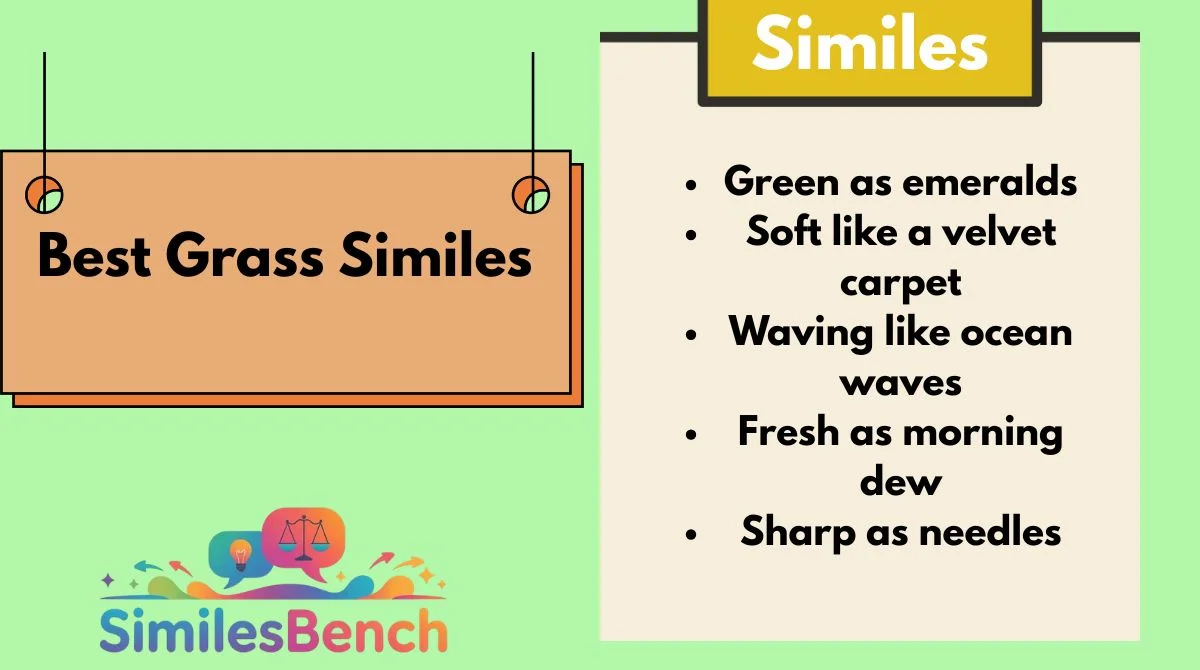
- Green as emeralds
- Soft like a velvet carpet
- Waving like ocean waves
- Fresh as morning dew
- Sharp as needles
- Gentle like a lullaby
- Bright as spring paint
- Still as a sleeping cat
- Wild like untamed hair
- Smooth as silk threads
- Thick like a green blanket
- Alive like a breathing thing
- Fragile as glass blades
- Calm as a quiet field at dawn
1. Green as emeralds
Meaning: Very bright and rich green
Explanation: This simile shows how healthy and shiny the grass looks.
The grass was green as emeralds after the rain.
She lay on grass as emeralds, staring up at the cloudy sky.
2. Soft like a velvet carpet
Meaning: Extremely soft and comfortable
Explanation: It compares grass to something smooth you enjoy touching.
The children rolled on grass soft like a velvet carpet.
Bare feet felt safe on the velvet-carpet grass of the park.
3. Waving like ocean waves
Meaning: Moving gently back and forth
Explanation: This simile shows motion caused by wind.
The tall grass waved like ocean waves in the breeze.
From the hill, the grass looked like green waves dancing.
4. Fresh as morning dew
Meaning: Clean, cool, and new
Explanation: It connects grass with the feeling of a new day.
The grass smelled fresh as morning dew.
She loved walking on grass fresh as dew before school.
5. Sharp as needles
Meaning: Pointy and uncomfortable
Explanation: This simile shows dry or rough grass.
The dry grass felt sharp as needles on his hands.
She avoided the sharp-needle grass near the fence.
6. Gentle like a lullaby
Meaning: Calm and soothing
Explanation: It describes grass that brings peace.
The grass moved gently like a lullaby in the wind.
Sitting there felt like listening to nature’s song.
7. Bright as spring paint
Meaning: Full of color and life
Explanation: This simile connects grass to art and happiness.
The field looked bright as spring paint.
Grass bright as paint made the playground cheerful.
8. Still as a sleeping cat
Meaning: Completely unmoving
Explanation: It shows quiet and silence.
At dawn, the grass was still as a sleeping cat.
Nothing moved—not even the grass.
9. Wild like untamed hair
Meaning: Messy and free-growing
Explanation: It shows grass growing without control.
The grass grew wild like untamed hair.
No one had cut the grass for weeks.
10. Smooth as silk threads
Meaning: Very smooth and pleasant
Explanation: This simile highlights comfort.
Smooth as silk threads, the grass brushed her ankles.
He enjoyed walking slowly across the lawn.
11. Thick like a green blanket
Meaning: Dense and full
Explanation: It shows grass covering the ground fully.
The yard was thick like a green blanket.
They picnicked on the blanket-like grass.
12. Alive like a breathing thing
Meaning: Full of life and movement
Explanation: This simile gives grass a living feeling.
The grass felt alive like a breathing thing.
Wind made it rise and fall softly.
13. Fragile as glass blades
Meaning: Easy to break
Explanation: It describes thin, weak grass.
The frost made the grass fragile as glass blades.
One step could snap it.
14. Calm as a quiet field at dawn
Meaning: Very peaceful
Explanation: It creates a calm image.
The grass felt calm as a quiet field at dawn.
She sat there to clear her thoughts.
Creative Writing Tips
Similes work best when they match the mood of your writing.
In stories, use grass similes to show setting and emotion. Calm grass fits peaceful scenes, while sharp grass can show tension.
In poems, choose similes that sound gentle or musical. Short similes often work better.
In essays, similes should support your point, not distract. Use one strong comparison instead of many.
In songs, simple similes are powerful. Think about rhythm and feeling.
Helpful tips:
- Don’t force a simile into every sentence
- Match the simile to the mood
- Use your senses: touch, sight, smell
- Read your line out loud—does it sound natural?
FAQs
What is a simile in simple words?
A simile compares two things using “like” or “as” to help readers understand better.
Why do writers use grass similes?
Grass similes help show nature, emotions, and settings in a clear and creative way.
Can students use similes in school essays?
Yes. Similes make essays more interesting when used carefully.
What is the difference between a simile and a metaphor?
A simile uses “like” or “as.” A metaphor does not.
How many similes should I use in one paragraph?
Usually one is enough. Too many can confuse the reader.
Conclusion
Similes turn simple words into vivid pictures. Grass similes, in particular, help writers describe calm moments, wild scenes, or gentle feelings with ease.
Whether you’re a student, poet, or storyteller, these comparisons can lift your writing and make it more enjoyable to read. Try one today, and let your words grow as naturally as grass itself.