Similes are one of theeasiest and most fun tools in the English language. They help us explain big emotions with simple pictures.
This guide is made for students, teachers, and writers who want clear explanations, real examples, and ideas they can actually use in daily writing.
What Is a Simile?
A simile is a comparison using “like” or “as.”
It helps readers imagine a feeling, action, or idea more clearly.
Similes make writing lively, colorful, and easy to understand.
Full List of Similes (16)
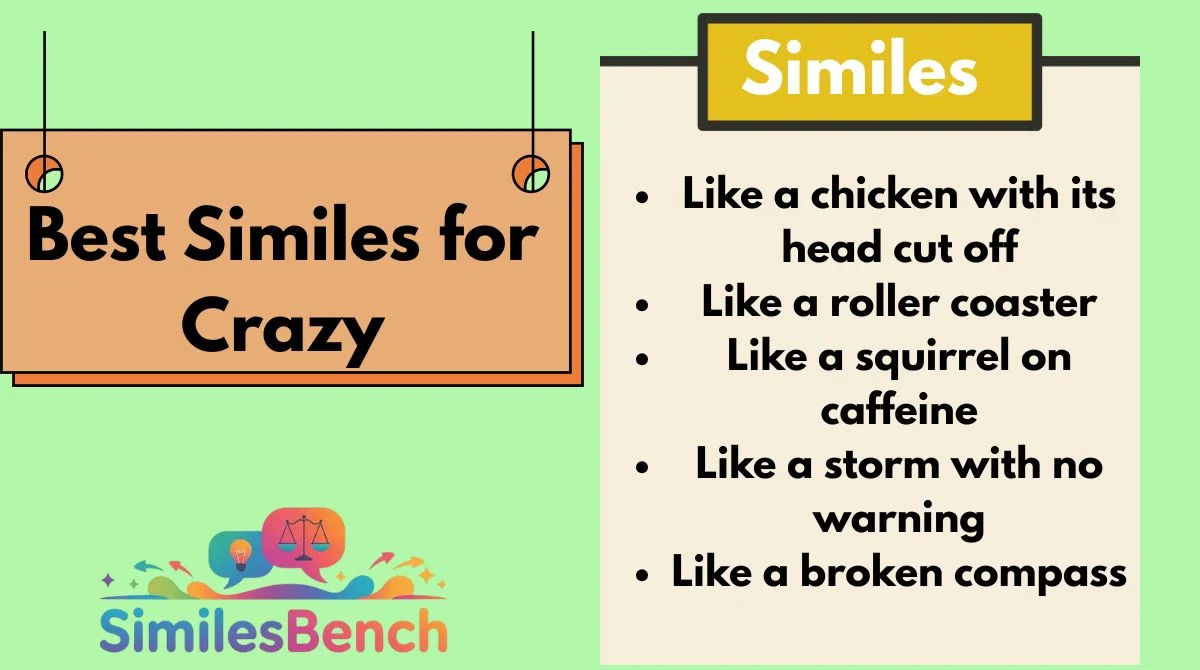
- Like a chicken with its head cut off
- Like a roller coaster
- Like a squirrel on caffeine
- Like a storm with no warning
- Like a broken compass
- Like fireworks in the brain
- Like a tornado in a room
- Like a bouncing pinball
- Like a wild horse
- Like a buzzing beehive
- Like a spinning top
- Like a shaken soda can
- Like a maze with no exit
- Like popcorn in a hot pan
- Like a radio stuck between stations
- Like juggling flaming torches
1. Like a chicken with its head cut off
Meaning: Acting in a wild, confused, and rushed way
Explanation: This simile shows someone moving fast without thinking clearly.
Examples:
She ran around the house like a chicken with its head cut off, late for school and missing her shoes.
The office felt chaotic as everyone moved like chickens with their heads cut off before the deadline.
2. Like a roller coaster
Meaning: Full of sudden emotional ups and downs
Meaning: Acting in a wild, confused, and rushed way
Examples:
The week was like a roller coaster, happy one moment and stressful the next.
His thoughts raced like a roller coaster he couldn’t slow down.
3. Like a squirrel on caffeine
Meaning: Extremely energetic and jumpy
Explanation: This simile adds humor to describe wild energy.
Examples:
After three cups of coffee, she bounced around like a squirrel on caffeine.
The kids at the party were running like squirrels on caffeine.
4. Like a storm with no warning
Meaning: Suddenly loud, intense, or emotional
Explanation: It shows chaos arriving fast and unexpectedly.
Examples:
His anger hit like a storm with no warning.
The classroom turned noisy like a storm with no warning.
5. Like a broken compass
Meaning: Feeling lost or confused
Explanation: This simile shows mental confusion without direction.
Examples:
Without her notes, she felt like a broken compass during the test.
His plans changed so often that his life felt like a broken compass.
6. Like fireworks in the brain
Meaning: Overloaded with thoughts or ideas
Explanation: It describes a mind bursting with energy and noise.
Examples:
Before the exam, it felt like fireworks were going off in his brain.
Her ideas exploded like fireworks in the brain during the meeting.
7. Like a tornado in a room
Meaning: Loud, messy, and uncontrollable behavior
Explanation: This simile shows total chaos in one space.
Examples:
The kids entered the house like a tornado in a room.
His emotions swept through him like a tornado in a room.
8. Like a bouncing pinball
Meaning: Jumping quickly from one thing to another
Explanation: It shows restless movement or thoughts.
Examples:
Her attention bounced like a pinball during the lecture.
He moved from task to task like a bouncing pinball.
9. Like a wild horse
Meaning: Hard to control, full of freedom
Explanation: This simile often describes untamed energy.
Examples:
His laughter ran free like a wild horse.
The idea took off like a wild horse with no reins.
10. Like a buzzing beehive
Meaning: Noisy and busy
Explanation: It shows active chaos rather than silence.
Examples:
The classroom sounded like a buzzing beehive before the bell.
Her thoughts hummed like a buzzing beehive all night.
11. Like a spinning top
Meaning: Dizzy, restless, or mentally overloaded
Explanation: It compares confusion to constant spinning.
Examples:
After the long day, her mind felt like a spinning top.
He talked so fast, his thoughts sounded like a spinning top.
12. Like a shaken soda can
Meaning: Ready to explode emotionally
Explanation: This simile suggests pressure building inside.
Examples:
He sat quietly, but inside he felt like a shaken soda can.
The tension in the room was like a shaken soda can waiting to pop.
13. Like a maze with no exit
Meaning: Confusing and overwhelming
Explanation: It shows feeling stuck in chaos.
Examples:
Her thoughts felt like a maze with no exit.
The project instructions were like a maze with no exit.
14. Like popcorn in a hot pan
Meaning: Ideas or actions happening rapidly
Explanation: This simile shows fast, nonstop movement.
Examples:
Ideas popped like popcorn in a hot pan during brainstorming.
His thoughts jumped like popcorn in a hot pan.
15. Like a radio stuck between stations
Meaning: Unclear and noisy thinking
Explanation: It describes mental confusion and distraction.
Examples:
His mind sounded like a radio stuck between stations.
The class discussion felt like a radio stuck between stations.
16. Like juggling flaming torches
Meaning: Managing many stressful things at once
Explanation: This simile adds danger and tension to the chaos.
Examples:
Balancing school and work felt like juggling flaming torches.
Her schedule looked like she was juggling flaming torches daily.
Creative Writing Tips
Similes are powerful when used with care. In stories, use them to show emotions instead of explaining them. Let readers feel the chaos. In poems, similes create strong images that stay in the reader’s mind. Choose comparisons that match the mood.
For essays, similes can make ideas clearer, but don’t overuse them. One strong simile is better than five weak ones. In songs, similes help listeners connect emotionally. Keep them simple and honest.
Always ask yourself: Does this comparison feel natural? If it sounds like something a real person might say, you’re on the right track.
FAQs
Are similes okay for school writing?
Yes. Teachers often encourage similes because they show creativity and understanding of language.
How many similes should I use in one paragraph?
Usually one is enough. Too many can make writing feel messy.
Can similes be funny?
Absolutely. Many similes use humor to make ideas more memorable.
What’s the difference between a simile and a metaphor?
A simile uses “like” or “as.” A metaphor does not. Both compare ideas.
Conclusion
Similes turn simple words into powerful pictures. They help writers explain emotions like confusion, excitement, and chaos in ways readers understand instantly.
Whether you’re writing a story, poem, essay, or song, the right simile can bring your words to life. Practice using them naturally, and soon your writing will feel clearer, stronger, and more expressive.