Similes help us turn feelings into pictures. Instead of just saying “someone cried,” we can show how deep, loud, or quiet that crying felt. That’s why similes for crying are so powerful in stories, poems, and even songs.
In this guide, you’ll learn simple, emotional similes that make writing clearer and more alive. Whether you’re a student or a creative writer, these examples will help your words feel real.
What Is a Simile?
A simile compares two things using “like” or “as.”
It helps readers imagine a feeling or action more clearly.
Similes make writing colorful and easy to understand.
Full List of Similes for Crying
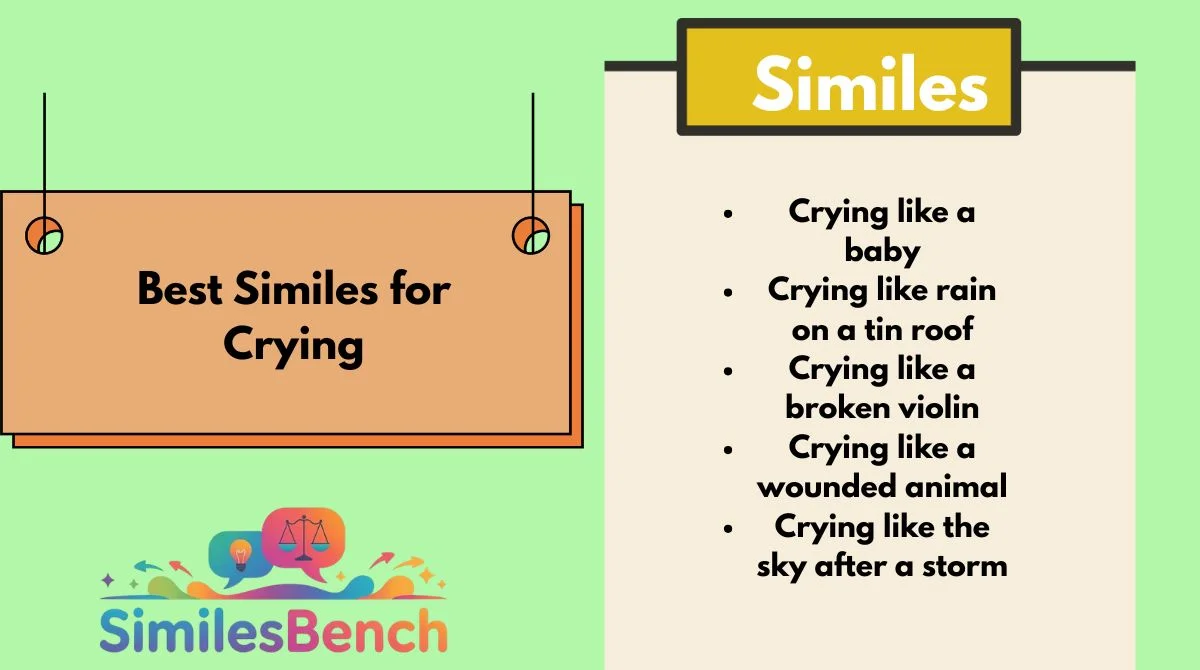
- Crying like a baby
- Crying like rain on a tin roof
- Crying like a broken violin
- Crying like a wounded animal
- Crying like the sky after a storm
- Crying like waves crashing on rocks
- Crying like a child lost in a crowd
- Crying like leaves falling in autumn
- Crying like a kettle left too long
- Crying like thunder in the distance
- Crying like glass shattering
- Crying like a river breaking its banks
- Crying like a candle melting away
- Crying like a door creaking in the dark
- Crying like wind through empty halls
- Crying like a heart cracking open
- Crying like saltwater pouring from the sea
- Crying like a storm trapped inside
- Crying like music played in minor keys
- Crying like a bird with a broken wing
- Crying like night falling too fast
1. Crying like a baby
Meaning: Crying openly and without control.
Explanation: This simile shows pure, honest emotion with no holding back.
She sat on the floor, crying like a baby when she heard the bad news.
After the long day, he finally broke down, crying like a baby in his room.
2. Crying like rain on a tin roof
Meaning: Steady, loud crying that doesn’t stop easily.
Explanation: It compares tears to rain hitting metal, which is constant and sharp.
Her tears fell like rain on a tin roof during the sad movie.
He cried like rain on a tin roof as the memories rushed back.
3. Crying like a broken violin
Meaning: Crying with pain and sadness in every sound.
Explanation: This simile suggests a sad, shaky cry that feels musical but hurt.
She cried like a broken violin when she said goodbye.
His voice sounded like a broken violin as tears filled his eyes.
4. Crying like a wounded animal
Meaning: Crying from deep pain or fear.
Explanation: It shows raw emotion that feels natural and hard to hide.
He cried like a wounded animal after the accident.
The child’s cries were like a wounded animal calling for help.
5. Crying like the sky after a storm
Meaning: Crying softly after strong emotions pass.
Explanation: This simile shows calm tears after a difficult moment.
She cried like the sky after a storm, quiet but full of feeling.
His tears came slowly, like the sky after a storm.
6. Crying like waves crashing on rocks
Meaning: Crying in powerful bursts.
Explanation: It suggests emotion coming again and again without warning.
Her sobs hit like waves crashing on rocks.
He cried like waves crashing on rocks as anger and sadness mixed.
7. Crying like a child lost in a crowd
Meaning: Crying from fear and loneliness.
Explanation: This simile focuses on feeling alone and unsure.
She cried like a child lost in a crowd when no one listened.
His tears showed panic, like a child lost in a crowd.
8. Crying like leaves falling in autumn
Meaning: Quiet, gentle crying.
Explanation: It shows sadness that feels soft and slow.
Tears fell like leaves falling in autumn as she read the letter.
He cried like leaves falling in autumn, barely making a sound.
9. Crying like a kettle left too long
Meaning: Crying that builds up and then bursts out.
Explanation: This simile compares emotion to pressure finally escaping.
She cried like a kettle left too long after holding everything inside.
His tears whistled out like a kettle left too long.
10. Crying like thunder in the distance
Meaning: Deep, low crying that feels heavy.
Explanation: It suggests sadness that fills the air quietly.
He cried like thunder in the distance, slow and strong.
Her voice shook, crying like thunder far away.
11. Crying like glass shattering
Meaning: Sudden, sharp crying.
Explanation: This simile shows pain that breaks all at once.
She cried like glass shattering when she heard the truth.
His tears came suddenly, like glass shattering inside him.
12. Crying like a river breaking its banks
Meaning: Crying that cannot be stopped.
Explanation: It shows emotions flowing freely and strongly.
She cried like a river breaking its banks after years of silence.
His tears poured out like a river breaking its banks.
13. Crying like a candle melting away
Meaning: Slow, quiet crying over time.
Explanation: This simile suggests sadness that slowly wears someone down.
She cried like a candle melting away through the night.
His tears fell slowly, like a candle melting away.
14. Crying like a door creaking in the dark
Meaning: Soft, uneasy crying.
Explanation: It shows fear mixed with sadness.
She cried like a door creaking in the dark.
His voice sounded thin, crying like a door creaking.
15. Crying like wind through empty halls
Meaning: Lonely, echoing crying.
Explanation: This simile focuses on emptiness and loss.
He cried like wind through empty halls after everyone left.
Her tears echoed, like wind through empty halls.
16. Crying like a heart cracking open
Meaning: Crying from emotional heartbreak.
Explanation: It shows pain that comes from love or loss.
She cried like a heart cracking open when he left.
His tears felt like a heart cracking open inside.
17. Crying like saltwater pouring from the sea
Meaning: Heavy, endless crying.
Explanation: This simile shows deep emotional release.
She cried like saltwater pouring from the sea.
His tears flowed like saltwater pouring from the sea.
18. Crying like a storm trapped inside
Meaning: Crying while trying to stay calm.
Explanation: It suggests emotion held back but powerful.
She cried like a storm trapped inside her chest.
He felt like a storm trapped inside as tears escaped.
19. Crying like music played in minor keys
Meaning: Sad but gentle crying.
Explanation: This simile gives crying a soft, emotional tone.
She cried like music played in minor keys.
His tears fell quietly, like music in minor keys.
20. Crying like a bird with a broken wing
Meaning: Crying from pain and helplessness.
Explanation: It shows vulnerability and hurt.
She cried like a bird with a broken wing.
His sobs sounded weak, like a bird with a broken wing.
21. Crying like night falling too fast
Meaning: Crying suddenly and unexpectedly.
Explanation: This simile shows how sadness can arrive quickly.
She cried like night falling too fast after the news.
His tears came on like night falling too fast.
Creative Writing Tips
Similes work best when they feel natural. In stories, use them to show emotion instead of explaining it. Let the reader feel the moment. In poems, choose similes that match the mood, soft or strong. For essays, use one clear simile to support your point, not too many. In songs, keep similes simple and emotional so they’re easy to remember. Always think about the feeling first, then pick a comparison that fits.
FAQs
What is the best simile for crying?
The best simile depends on the feeling. “Crying like a baby” fits strong emotion, while “crying like leaves falling” suits quiet sadness.
Are similes good for student writing?
Yes. Similes help students explain feelings clearly and make writing more interesting.
Can similes be used in essays?
They can, as long as they fit the topic and are not too dramatic.
How many similes should I use in one piece?
Usually one or two strong similes are enough to make an impact.
What’s the difference between a simile and a metaphor?
A simile uses “like” or “as.” A metaphor does not.
Conclusion
Similes help turn simple crying into something readers can truly feel. They add color, emotion, and meaning to writing without making it complicated.
By using the right simile, you can show sadness, fear, or heartbreak in a powerful way. Practice using these examples, and soon your writing will sound more natural, emotional, and alive.