Similes make writing brighter, clearer, and more fun to read. They help us explain feelings, looks, and actions by comparing them to something familiar.
Body parts similes are especially powerful because we all understand them right away. Whether you’re a student, a teacher, or a creative writer, learning these similes can turn simple sentences into ones that feel alive and emotional.
What Is a Simile?
A simile is a comparison using the words “like” or “as.”
It helps readers imagine something more clearly.
Similes are common in stories, poems, songs, and everyday speech.
Full List of Similes (12)
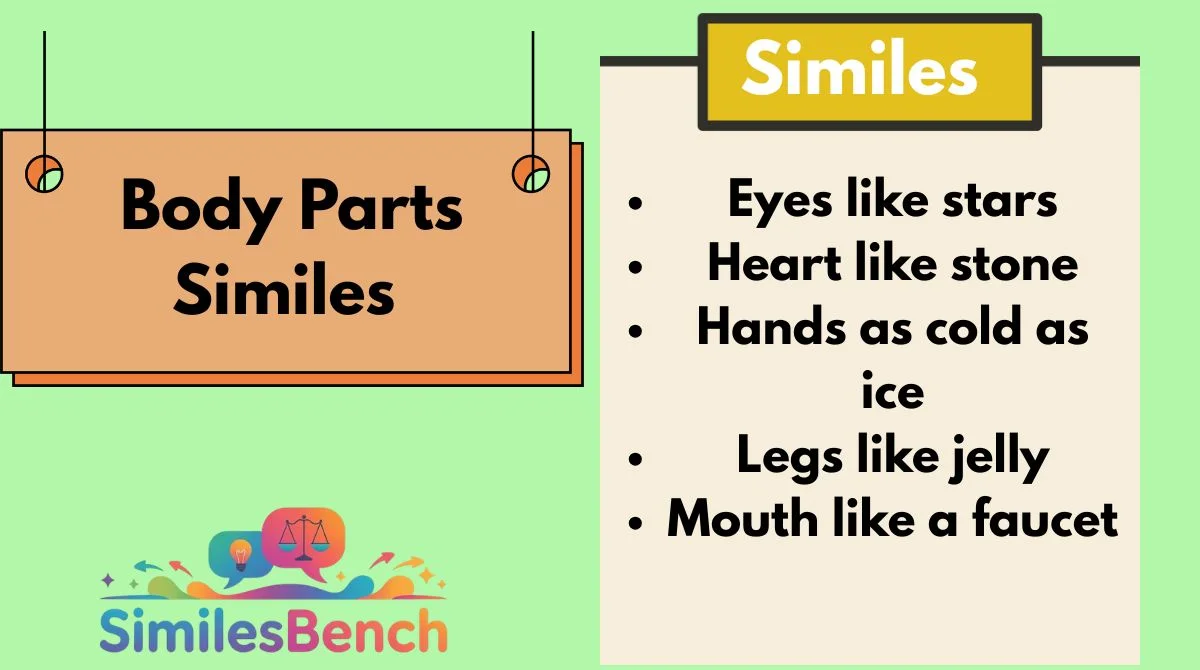
- Eyes like stars
- Heart like stone
- Hands as cold as ice
- Legs like jelly
- Mouth like a faucet
- Face as red as a tomato
- Head like a balloon
- Fingers like feathers
- Arms like tree branches
- Ears like a bat
- Hair like silk
- Back like a board
1. Eyes like stars
Meaning: Very bright, happy, or full of excitement.
Explanation: This simile shows strong emotions through shining eyes.
She walked into the room with eyes like stars, excited for the surprise party.
His eyes like stars lit up when he saw his name on the winner’s list.
2. Heart like stone
Meaning: Cold, unkind, or showing no emotion.
Explanation: It describes someone who does not easily feel sympathy.
He listened to her story with a heart like stone and said nothing.
The villain’s heart like stone never softened, even when people begged.
3. Hands as cold as ice
Meaning: Very cold or lacking warmth and comfort.
Explanation: Often used to show fear, illness, or emotional distance.
Her hands were as cold as ice after waiting in the snow.
He shook my hand, and it felt as cold as ice, making me uneasy.
4. Legs like jelly
Meaning: Weak, shaky, or tired.
Explanation: This simile is common after fear, shock, or exhaustion.
After the long race, my legs felt like jelly.
When she stood on stage, her legs like jelly almost gave up.
5. Mouth like a faucet
Meaning: Talking nonstop.
Explanation: It compares endless talking to running water.
Once he starts telling stories, his mouth is like a faucet.
Her mouth like a faucet kept the whole class laughing.
6. Face as red as a tomato
Meaning: Very embarrassed or shy.
Explanation: The color shows strong feelings clearly.
My face turned as red as a tomato when the teacher called my name.
His face as red as a tomato gave away his secret.
7. Head like a balloon
Meaning: Full of thoughts, ideas, or sometimes pride.
Explanation: It can describe excitement or overconfidence.
After winning the prize, his head was like a balloon.
Too many ideas made my head feel like a balloon ready to pop.
8. Fingers like feathers
Meaning: Gentle and soft to the touch.
Explanation: Often used to describe kindness or care.
Her fingers like feathers brushed away my tears.
The nurse worked with fingers like feathers, calming the child.
9. Arms like tree branches
Meaning: Strong and steady.
Explanation: This simile shows power and support.
The firefighter’s arms like tree branches lifted the heavy door.
His arms like tree branches wrapped around her protectively.
10. Ears like a bat
Meaning: Very good hearing.
Explanation: It highlights someone who notices small sounds.
She has ears like a bat and hears every whisper.
With ears like a bat, he caught the quiet footsteps.
11. Hair like silk
Meaning: Very smooth and soft.
Explanation: It creates a clear picture of beauty and care.
Her hair like silk shone in the sunlight.
The child’s hair felt like silk against my hand.
12. Back like a board
Meaning: Very straight or stiff.
Explanation: It can show discipline, pain, or tension.
He stood with a back like a board during the ceremony.
After hours of sitting, my back felt like a board.
Creative Writing Tips
Similes are tools, not decorations. Use them with care. In stories, add similes when you want readers to feel what a character feels. A scared character with legs like jelly feels more real than one who is just “afraid.”
In poems, similes add rhythm and emotion. Choose comparisons that match the mood. Soft similes suit gentle poems, while sharp ones fit strong emotions.
In essays, similes should clarify ideas, not confuse them. Use them sparingly to explain complex feelings or situations.
In songs, similes help listeners connect quickly. Simple comparisons are often the most powerful.
Always ask yourself: does this simile help the reader imagine better? If yes, keep it.
FAQs
What are body parts similes?
Body parts similes are comparisons that describe parts of the body using “like” or “as” to create clear images.
Why are similes important in writing?
They make writing more interesting, emotional, and easier to understand.
Can students use similes in essays?
Yes, when used carefully, similes can make essays clearer and more engaging.
What is the difference between a simile and a metaphor?
A simile uses “like” or “as,” while a metaphor compares directly without those words.
How can I create my own similes?
Think about how something looks or feels, then compare it to something familiar.
Conclusion
Similes help words come alive. Body parts similes are especially easy to understand and powerful to use. They add feeling, color, and clarity to writing.
Whether you are learning English or polishing your creative skills, these similes can strengthen your voice. Practice them, experiment with your own, and enjoy how your writing grows more expressive every day.