Language constantly evolves, especially in online spaces where slang terms can gain popularity very quickly. One such term that many people search for is “brat” in slang. While the word has existed for centuries, its meaning has shifted depending on context, culture, and the platform where it’s used.
People often look up this term because they encounter it on social media, dating apps, memes, or casual conversations and want to understand whether it’s playful, insulting, or something entirely different. In some situations, “brat” describes a spoiled child, while in other modern contexts it can represent someone who is playful, rebellious, or teasing.
Understanding slang is important because the tone, relationship between speakers, and environment can completely change how a word is interpreted. What may seem rude in one setting might actually be affectionate or humorous in another.
This article explains the true meaning of “brat” in slang, its background, how it is used today, and how to interpret it correctly depending on the situation.
Definition & Meaning
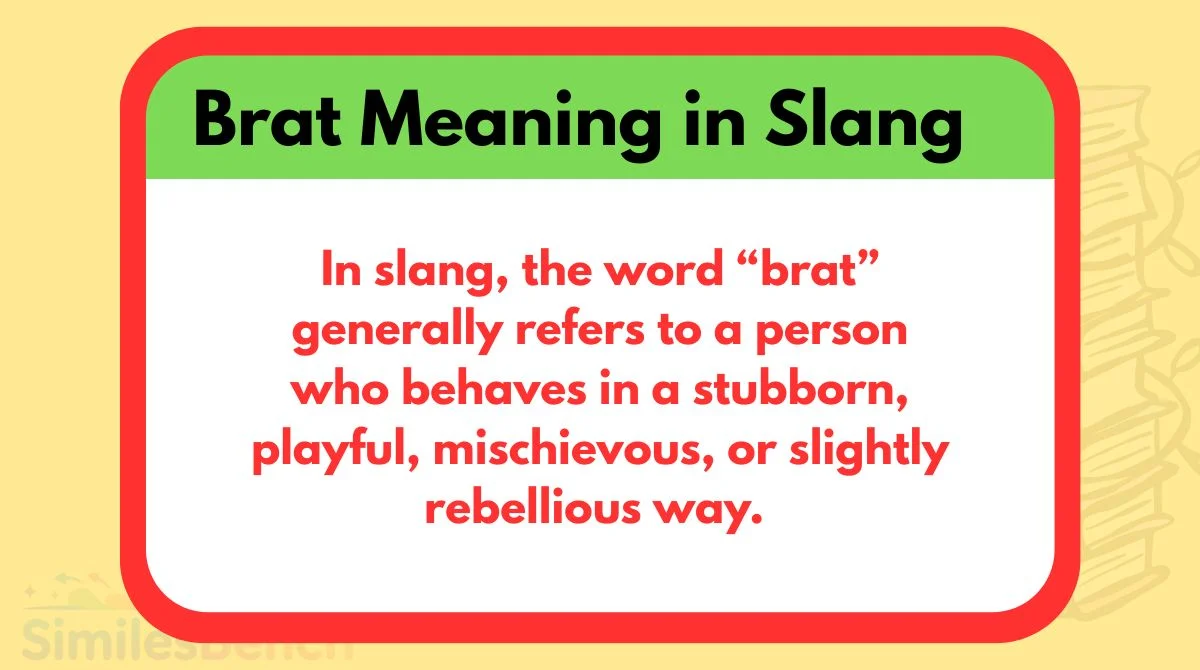
In slang, the word “brat” generally refers to a person who behaves in a stubborn, playful, mischievous, or slightly rebellious way. Traditionally, it described a child who is spoiled or badly behaved, but in modern slang the meaning has expanded.
In everyday conversation, someone might call another person a brat if they are acting stubborn, teasing others, or deliberately being difficult in a playful way. For example, a friend might jokingly say, “Stop being such a brat,” when someone refuses to share something or playfully argues.
The term can carry different tones depending on context:
- Playful or teasing – Used among friends or partners in a joking way.
- Mild criticism – Referring to someone acting childish or selfish.
- Affectionate teasing – Sometimes used between close people in a lighthearted manner.
In some online communities and relationship dynamics, “brat” may also refer to someone who enjoys playfully challenging authority or rules, often as part of humor or flirtation.
However, tone matters a lot. If used harshly or with anger, it can still sound insulting, especially if directed at someone behaving immaturely.
Overall, the slang meaning blends mischief, stubbornness, and playful defiance, rather than simply describing a badly behaved person.
Background & History
The word “brat” has a long linguistic history. Originally, it was used centuries ago in English to describe a poorly behaved child. Parents or teachers might have used the term to criticize a child who was rude, demanding, or spoiled.
Over time, the word became part of casual speech and started appearing in literature, movies, and everyday conversation. By the 20th century, “brat” was commonly used to describe children who were pampered or difficult to discipline.
As internet culture developed, slang terms began to evolve rapidly. Words that once had strict negative meanings started gaining new interpretations depending on social context.
Online communities played a major role in reshaping the meaning of “brat.” In modern usage, especially among younger audiences, it can describe someone who is:
- playful
- sarcastic
- stubborn in a humorous way
- intentionally teasing
Memes, social media posts, and short-form videos helped spread this interpretation. When users began labeling themselves or others as “brats,” it often carried a self-aware, humorous tone rather than serious criticism.
Today, the term exists in multiple layers: it can still refer to a spoiled child, but it can also function as lighthearted slang between adults.
Usage in Various Contexts
The meaning of “brat” can change significantly depending on the situation, relationship between people, and tone of voice.
1. Everyday Conversations
In casual speech, friends might use the word jokingly. For example:
- Someone refusing to share food might be called a brat.
- A friend who keeps teasing others could be described this way.
In these cases, the word usually carries humor rather than hostility.
2. Family Context
Parents sometimes use the term when referring to children behaving badly or being stubborn. This is closer to the traditional meaning.
3. Romantic or Flirtatious Context
In some relationships, “brat” can describe a partner who enjoys playful teasing, sarcasm, or light rebellion in conversations.
4. Internet and Meme Culture
Online communities often use the term humorously to describe someone who is sassy, sarcastic, or intentionally mischievous.
For instance, a person might caption a post with:
“Feeling like a brat today.”
This usage often suggests playful self-expression rather than criticism.
Common Misconceptions & Clarifications
One common misunderstanding is that the word always means someone spoiled or rude. While that was its original definition, slang has expanded its meaning.
Another misconception is that the term is always offensive. In reality, it depends heavily on tone and relationship. Friends who know each other well may use it jokingly, while strangers using it might sound insulting.
Some people also assume the word is only used for children. In modern slang, however, adults frequently use it when describing playful or teasing behavior.
Clarifying the context helps avoid confusion. If the word is used during lighthearted conversations, it usually carries a softer meaning.
Similar Terms & Alternatives
Several slang words have meanings similar to “brat,” though each has its own nuance.
Examples include:
- Troublemaker – someone who causes minor problems.
- Mischief-maker – someone playful and slightly rebellious.
- Sassy person – someone bold or cheeky.
- Rebel – someone who resists rules or expectations.
Each of these terms shares the idea of defying expectations, but “brat” tends to emphasize a more playful or immature tone.
How to Respond to This Term
How you respond when someone calls you a “brat” depends on the tone and context.
If it’s playful
You can respond with humor, such as joking back or teasing in return.
If it feels insulting
It’s okay to ask what the person means or politely tell them you don’t appreciate the label.
If it’s affectionate
In close relationships, the word may simply be part of light teasing or inside jokes.
Understanding the intention behind the word helps determine the best response.
Regional or Cultural Differences
Different cultures interpret slang differently. In some regions, calling someone a brat may still sound strongly negative, especially if used by adults.
In other cultures influenced by internet slang, the term may appear lighter or humorous.
Because language evolves differently across regions, people should be cautious when using slang with new acquaintances or in multicultural environments.
Comparison with Similar Terms
Compared to words like “spoiled” or “rude,” the term “brat” often sounds less serious.
For example:
| Term | Meaning |
|---|---|
| Brat | Playfully stubborn or mischievous |
| Spoiled | Used to describe someone overly pampered |
| Rude | Someone disrespectful |
| Sassy | Bold or cheeky behavior |
The key difference is that “brat” can be humorous, while some alternatives sound more critical.
Usage in Online Communities & Dating Apps
Online communities have popularized many slang interpretations of the word.
In social media bios, comments, or memes, someone might describe themselves as a brat to show they have a sarcastic or teasing personality.
On dating apps, it can sometimes indicate someone who enjoys playful banter and teasing interactions. However, the meaning may vary widely depending on the individual.
Because internet slang spreads quickly, the interpretation of the word may continue evolving in digital spaces.
Hidden or Offensive Meanings
Although often harmless, the word can still be offensive in certain situations.
If used to criticize someone harshly, it may imply that the person is selfish, immature, or disrespectful.
Additionally, in some online communities the word can have specialized meanings related to relationship dynamics, which may not be obvious to everyone.
For this reason, it’s important to consider context carefully before using or interpreting the term.
Suitability for Professional Communication
The word “brat” is generally unsuitable for professional environments.
Workplaces typically prioritize respectful and formal communication, so using slang labels could sound unprofessional or disrespectful.
In professional settings, it is better to describe behavior using clear and neutral language, such as “uncooperative,” “playful,” or “stubborn,” depending on the situation.
FAQs
What does “brat” mean in slang?
In slang, it usually describes someone who behaves in a playfully stubborn, mischievous, or teasing way.
Is calling someone a brat an insult?
It can be an insult, but in many casual conversations it is used jokingly or affectionately.
Is the term only used for children?
No. While it originally described children, adults often use it in playful slang conversations.
Why is the term popular online?
Social media and memes helped popularize the word as a way to describe sarcastic or mischievous personalities.
Should you use this term in formal settings?
No, it’s best avoided in professional communication.
Conclusion
The slang meaning of “brat” has evolved far beyond its original definition of a badly behaved child. Today, it can describe someone who is playful, stubborn, teasing, or mischievous, especially in informal conversations and online spaces.
However, context remains crucial. The same word can sound affectionate, humorous, or insulting depending on tone and relationship. Understanding how and where the term is used helps avoid misunderstandings and ensures communication remains respectful.
As slang continues evolving through internet culture, words like “brat” will likely gain new interpretations and nuances, making it even more important to consider context when using or interpreting them.