Similes are one of the easiest and most fun tools in English. They help us describe things by comparing them to something familiar. Clouds are perfect for this because they change shape, color, and mood all the time.
Whether you are a student, a teacher, or a writer, learning cloud similes can make your writing clearer, softer, and more imaginative. Let’s explore them together in a simple, friendly way.
What Is a Simile?
A simile compares two things using the words “like” or “as.”
It helps readers picture something more clearly.
Similes make writing feel alive and emotional.
Full List of Cloud Similes (12)
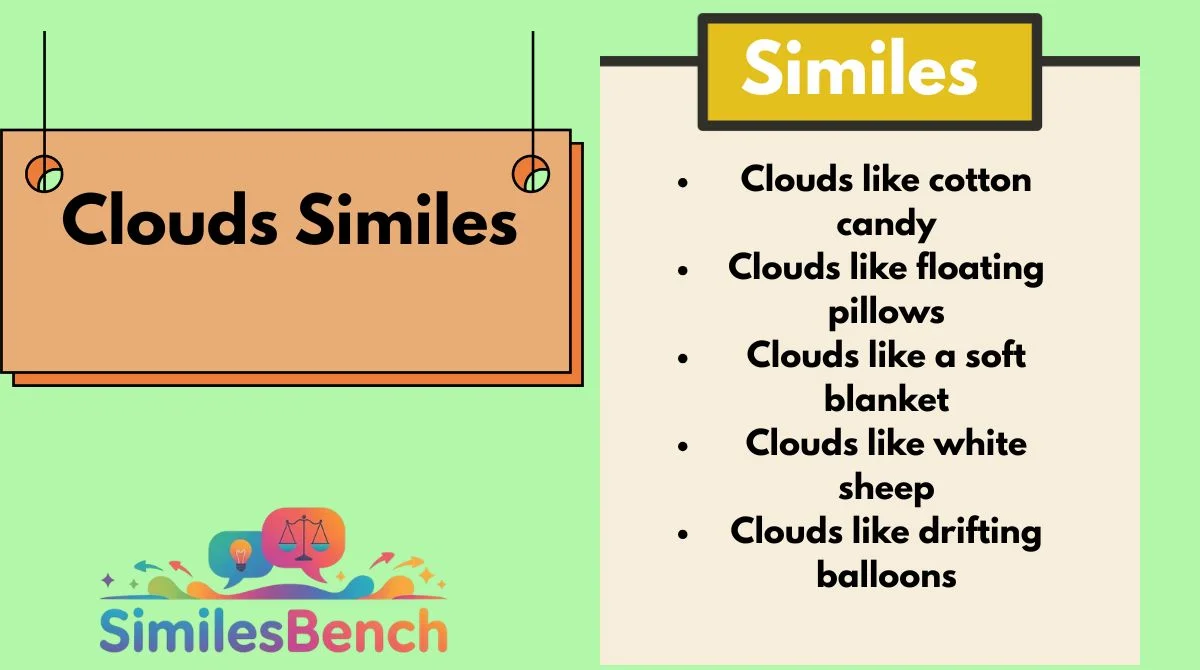
- Clouds like cotton candy
- Clouds like floating pillows
- Clouds like a soft blanket
- Clouds like white sheep
- Clouds like drifting balloons
- Clouds like a painter’s brush
- Clouds like slow-moving ships
- Clouds like torn paper
- Clouds like silver waves
- Clouds like a giant sponge
- Clouds like feathers in the sky
- Clouds like melting ice cream
1. Clouds like cotton candy
Meaning: Soft, fluffy, and sweet-looking clouds
Explanation: This simile compares clouds to cotton candy because both look light, puffy, and gentle.
Examples:
The sunset turned the clouds like cotton candy, glowing pink above the park.
She lay on the grass, smiling as clouds like cotton candy floated overhead.
2. Clouds like floating pillows
Meaning: Clouds that look soft and comfortable
Explanation: Pillows are soft and light, just like big white clouds in a calm sky.
Examples:
After a long day, he stared at clouds like floating pillows and felt peaceful.
The baby laughed and pointed at the clouds like floating pillows above her stroller.
3. Clouds like a soft blanket
Meaning: Clouds covering the sky gently
Explanation: This simile shows how clouds can spread across the sky the way a blanket covers a bed.
Examples:
In the early morning, clouds like a soft blanket wrapped the hills.
The city felt quiet under clouds like a soft blanket before the rain.
4. Clouds like white sheep
Meaning: Small, puffy clouds scattered across the sky
Explanation: Sheep are fluffy and move slowly, just like clouds on a clear day.
Examples:
The children counted clouds like white sheep while waiting for the bus.
Across the blue sky, clouds like white sheep wandered peacefully.
5. Clouds like drifting balloons
Meaning: Clouds moving slowly and freely
Explanation: Balloons float without hurry, just like clouds pushed by a gentle wind.
Examples:
She watched clouds like drifting balloons during her lunch break.
The sky felt playful with clouds like drifting balloons above the fairground.
6. Clouds like a painter’s brush
Meaning: Clouds shaped like strokes of paint
Explanation: This simile compares clouds to brush strokes because they often look stretched or artistic.
Examples:
At sunrise, clouds like a painter’s brush colored the sky orange and gold.
The evening sky looked like art, filled with clouds like a painter’s brush.
7. Clouds like slow-moving ships
Meaning: Large clouds moving steadily
Explanation: Ships travel calmly across water, similar to how big clouds move across the sky.
Examples:
From the hilltop, clouds like slow-moving ships sailed across the horizon.
Time felt slower as clouds like slow-moving ships passed above us.
8. Clouds like torn paper
Meaning: Thin, uneven clouds
Explanation: Torn paper has rough edges, just like broken or scattered clouds.
Examples:
The sky looked messy with clouds like torn paper after the storm.
She noticed clouds like torn paper stretching across the pale blue sky.
9. Clouds like silver waves
Meaning: Shiny clouds that move in patterns
Explanation: Waves roll across water, and some clouds move in the same flowing way.
Examples:
Moonlight turned the clouds like silver waves late at night.
The plane flew above clouds like silver waves shining below.
10. Clouds like a giant sponge
Meaning: Clouds full of rain
Explanation: A sponge holds water, just like heavy clouds before a downpour.
Examples:
Dark clouds like a giant sponge hung over the town.
Everyone rushed inside as clouds like a giant sponge filled the sky.
11. Clouds like feathers in the sky
Meaning: Light, thin clouds
Explanation: Feathers are light and gentle, similar to wispy clouds.
Examples:
On a quiet afternoon, clouds like feathers in the sky drifted slowly.
The sky felt open and calm with clouds like feathers in the sky.
12. Clouds like melting ice cream
Meaning: Clouds that look soft and droopy
Explanation: Melting ice cream loses shape, just like clouds on a hot day.
Examples:
Under the summer sun, clouds like melting ice cream sagged low.
The afternoon heat made the clouds like melting ice cream above the playground.
Creative Writing Tips
Similes are powerful when used with care. In stories, use cloud similes to set the mood. Soft clouds can make a scene calm, while dark ones can feel tense. In poems, similes help paint pictures with fewer words, so choose ones that match your feelings. For essays, similes can make descriptions clearer, but use them sparingly. In songs, simple similes are easier to remember and feel more emotional. Always ask yourself: does this simile help the reader see or feel something new?
FAQs
What is the easiest way to learn similes?
Start by comparing something you see to something you already know. Use “like” or “as” and keep it simple.
Why are clouds often used in similes?
Clouds change shape, color, and mood, which makes them perfect for creative comparisons.
Can students use similes in school essays?
Yes. When used carefully, similes can make essays more interesting and clear.
Are similes and metaphors the same?
No. Similes use “like” or “as.” Metaphors do not.
How many similes should I use in one piece of writing?
A few strong similes are better than many weak ones. Quality matters more than number.
Conclusion
Similes help writers turn simple ideas into clear pictures. Cloud similes are especially useful because everyone can imagine them. They bring emotion, beauty, and life into writing without being hard to learn.
Try using one or two in your next story, poem, or paragraph. With practice, similes will start to feel natural, and your writing will grow stronger and more enjoyable.