Language constantly evolves, and slang terms often gain new meanings as they spread across social media, pop culture, and everyday conversations. One such word that frequently sparks curiosity is “demure.” Many people search for the slang meaning of this term because it appears in online posts, memes, comments, and even dating app bios. Traditionally, “demure” has a formal dictionary definition connected to modesty and reserved behavior.
However, in modern slang, the word can carry slightly different tones depending on context, tone, and the platform where it appears.
Understanding the slang meaning of “demure” helps people interpret conversations correctly and avoid misunderstandings. Sometimes the word is used sincerely to describe a personality trait, while other times it may be playful, ironic, or even sarcastic. Because of these shifting meanings, people often want clarification before using it themselves.
This article explores the slang meaning of “demure,” its history, how it is used in different contexts, common misconceptions, and whether it is appropriate in professional or social communication.
Definition & Meaning
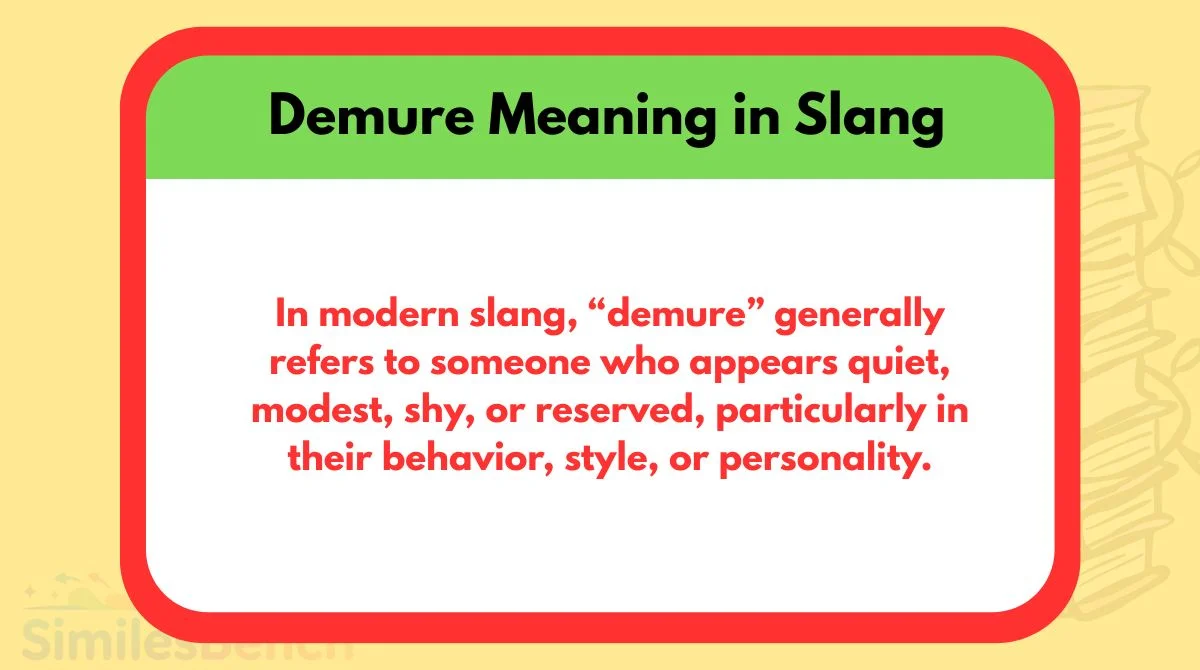
In modern slang, “demure” generally refers to someone who appears quiet, modest, shy, or reserved, particularly in their behavior, style, or personality. The term often describes a person who presents themselves in a gentle, polite, or understated way rather than being loud or attention-seeking.
In casual conversation, the slang meaning often emphasizes a soft, calm, and slightly mysterious vibe. For example, someone might describe a person as demure if they dress elegantly, speak softly, or behave in a composed and respectful way.
In online slang, the term may also be used with a playful or ironic tone. For instance, someone might jokingly say they are being “demure” after doing something slightly dramatic or expressive. This contrast between the word’s traditional meaning and the situation can create humor.
Common slang interpretations include:
- Quiet and modest personality
- Elegant or soft-spoken behavior
- Reserved yet attractive demeanor
- Subtle confidence rather than boldness
In social media captions, people sometimes use the word to highlight a balanced aesthetic—not overly flashy but still appealing. It may describe someone who carries themselves with calm confidence.
While the slang meaning stays close to the traditional definition, the tone can shift depending on the speaker’s intent. It might be used as a compliment, a light joke, or simply a descriptive label for a personality style.
Background & History
The word “demure” has existed for centuries and originally appeared in the English language during the late Middle Ages. Its roots come from Old French terms that referred to seriousness, calmness, and composure. Over time, the word developed associations with modesty and reserved behavior.
Historically, the word was often used to describe women who behaved politely, quietly, and modestly according to social expectations of the time. In literature and early English writings, a demure character was typically portrayed as graceful, respectful, and soft-spoken.
As society evolved, the term gradually became less tied to strict social roles and began describing anyone who appears calm, modest, or restrained. It remained a fairly formal word for many years and was commonly found in books, essays, and descriptive writing.
The transition into slang usage happened much later, largely influenced by internet culture and modern communication styles. Social media platforms encouraged shorter, expressive language, and older words like “demure” started appearing in memes, captions, and casual posts.
This shift created a slightly playful tone around the word. While it still carries its traditional meaning, modern slang often uses it in humorous or exaggerated ways. For example, someone might jokingly label themselves “demure” even when they are acting the opposite way.
Because of these evolving uses, the word now exists in two overlapping worlds: formal vocabulary and casual online slang.
Usage in Various Contexts
The slang meaning of “demure” can vary depending on where and how it is used. Context plays a major role in determining whether the word is serious, playful, or ironic.
1. Social Media
On platforms like TikTok, Instagram, or Twitter, “demure” is often used to describe a subtle aesthetic or personality style. Someone might post a photo with a caption suggesting they are feeling calm, elegant, or understated.
Example usage:
- “Keeping it demure today.”
- “Her style is so demure and classy.”
Sometimes the word is used humorously to contrast with dramatic or bold actions.
2. Everyday Conversation
In normal speech, calling someone demure usually means they appear polite, gentle, and reserved. It can be a compliment, especially when referring to elegance or grace.
For instance:
- “She has a demure personality.”
- “His quiet confidence feels very demure.”
3. Fashion and Aesthetic Discussions
The term is also used when discussing clothing styles. A demure fashion style often means simple, modest, and refined clothing choices rather than flashy outfits.
4. Dating Culture
In dating conversations, the word may describe someone who seems soft-spoken, calm, and emotionally balanced. Some people view this as an attractive personality trait.
Because the tone can change depending on context, it is important to consider whether the speaker is using the word sincerely or jokingly.
Common Misconceptions & Clarifications
Many people misunderstand the slang meaning of “demure.” Several common misconceptions exist because the word can sound formal or old-fashioned.
Misconception 1: It Means Weak or Passive
Some people assume that “demure” implies weakness or lack of confidence. In reality, the term simply describes reserved behavior, not a lack of strength or personality.
Misconception 2: It Only Describes Women
Historically the word was used mostly for women, but modern usage applies to any gender. Anyone can have a demure personality or style.
Misconception 3: It Always Means Shy
Being demure does not necessarily mean someone is shy. It may simply mean they prefer subtle expression over loud behavior.
Misconception 4: It Is Always a Compliment
Although the word is often positive, tone matters. In some cases, it might be used sarcastically or humorously.
Understanding these distinctions helps people interpret the term correctly in different situations.
Similar Terms & Alternatives
Several other words carry meanings similar to “demure,” although each has slightly different nuances.
Common alternatives include:
Modest – emphasizes humility and simplicity
Reserved – describes someone who keeps emotions private
Graceful – highlights elegance and poise
Soft-spoken – focuses on quiet communication style
Subtle – suggests understated behavior or appearance
While these words overlap, “demure” uniquely combines modesty, calmness, and quiet elegance.
Choosing the right term often depends on the context. For example, “reserved” may sound more neutral, while “graceful” emphasizes beauty and poise.
How to Respond to This Term
If someone calls you “demure,” the appropriate response depends on the context and tone.
If It Is a Compliment
You can simply respond with appreciation:
- “Thank you, I appreciate that.”
- “That’s kind of you to say.”
If It Is Playful or Joking
A lighthearted response works best:
- “Trying my best to stay classy!”
- “Only sometimes!”
If You Are Unsure of the Intent
You can politely clarify:
- “What do you mean by that?”
Responding calmly keeps the conversation comfortable and avoids misunderstandings.
Regional or Cultural Differences
The interpretation of “demure” can vary across cultures and communities.
In some cultures, modesty and quiet behavior are strongly valued, so being described as demure may be seen as high praise.
In other environments, particularly modern urban cultures, the term may be interpreted as old-fashioned or humorous.
Online communities also shape meaning differently. Younger internet users may use the word ironically, while older speakers might use it in a more traditional sense.
Because cultural expectations differ, understanding the speaker’s background can help clarify the intended meaning.
Comparison with Similar Terms
Although “demure” shares similarities with several other descriptive words, subtle differences exist.
Demure vs Shy
Shy implies nervousness around people, while demure simply suggests quiet elegance.
Demure vs Modest
Modest focuses on humility or simplicity, while demure highlights gentle composure and reserved charm.
These distinctions help explain why the word continues to appear in both traditional and modern language.
Usage in Online Communities & Dating Apps
In online communities and dating apps, “demure” can describe personality traits that people find appealing.
For example, a dating profile might mention being demure to suggest qualities like:
- Calm personality
- Respectful communication
- Elegant style
- Soft demeanor
However, interpretations can vary widely. Some users may view the word as positive and attractive, while others might see it as slightly formal or humorous.
Because dating profiles rely heavily on quick impressions, the word may be used to signal subtle charm rather than bold confidence.
Hidden or Offensive Meanings
Generally, “demure” does not carry offensive meanings. It is typically a neutral or positive descriptor.
However, tone matters. In rare cases, someone might use the term sarcastically to imply that a person is pretending to be modest or innocent.
For example, if someone acts dramatically but then claims to be demure, the word may be used ironically.
Understanding tone and context helps determine whether the word is meant sincerely or playfully.
Suitability for Professional Communication
In professional settings, “demure” is usually considered safe but somewhat formal language.
It may appear in contexts such as:
- Fashion writing
- Character descriptions
- Literature discussions
- Polite personality descriptions
However, it is less common in technical or corporate communication. In professional environments, words like reserved, composed, or professional may be more appropriate.
Using the word carefully ensures that communication remains clear and respectful.
FAQs
What does “demure” mean in slang?
In slang, it usually describes someone who behaves quietly, modestly, and elegantly, often with a calm or subtle personality.
Is calling someone demure a compliment?
Yes, in most cases it is a positive description suggesting grace, modesty, or quiet charm.
Can men be described as demure?
Yes. Although historically used for women, modern language allows the term to describe any person.
Is demure the same as shy?
Not exactly. Shy implies nervousness, while demure focuses on calm, reserved behavior.
Why is the word trending online?
Social media trends and aesthetic discussions often revive older words, giving them new humorous or stylistic uses.
Conclusion
The slang meaning of “demure” reflects how language evolves over time while still preserving elements of its original definition. Traditionally associated with modesty and quiet elegance, the word has found new life in modern online conversations, social media posts, and casual speech.
Today, calling someone demure usually highlights a personality or style that is calm, subtle, and graceful rather than loud or attention-seeking. While the word can sometimes be used humorously or ironically, it remains largely positive and descriptive.
Understanding the context behind the term helps avoid confusion and allows people to interpret it correctly. As internet culture continues to reshape language, words like “demure” demonstrate how older vocabulary can adapt to modern communication while maintaining its core meaning.