Language on the internet changes quickly, and slang words appear almost every day. One term that has recently caught attention online is “fein.” Many people search for the fein meaning in slang because they see it used in comments, memes, chats, or social media captions but are unsure what it actually means.
Slang words often carry meanings that differ from their traditional definitions, and the context in which they are used plays a big role in understanding them. Sometimes a slang word can express admiration, excitement, or even criticism depending on how it is used in a sentence.
The word “fein” is an example of slang that can be confusing because it may appear similar to other words or may be used humorously or sarcastically. As online communities continue to shape modern language, understanding such expressions helps people communicate more effectively and avoid misunderstandings.
This article explores the slang meaning of “fein,” its background, how people use it in different contexts, and whether it is appropriate in various situations.
Definition & Meaning
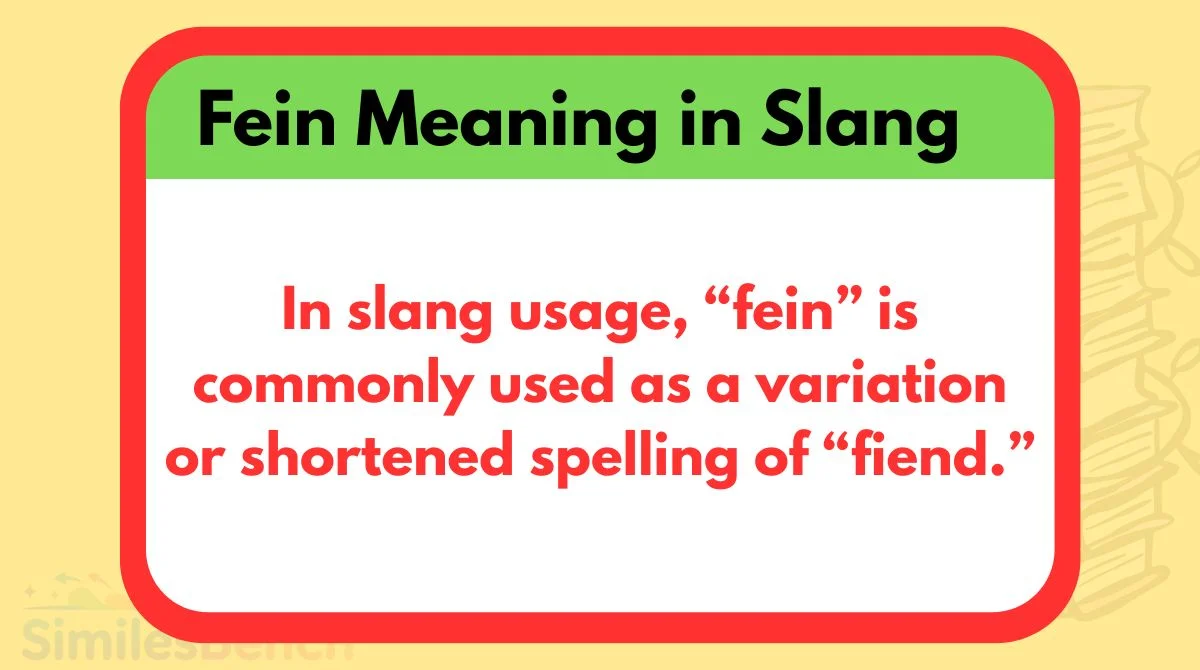
In slang usage, “fein” is commonly used as a variation or shortened spelling of “fiend.” In informal language, a fiend refers to someone who is extremely obsessed with or addicted to something. When people use the slang version “fein,” they are usually describing someone who strongly craves or constantly wants a particular thing.
For example, someone might say:
- “He’s a gaming fein.”
- “She’s a coffee fein.”
In these cases, the word does not necessarily mean addiction in a serious sense. Instead, it often describes a person who loves something so much that they seem unable to stop talking about it or doing it.
Sometimes the word is also used humorously or exaggeratedly. For instance, friends might jokingly call someone a “snack fein” if they are always eating or asking for food.
In modern online slang, the term can also imply strong enthusiasm or obsession. It may be used playfully among friends rather than as a serious insult.
However, context matters. Depending on tone and situation, it could either sound lighthearted or slightly negative. When used negatively, it may suggest that someone is desperate for something or behaves in an excessive way.
Because slang spelling varies widely, “fein” may appear in different forms in online conversations. The meaning usually remains connected to the idea of someone craving or obsessing over something.
Background & History
The slang form “fein” likely developed from the word “fiend.” Historically, the word fiend had a much darker meaning. In older English, it referred to an evil spirit or demon. Over time, however, the meaning shifted and became more flexible in everyday speech.
By the twentieth century, “fiend” started being used informally to describe someone with an intense passion or craving. For example, phrases like “chocolate fiend” or “sports fiend” became common ways to describe strong enthusiasm.
In urban slang and casual speech, the pronunciation of “fiend” sometimes evolved into spellings like “feen” or “fein.” These variations appeared in music lyrics, street slang, and internet conversations.
Online culture accelerated the spread of these spellings. Social media platforms encourage shorter, faster communication, which often leads to creative spelling variations. As a result, “fein” became another informal way to represent the same idea.
Today the slang appears in memes, online jokes, chat messages, and digital communities where playful language is common. While it is not considered standard English spelling, it continues to appear in informal digital communication.
Usage in Various Contexts
The slang term “fein” can appear in several different contexts, especially in casual conversations.
1. Casual Friend Conversations
Among friends, it is often used jokingly to describe someone who loves something excessively. For example:
“Don’t invite him to the arcade—he’s a game fein.”
2. Social Media Posts
On platforms like short-form video apps or comment sections, people sometimes use the term to exaggerate a personality trait. A caption might say:
“Certified pizza fein.”
3. Humor and Memes
Memes frequently exaggerate behaviors, and calling someone a “fein” is a way to humorously highlight their obsession with something.
4. Music and Pop Culture
Slang spelling variations often appear in song lyrics or fan discussions, helping the word spread through entertainment culture.
5. Gaming Communities
In gaming circles, someone might jokingly call a highly dedicated player a “game fein,” meaning they spend a lot of time playing.
In most of these situations, the tone is playful rather than offensive. However, the meaning still depends heavily on the context and relationship between speakers.
Common Misconceptions & Clarifications
There are several misunderstandings about the slang use of “fein.”
First, some people assume it is a completely different word from “fiend.” In reality, it is usually just a creative or phonetic spelling variation.
Second, people sometimes believe the term always refers to drug addiction. While historically “fiend” has been used in phrases like “drug fiend,” the slang version is often used much more casually. It may simply describe someone who loves something a lot.
Another misconception is that it always carries a negative tone. In many conversations it is used humorously and not intended as an insult.
Finally, some users think the spelling “fein” is standard English. It is not considered formal or dictionary spelling and mainly exists in informal writing online.
Understanding these distinctions helps prevent confusion when encountering the term in digital conversations.
Similar Terms & Alternatives
Several slang or informal expressions convey similar meanings.
One common alternative is People sometimes say “gym or “coffee to describe strong enthusiasm.
Another similar expression is “fanatic.” This word describes someone with intense passion for a hobby or interest.
“Obsessed” is another widely used term. It often appears in social media captions like “I’m obsessed with this show.”
“Superfan” is used to describe someone extremely dedicated to a particular celebrity, show, or hobby.
Finally, some communities use phrases like “die-hard fan,” which also highlight strong enthusiasm.
While these terms are similar, they may carry slightly different tones, ranging from humorous to serious.
How to Respond to This Term
If someone calls you a “fein,” your response depends on the context.
If the tone is playful, you can respond humorously. For example:
“Yeah, I admit it—I’m a pizza fein.”
If the comment feels negative or insulting, it may be better to clarify or address it calmly.
You can also respond with curiosity by asking what they mean if you are unsure about the intention behind the word.
In many cases, the best approach is to interpret the tone of the conversation before reacting.
Regional or Cultural Differences
Slang words often change meaning depending on region or community.
In some urban slang communities, variations like “feen” or “fiend” are common ways to describe someone who constantly seeks something.
In other regions, the term might rarely be used or may be misunderstood entirely.
Online communities also shape the meaning of slang. Gaming groups, meme pages, and fan communities sometimes develop their own interpretations.
Because slang evolves rapidly, meanings may shift over time as new generations adopt and modify the language.
Comparison with Similar Terms
Although “fein” and “fiend” are closely related, their usage differs slightly.
“Fiend” is the traditional spelling and appears in dictionaries. It can refer to an evil being or someone with an intense craving.
“Fein,” on the other hand, is mainly an informal spelling used online or in casual speech.
Compared to terms like “fanatic” or the slang version tends to sound more playful and less formal.
Understanding these differences helps people choose the right word depending on the situation.
Usage in Online Communities & Dating Apps
In online communities, slang spreads quickly because people communicate in short messages and memes.
Someone might describe themselves as a “travel fein” or “food fein” in a playful way to show strong interest.
On dating apps, users sometimes use exaggerated slang to highlight hobbies or personality traits.
For example, a profile might say:
In these spaces, the term is usually meant to be humorous or expressive rather than serious.
Hidden or Offensive Meanings
Although the term is usually harmless, it can sometimes carry negative implications.
Because “fiend” historically referred to addiction or extreme craving, using it toward someone might imply desperation or unhealthy obsession.
If used aggressively, it could sound insulting.
For that reason, it is best used only in friendly or humorous contexts where the tone is clearly understood.
Suitability for Professional Communication
The slang spelling “fein” is not suitable for professional writing.
In business communication, academic writing, or formal emails, it is better to use standard words such as “enthusiast,” “fan,” or “passionate about.”
Slang can appear unprofessional or confusing to readers who are unfamiliar with internet language.
Therefore, the term should generally be reserved for informal conversations.
FAQs
1. What does “fein” mean in slang?
It usually refers to someone who strongly craves or is obsessed with something.
2. Is “fein” the same as “fiend”?
Yes, it is often used as a slang spelling variation of the word “fiend.”
3. Is the term offensive?
Not necessarily. It is often playful, but tone and context matter.
4. Is “fein” a real dictionary word?
No, it is mainly an informal internet spelling.
5. Can it describe hobbies or interests?
Yes, people often use it to exaggerate enthusiasm for things like food, games, or music.
Conclusion
Understanding modern slang can make online communication easier and more enjoyable. The fein meaning in slang usually refers to someone who strongly craves or is deeply enthusiastic about something. While the spelling may vary, it generally comes from the word “fiend,” which has evolved over time into a playful way to describe obsession or intense interest.
The term is widely used in casual conversations, memes, and online communities, but it is rarely appropriate in professional settings. Because slang depends heavily on context and tone, it is important to interpret how the word is being used before reacting.
As language continues to evolve, expressions like “fein” show how digital culture constantly reshapes communication.