Language evolves quickly, especially in online spaces where slang terms appear and spread rapidly. One such term that has gained attention is “glazing” in slang. Many people search for this phrase after seeing it used in social media comments, gaming chats, or online discussions.
While the word “glazing” traditionally refers to coating something with a glossy layer—like pottery or pastries—its slang meaning is very different and tied to how people talk about admiration or excessive praise.
Understanding slang like this helps people interpret conversations correctly and avoid misunderstandings. Because slang often carries humor, sarcasm, or criticism, the context in which it appears is extremely important. In some cases, it may even carry a slightly mocking tone.
This article explores the meaning of glazing in slang, where it originated, how it is used in different situations, and what people really mean when they say someone is “glazing.” By the end, you’ll clearly understand when the term is harmless, when it’s sarcastic, and how to respond appropriately.
Definition & Meaning
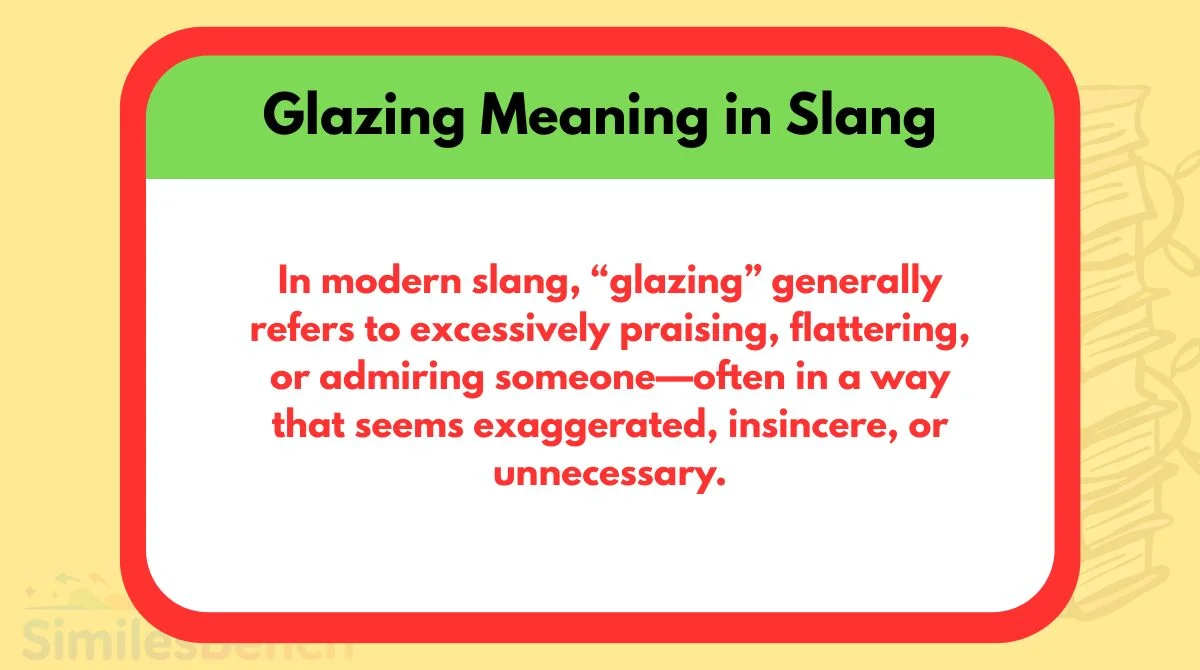
In modern slang, “glazing” generally refers to excessively praising, flattering, or admiring someone—often in a way that seems exaggerated, insincere, or unnecessary. When someone says another person is “glazing,” they are usually implying that the person is trying too hard to compliment or support someone, sometimes for attention or approval.
For example, in online conversations, you might see comments like:
- “Stop glazing him.”
- “Bro is glazing so hard right now.”
In these cases, the speaker suggests that someone is overhyping another person, possibly beyond what is deserved.
The slang often appears in contexts such as:
- Social media debates
- Sports discussions
- Gaming communities
- Celebrity fan conversations
Another important aspect of the term is tone. “Glazing” is rarely used as a neutral description. Instead, it usually carries a critical or teasing tone, implying that the praise being given is excessive.
Some people also interpret the term as similar to “overly defending” or “being biased toward someone.” For instance, if someone repeatedly defends a celebrity despite criticism, others may accuse them of “glazing.”
It’s important to note that the slang meaning is informal and mostly used in casual digital communication, not in formal settings. The meaning can also shift slightly depending on context. In some communities, it might simply mean “overpraising,” while in others it may carry stronger sarcasm or mockery.
Overall, the slang meaning of glazing revolves around exaggerated admiration or praise, especially when observers believe it’s unnecessary or exaggerated.
Background & History
The slang usage of “glazing” is relatively recent and mainly emerged from internet culture and social media conversations. The original word has existed for centuries, referring to coating something with a glossy finish—like pottery glaze or icing on baked goods.
The slang meaning likely developed through metaphorical language, where “glazing” symbolically represents “covering someone with praise.” Over time, online communities began using it to describe people who excessively compliment or support someone.
The rise of the term is closely linked to platforms such as:
- Streaming communities
- Gaming forums
- Short-form video platforms
- Comment sections of viral posts
Younger internet users often create playful or exaggerated expressions, and “glazing” fits this pattern. It became popular because it is short, expressive, and humorous, making it ideal for quick online reactions.
Another factor that contributed to the spread of the term is meme culture. Memes frequently exaggerate behaviors for comedic effect. Calling someone a “glazer” became a funny way to accuse them of being overly loyal or overly flattering toward someone.
Over time, the term expanded beyond its original communities and is now seen in discussions about:
- Sports players
- Influencers
- Celebrities
- Streamers
- Online personalities
Because internet slang spreads quickly, meanings sometimes shift or become exaggerated. In some contexts, the term might even carry stronger or more sarcastic undertones.
Despite its popularity online, the slang meaning is still considered informal and culture-specific, meaning many people outside internet communities may not immediately understand it.
Usage in Various Contexts
The slang term “glazing” appears in a wide range of situations, particularly in online discussions where people debate opinions or defend public figures. Its meaning remains centered around excessive praise or admiration, but the exact tone depends on the context.
1. Social Media Discussions
On platforms like comment sections or video replies, people often accuse others of glazing when they repeatedly defend a celebrity or influencer. For example, if someone praises a public figure in every conversation, other users might say they are “glazing.”
2. Sports Conversations
Sports fans frequently debate players and teams. When a fan praises a particular athlete repeatedly—even when performance is questionable—others may accuse them of glazing that player.
3. Gaming Communities
Gamers often use the term when someone strongly supports a certain streamer, game developer, or player. Saying someone is glazing suggests they are being overly supportive or biased.
4. Friend Groups
In casual conversations among friends, the term may be used jokingly. If someone compliments another friend too much, others might tease them by saying they are glazing.
5. Online Debates
During heated debates, accusing someone of glazing can be a way to dismiss their opinion by suggesting they are biased or overly loyal.
While the tone can be playful in some situations, it can also come across as dismissive or sarcastic, especially in arguments.
Common Misconceptions & Clarifications
Because the slang meaning differs greatly from the original word, several misunderstandings often occur.
Misconception 1: It means simple praise.
In reality, glazing refers to excessive or exaggerated praise, not normal compliments.
Misconception 2: It is always offensive.
The term is not always insulting. In many situations, it is used humorously or casually.
Misconception 3: It has only one meaning.
Like many slang expressions, its interpretation changes depending on tone, context, and community.
Misconception 4: It’s appropriate everywhere.
The slang is mainly used in informal online conversations. Using it in professional settings may sound confusing or inappropriate.
Understanding these nuances helps avoid misinterpreting comments or using the word incorrectly.
Similar Terms & Alternatives
Several other slang expressions convey similar ideas to glazing. These terms often describe excessive admiration or support.
Common alternatives include:
- Overhyping – exaggerating someone’s abilities
- Fanboying / fangirling – showing extreme admiration
- Meat riding – a more vulgar internet slang term
- Bootlicking – excessively flattering someone for advantage
- Simping – showing excessive attention or admiration
Each of these expressions carries slightly different connotations, but they generally refer to overly enthusiastic praise or loyalty.
How to Respond to This Term
If someone accuses you of glazing, the best response depends on the situation.
Stay calm and consider the context.
Sometimes the comment is simply meant as a joke.
Clarify your opinion.
If you genuinely support someone’s actions or achievements, explaining your reasoning can shift the conversation toward a more constructive discussion.
Ignore playful teasing.
In casual chats, accusations of glazing may just be friendly banter.
Avoid escalating arguments.
Responding aggressively can turn a light remark into a larger conflict.
Understanding tone helps determine whether the comment is serious criticism or harmless humor.
Regional or Cultural Differences
Slang terms often spread unevenly across regions and cultures. The term glazing is most commonly used in English-speaking online communities, especially among younger internet users.
In some regions, people may not recognize the slang meaning at all, instead interpreting it only in its traditional sense related to cooking or ceramics.
Cultural factors also influence how seriously the term is taken. In some online communities it is a lighthearted joke, while in others it can be used more critically during debates.
Comparison with Similar Terms
Although glazing overlaps with several slang expressions, it has subtle differences.
Glazing vs Bootlicking
Bootlicking often implies flattery for personal gain, especially toward authority figures. Glazing doesn’t always suggest a motive—it may simply describe exaggerated praise.
These distinctions explain why the term has become popular—it captures a specific type of behavior in conversations.
Usage in Online Communities & Dating Apps
Online spaces have played a major role in spreading the slang meaning of glazing.
Online Communities
In forums, gaming chats, and comment sections, the term is commonly used to call out perceived bias or excessive praise toward influencers, athletes, or public figures.
Dating Apps
Although less common, the term may appear in humorous bios or conversations. Someone might jokingly say they don’t want a partner who “glazes them nonstop,” meaning they prefer genuine interactions over exaggerated compliments.
Because tone is harder to read online, the term can sometimes lead to misunderstandings if users interpret it too seriously.
Hidden or Offensive Meanings
In certain internet communities, “glazing” may carry more explicit or suggestive undertones. Some people use the term as a metaphor that hints at inappropriate or exaggerated devotion.
However, this meaning is not universal and depends heavily on context and community culture. In many situations, the term simply refers to overly enthusiastic praise rather than anything explicit.
Because slang evolves quickly, meanings can shift or gain new interpretations over time.
Suitability for Professional Communication
The slang term glazing is not appropriate for professional environments such as workplaces, academic writing, or formal communication.
Reasons include:
- It may confuse people unfamiliar with internet slang.
- The tone can appear sarcastic or dismissive.
- Some interpretations may be considered unprofessional.
In formal discussions, it is better to use clearer expressions like “excessive praise,” “bias,” or “overly supportive.”
FAQs
1. What does glazing mean in slang?
It usually means giving someone excessive praise or admiration, often in a sarcastic or critical tone.
2. Is glazing always negative?
Not always. Sometimes it is used jokingly among friends.
3. Where is the term most commonly used?
It appears mostly in online communities, gaming discussions, and social media comments.
4. Is glazing the same as simping?
They are similar but not identical. Simping often involves romantic admiration, while glazing can apply to any type of excessive praise.
5. Can the term be offensive?
In certain contexts, it may come across as dismissive or mocking.
Conclusion
The slang term “glazing” has become a recognizable part of modern internet language. While the original word relates to coatings and finishes, the slang version describes excessive admiration, exaggerated praise, or strong bias toward someone. Its popularity comes from online discussions where people debate celebrities, athletes, influencers, or friends.
Like many internet expressions, the meaning depends heavily on tone and context. In some conversations it serves as playful teasing, while in others it may function as criticism. Understanding the nuance behind the term helps avoid confusion and ensures it is used appropriately.
Because slang evolves quickly, expressions like glazing may continue to shift in meaning as internet culture changes. Recognizing these changes allows people to stay informed about modern language trends and communicate more effectively in digital spaces.