Similes make writing brighter, clearer, and more fun to read. They help readers see and feel what the writer means instead of just understanding the words.
Hands are perfect for similes because we use them to show care, fear, strength, and love. In this guide, you’ll explore 14+ hands similes explained in simple English, with warm examples that sound real—not forced or robotic.
What Is a Simile?
A simile compares two things using the words “like” or “as.”
It helps describe something in a clearer, more interesting way.
Writers use similes to make ideas easier to imagine.
Full List of Hands Similes
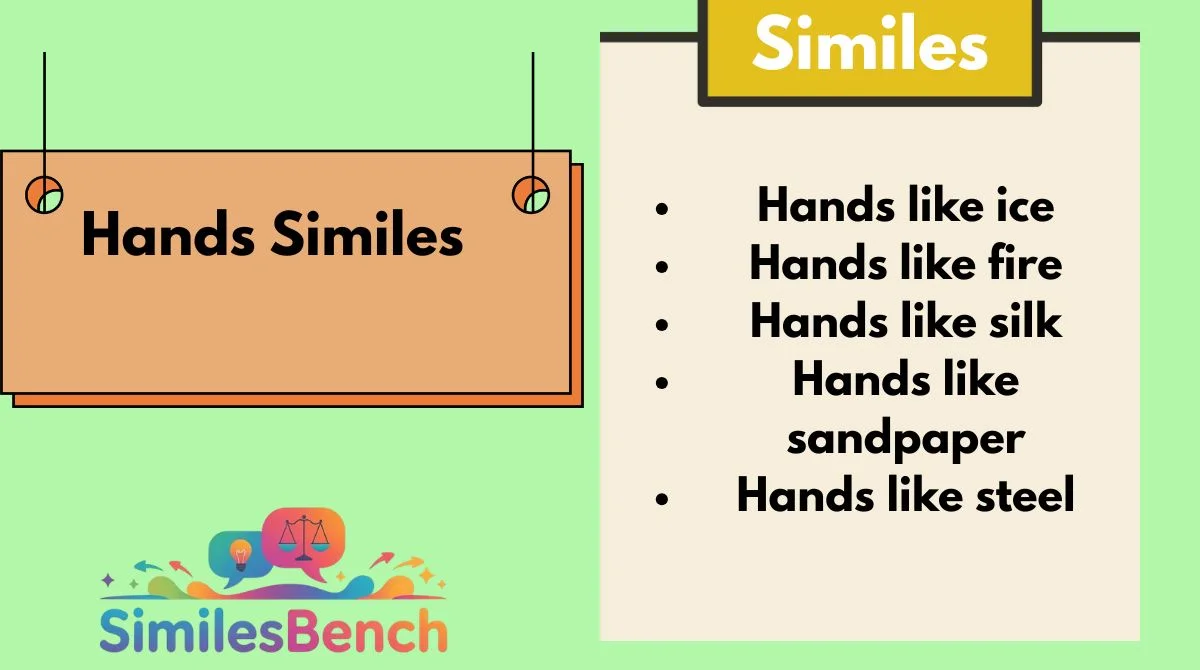
- Hands like ice
- Hands like fire
- Hands like silk
- Hands like sandpaper
- Hands like steel
- Hands like feathers
- Hands like claws
- Hands like warm bread
- Hands like shaking leaves
- Hands like stone
- Hands like open books
- Hands like tangled wires
- Hands like gentle rain
- Hands like tight knots
1. Hands like ice
Meaning: Very cold hands, often showing fear or shock.
Explanation: This simile connects cold hands with strong emotions.
Example sentences:
- Her hands were like ice when she heard the bad news.
- He shook my hand, and it felt like ice on my skin.
2. Hands like fire
Meaning: Very hot hands, showing anger, energy, or fever.
Explanation: Fire suggests heat and strong feeling.
Example sentences:
- His hands were like fire after working in the sun all day.
- She grabbed the cup with hands like fire, still full of nervous energy.
3. Hands like silk
Meaning: Very soft and smooth hands.
Explanation: Silk helps readers imagine a gentle touch.
Example sentences:
- The baby reached out with hands like silk.
- Her hands felt like silk as she fixed my collar.
4. Hands like sandpaper
Meaning: Rough or dry hands from hard work.
Explanation: Sandpaper shows texture and effort.
Example sentences:
- Grandpa’s hands were like sandpaper from years of farming.
- His hands felt like sandpaper when he patted my back.
5. Hands like steel
Meaning: Strong, firm, and powerful hands.
Explanation: Steel suggests strength and control.
Example sentences:
- She climbed the rope with hands like steel.
- His grip was steady, hands like steel holding me up.
6. Hands like feathers
Meaning: Very light and gentle hands.
Explanation: Feathers create a soft, caring image.
Example sentences:
- The nurse touched my arm with hands like feathers.
- His hands were like feathers as he brushed away her tears.
7. Hands like claws
Meaning: Tight, tense, or angry hands.
Explanation: Claws show stress or strong emotion.
Example sentences:
- His hands curled like claws when he lost the game.
- She grabbed the bag with hands like claws, afraid to let go.
8. Hands like warm bread
Meaning: Comforting, safe, and welcoming hands.
Explanation: Warm bread feels cozy and kind.
Example sentences:
- Her hands were like warm bread on my cold cheeks.
- He held the child with hands like warm bread.
9. Hands like shaking leaves
Meaning: Nervous or frightened hands.
Explanation: Shaking leaves show fear clearly.
Example sentences:
- Her hands were like shaking leaves before the speech.
- He signed the paper with hands like shaking leaves.
10. Hands like stone
Meaning: Hard, still, or emotionless hands.
Explanation: Stone suggests no movement or feeling.
Example sentences:
- His hands felt like stone when she needed comfort.
- She stood there, hands like stone, unable to react.
11. Hands like open books
Meaning: Honest and easy to understand.
Explanation: Open books represent openness and truth.
Example sentences:
- His hands were like open books, never hiding his feelings.
- She spoke calmly, hands like open books in front of her.
12. Hands like tangled wires
Meaning: Confused or unsure hands.
Explanation: Tangled wires show disorder.
Example sentences:
- His hands moved like tangled wires while explaining the problem.
- She fidgeted, hands like tangled wires in her lap.
13. Hands like gentle rain
Meaning: Calm, caring, and soothing hands.
Explanation: Gentle rain brings peace.
Example sentences:
- Her hands were like gentle rain on my tired shoulders.
- He worked quietly, hands like gentle rain across the keys.
14. Hands like tight knots
Meaning: Tense, stressed, or worried hands.
Explanation: Tight knots show pressure and fear.
Example sentences:
- His hands felt like tight knots during the long wait.
- She sat silently, hands like tight knots in her lap.
Creative Writing Tips
Similes work best when they feel natural, not forced.
In stories:
Use hands similes to show feelings instead of naming them. Fear, love, or anger can all appear through hand movement.
In poems:
Choose similes that match the mood. Soft similes suit calm poems, while sharp ones fit tense moments.
In essays:
A single simile can make your writing more memorable. Keep it simple and clear.
In songs:
Hands similes add emotion. They help listeners connect with the story behind the words.
Helpful tip:
Always ask yourself, Does this sound like something a real person would notice?
FAQs
What are hands similes?
Hands similes are comparisons that describe hands using “like” or “as” to show feeling, texture, or movement.
Why are similes important in writing?
They help readers imagine scenes better and feel emotions more deeply.
Can students use similes in school writing?
Yes. Similes make school essays, stories, and poems more interesting and expressive.
How many similes should I use in one piece?
A few strong similes work better than many weak ones.
Are similes and metaphors the same?
No. Similes use “like” or “as.” Metaphors do not.
Conclusion
Similes turn simple writing into something readers remember. When you use hands similes, you show emotion without explaining it directly. These 14+ hands similes can help students and writers add warmth, clarity, and feeling to their work. Try one in your next story or poem, and notice how your words come alive.