Similes are one of the easiest and most enjoyable tools in English writing. They help us explain feelings by comparing them to things we already understand.
Happiness, in particular, is a feeling we all know, but sometimes it’s hard to describe in words. That’s where similes shine. In this article, you’ll explore simple, beautiful happiness similes that students and writers can use in stories, poems, essays, and everyday writing.
What Is a Simile?
A simile is a comparison using the words “like” or “as.”
It helps describe something by comparing it to something familiar.
Similes make writing clearer, more colorful, and more fun to read.
Full List of Happiness Similes
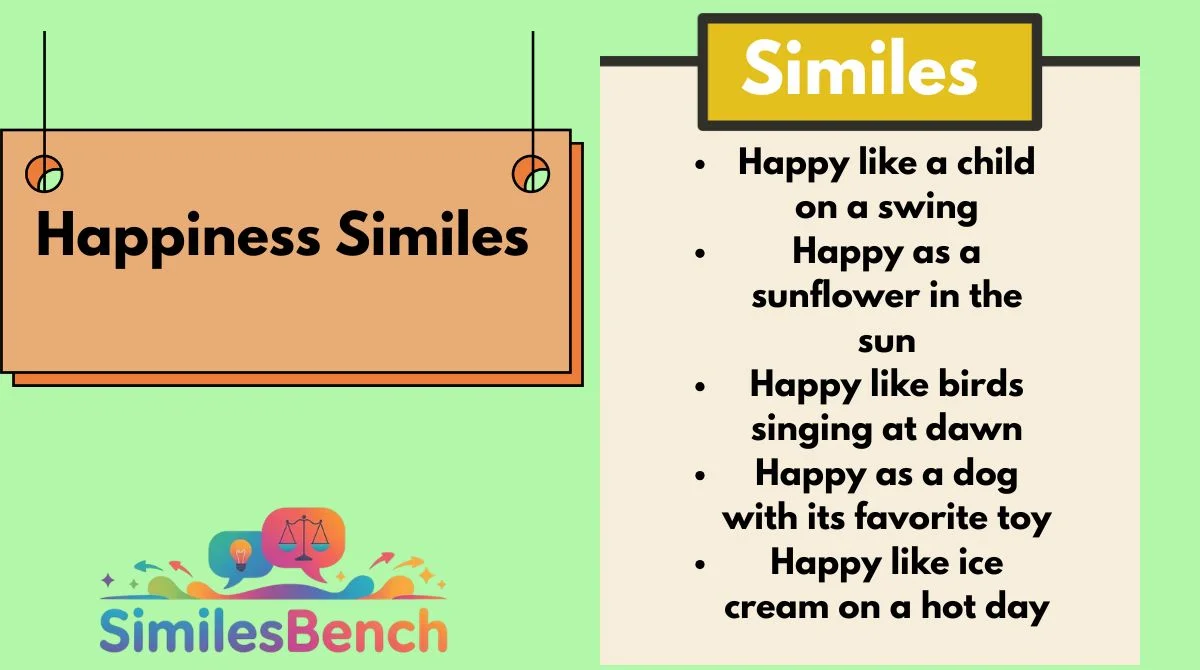
- Happy like a child on a swing
- Happy as a sunflower in the sun
- Happy like birds singing at dawn
- Happy as a dog with its favorite toy
- Happy like ice cream on a hot day
- Happy as a butterfly in spring
- Happy like a kid on their birthday
- Happy as a rainbow after rain
- Happy like music playing in the heart
- Happy as a fresh breeze on a summer morning
- Happy like a cat in a sunny window
- Happy as a blooming garden
- Happy like laughter shared with friends
1. Happy like a child on a swing
Meaning: Feeling free, light, and joyful
Explanation: This simile shows pure, simple happiness without worries.
Example sentences:
She felt happy like a child on a swing, laughing without a care in the world.
After finishing her exams, his heart lifted, happy like a child on a swing at the park.
2. Happy as a sunflower in the sun
Meaning: Bright, warm, and full of positive energy
Explanation: Sunflowers naturally turn toward sunlight, just like happy people lean toward joy.
Example sentences:
She walked into the room happy as a sunflower in the sun, spreading smiles everywhere.
Winning the small prize made him feel happy as a sunflower in the sun.
3. Happy like birds singing at dawn
Meaning: Calm, hopeful happiness
Explanation: Morning birdsong often feels peaceful and full of promise.
Example sentences:
She woke up happy like birds singing at dawn on the first day of summer.
The good news left him smiling, happy like birds singing at dawn.
4. Happy as a dog with its favorite toy
Meaning: Excited and deeply content
Explanation: Dogs show joy openly, without hiding it.
Example sentences:
When he saw his old friend, he was happy as a dog with its favorite toy.
She hugged the book she loved, happy as a dog with its favorite toy.
5. Happy like ice cream on a hot day
Meaning: Deeply satisfying happiness
Explanation: Ice cream on a hot day feels like a small but perfect joy.
Example sentences:
Her smile spread happy like ice cream on a hot day after the long walk.
The break from school felt happy like ice cream on a hot day.
6. Happy as a butterfly in spring
Meaning: Light, playful happiness
Explanation: Butterflies in spring represent new beginnings and gentle joy.
Example sentences:
She danced through the garden happy as a butterfly in spring.
His voice sounded happy as a butterfly in spring when he spoke about his dreams.
7. Happy like a kid on their birthday
Meaning: Excited, joyful, and full of anticipation
Explanation: Birthdays often bring a special kind of happiness.
Example sentences:
She opened the letter happy like a kid on their birthday.
He ran home happy like a kid on their birthday morning.
8. Happy as a rainbow after rain
Meaning: Joy after sadness or difficulty
Explanation: Rainbows appear after storms, symbolizing hope and happiness.
Example sentences:
After the argument ended, peace returned, happy as a rainbow after rain.
Passing the test made her feel happy as a rainbow after rain.
9. Happy like music playing in the heart
Meaning: Quiet, emotional happiness
Explanation: This simile shows happiness that feels personal and deep.
Example sentences:
She listened to the news, happy like music playing in the heart.
His success filled him, happy like music playing in the heart.
10. Happy as a fresh breeze on a summer morning
Meaning: Refreshing and gentle happiness
Explanation: A cool breeze often brings comfort and relief.
Example sentences:
The vacation began happy as a fresh breeze on a summer morning.
Her kind words felt happy as a fresh breeze on a summer morning.
11. Happy like a cat in a sunny window
Meaning: Calm and comfortable happiness
Explanation: Cats resting in sunlight show peaceful contentment.
Example sentences:
He sat reading, happy like a cat in a sunny window.
After lunch, she felt happy like a cat in a sunny window.
12. Happy as a blooming garden
Meaning: Full, growing happiness
Explanation: A garden in bloom shows life, color, and joy.
Example sentences:
Her heart felt happy as a blooming garden after the good news.
The classroom buzzed, happy as a blooming garden in spring.
13. Happy like laughter shared with friends
Meaning: Warm, shared happiness
Explanation: This simile focuses on joy that comes from connection.
Example sentences:
The evening felt happy like laughter shared with friends.
He remembered the trip, happy like laughter shared with friends.
Creative Writing Tips
Similes work best when they feel natural, not forced. In stories, use them to show emotions instead of explaining them directly. In poems, choose similes that match the mood and rhythm of your lines. For essays, one strong simile can make your writing memorable. In songs, simple similes often connect faster with listeners. Always pick comparisons your reader can picture easily, and avoid using too many at once.
FAQs
What is a simile in simple words?
A simile compares two things using “like” or “as” to make meaning clearer.
Why are similes important in writing?
They help readers imagine feelings and ideas more clearly.
Can students use similes in essays?
Yes, when used carefully, similes make essays more engaging.
What is the difference between a simile and a metaphor?
A simile uses “like” or “as,” while a metaphor does not.
How can I make my own happiness similes?
Think about what happiness feels like and compare it to something familiar.
Conclusion
Happiness similes help bring feelings to life in a simple, powerful way. They allow students and writers to express joy with color, warmth, and imagination.
By using clear comparisons, your writing becomes more emotional and easier to understand. Try adding one or two happiness similes to your next piece, and notice how your words begin to smile back at the reader.