The internet constantly creates and spreads new slang terms, and one word that has recently caught people’s attention is “jit.” Many users come across this term in social media comments, gaming chats, or casual conversations and wonder what it actually means. Because slang evolves quickly, the meaning of a word can vary depending on where it is used and who is saying it.
People often search for the jit meaning in slang to understand whether it is friendly, insulting, or simply a casual way to refer to someone. In some contexts it is harmless and playful, while in others it can sound disrespectful depending on tone and location.
Understanding slang like “jit” helps people communicate better online and avoid misunderstandings. This article explains the meaning, origin, and common usage of the word “jit,” along with examples, cultural context, and tips on how to respond when someone uses it in conversation.
Definition & Meaning
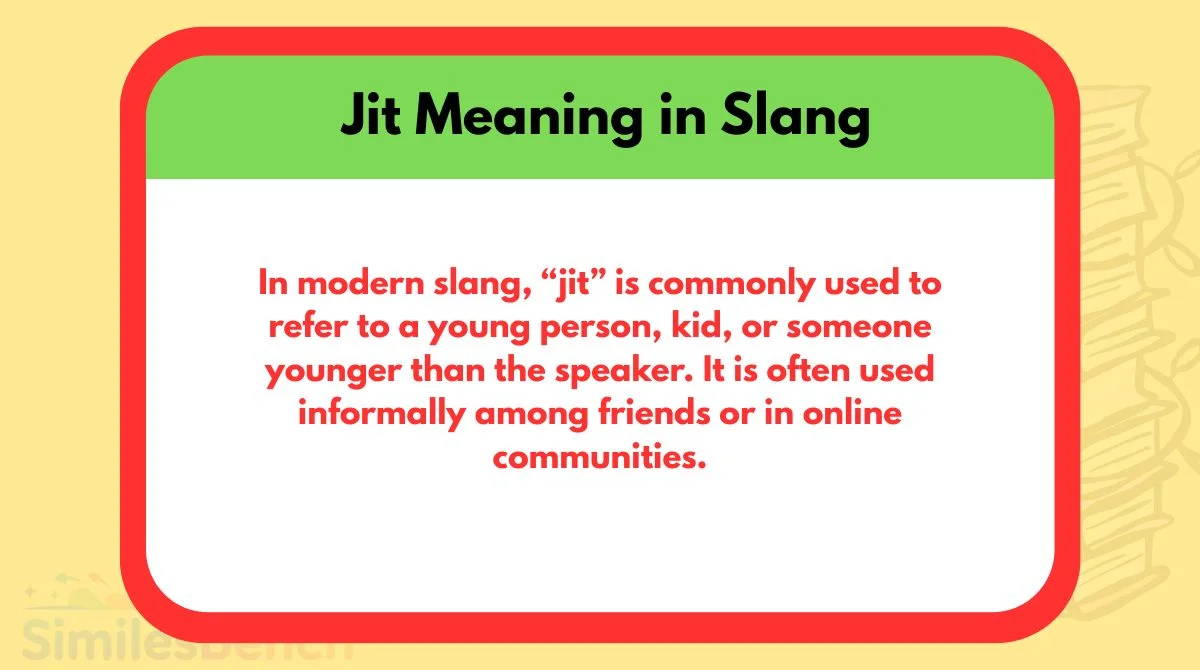
In modern slang, “jit” is commonly used to refer to a young person, kid, or someone younger than the speaker. It is often used informally among friends or in online communities.
The term can carry slightly different tones depending on context:
- Neutral Meaning: Simply referring to a young person.
Example: “That jit is really good at the game.” - Playful or Teasing: Used jokingly toward someone younger.
Example: “Relax, jit, it’s just a game.” - Disrespectful or Dismissive: Sometimes used to talk down to someone.
Example: “Don’t listen to that jit.”
Because slang relies heavily on tone and context, the same word may sound friendly in one situation and rude in another. Most commonly, however, it functions as a casual nickname or label rather than a serious insult.
In online gaming and social media culture, the term is sometimes used by older players to describe inexperienced or younger users. Despite this, many communities use it humorously rather than aggressively.
Background & History
The slang term “jit” has roots in regional speech, particularly in parts of the southern United States, especially Florida. Linguists and cultural observers believe the word evolved from the term “jitterbug” or shortened forms of words used to describe energetic young people.
Over time, the term was shortened to “jit,” making it easier to use in quick conversations. It became popular in street slang and local communities before eventually spreading online.
The rise of social media platforms, streaming culture, and gaming communities helped the word reach a global audience. Short slang terms travel quickly online because they are easy to type and easy to remember.
Another reason the word gained attention is its frequent appearance in rap lyrics, online memes, and gaming chats. When influencers or content creators use a term regularly, it often becomes part of internet vocabulary.
Although “jit” has older regional origins, its modern popularity largely comes from internet culture, where slang spreads rapidly across different countries and communities.
Usage in Various Contexts
The slang term “jit” appears in several different types of conversations. Understanding these contexts helps clarify the tone and intention behind the word.
1. Casual Conversations
Friends may use it jokingly to refer to someone younger.
Example:
“Slow down, jit, you’re moving too fast.”
2. Online Gaming
In gaming communities, it can describe a new or inexperienced player.
Example:
“That jit just started playing yesterday.”
3. Social Media Comments
People sometimes use the word humorously in comment sections or memes.
Example:
“This jit thinks he discovered something new.”
4. Friendly Teasing
Among close friends, it may simply be playful banter.
Example:
“Alright jit, show us what you can do.”
In most cases, context determines whether the word feels lighthearted or slightly disrespectful.
Common Misconceptions & Clarifications
Many people misunderstand the slang term “jit,” especially when they encounter it online for the first time.
One misconception is that it always means an insult. In reality, it is often neutral or playful. The intention depends heavily on the tone of the speaker.
Another misunderstanding is that it refers specifically to a certain group of people. In truth, the word simply describes someone younger or inexperienced, not a specific ethnicity or background.
Some users also assume it is a completely new internet word. However, it actually existed in regional slang long before social media popularized it.
Understanding these points helps avoid confusion and prevents unnecessary offense during conversations.
Similar Terms & Alternatives
Several slang words have meanings similar to “jit.” These alternatives may be used depending on region or online culture.
Examples include:
- Kid – simple and neutral
- Youngster – slightly more formal
- Noob/Newbie – common in gaming communities
- Lil bro – popular internet slang
- Shorty – sometimes used informally
Each of these terms has slightly different connotations, but they often serve a similar purpose in casual conversation.
How to Respond to This Term
If someone calls you “jit,” your response should depend on the tone of the conversation.
Friendly Situation
If it is playful, you can respond casually.
Example:
“Alright, jit coming through!”
Neutral Conversation
You can simply ignore the label and continue talking.
Disrespectful Tone
If the term feels insulting, you may respond calmly or clarify your feelings.
Example:
“Let’s keep the conversation respectful.”
Most online slang is not meant to be taken seriously, so understanding the intent behind the word is important.
Regional or Cultural Differences
The meaning and frequency of “jit” vary depending on location.
In Florida and some southern U.S. communities, the term has been part of local slang for years. It is commonly used among younger generations and in street culture.
Outside those regions, people often learn the term through internet culture, music, and gaming communities. As a result, users in other countries may adopt the word without fully understanding its original background.
Because slang evolves differently in each region, interpretations can shift over time.
Comparison with Similar Terms
Comparing “jit” with other slang helps clarify its tone.
| Term | Meaning | Tone |
|---|---|---|
| Jit | Young person or inexperienced individual | Casual |
| Kid | Young person | Neutral |
| Noob | Inexperienced gamer | Slightly teasing |
| Lil bro | Younger person or friend | Friendly |
Unlike some terms that clearly insult someone’s skill level, “jit” usually focuses on age or perceived youth rather than ability.
Usage in Online Communities & Dating Apps
On social media platforms, the slang word “jit” appears in comments, memes, and playful arguments.
In gaming communities, it may refer to a new player who is still learning the game.
On dating apps or casual chat platforms, the word might occasionally appear when someone describes a younger person or jokingly addresses someone acting immature.
Because online communication lacks tone and facial expressions, misunderstandings can occur more easily. For that reason, users should interpret slang carefully before reacting.
Hidden or Offensive Meanings
Although the word “jit” is usually harmless, it can occasionally sound dismissive or belittling if used aggressively.
For example, if someone repeatedly calls another person “jit” in an argument, it may imply that they see them as immature or unimportant.
However, the term is not generally considered a serious offensive slur. Most of the time it remains casual slang.
As with many internet expressions, tone and intention matter more than the word itself.
Suitability for Professional Communication
The slang word “jit” is not appropriate for professional settings such as:
- workplace emails
- formal presentations
- academic writing
- business communication
Professional environments usually require respectful and clear language. Informal slang can appear unprofessional or confusing to readers who are unfamiliar with internet terminology.
In professional contexts, it is better to use neutral terms such as “young person,” “beginner,” or “new team member.”
FAQs
What does “jit” mean in slang?
It usually refers to a young person or someone younger than the speaker, often used casually.
Is “jit” an insult?
Not always. It can be playful or neutral, but tone determines whether it feels disrespectful.
Where did the slang word “jit” originate?
It is believed to come from regional slang in southern United States communities, especially Florida.
Is the term popular online?
Yes. Social media, gaming platforms, and internet culture helped spread the word globally.
Should I use this word in formal conversations?
No. It is informal slang and better suited for casual conversations.
Conclusion
The slang term “jit” has become increasingly visible in online conversations, gaming chats, and social media comments. While the word may seem confusing at first, its core meaning is relatively simple: it usually refers to a young person or someone perceived as younger or less experienced.
Like many slang expressions, the tone and context determine whether the term sounds friendly, playful, or slightly disrespectful. Its origins in regional speech and its spread through internet culture demonstrate how language constantly evolves in the digital age.
Understanding slang terms like “jit” helps people navigate modern communication more confidently and avoid misunderstandings when interacting online.