Internet slang evolves quickly, and many short abbreviations can confuse people who encounter them for the first time. One such term that often raises curiosity is “JOI.” People frequently search for the JOI meaning in slang after seeing it in online chats, social media, forums, or dating platforms. Because the acronym is short and appears in different contexts, its meaning is not always obvious to everyone.
Understanding slang terms like this is useful for navigating online communication, especially in digital communities where abbreviations are common. In some cases, these expressions have specific meanings tied to internet culture or adult content, which can lead to misunderstandings if someone is unfamiliar with them.
This article explains the slang meaning of JOI, its background, where it is commonly used, and how people interpret it in different online spaces. It also discusses misconceptions, cultural differences, and whether the term is appropriate for professional or everyday conversations.
Definition & Meaning
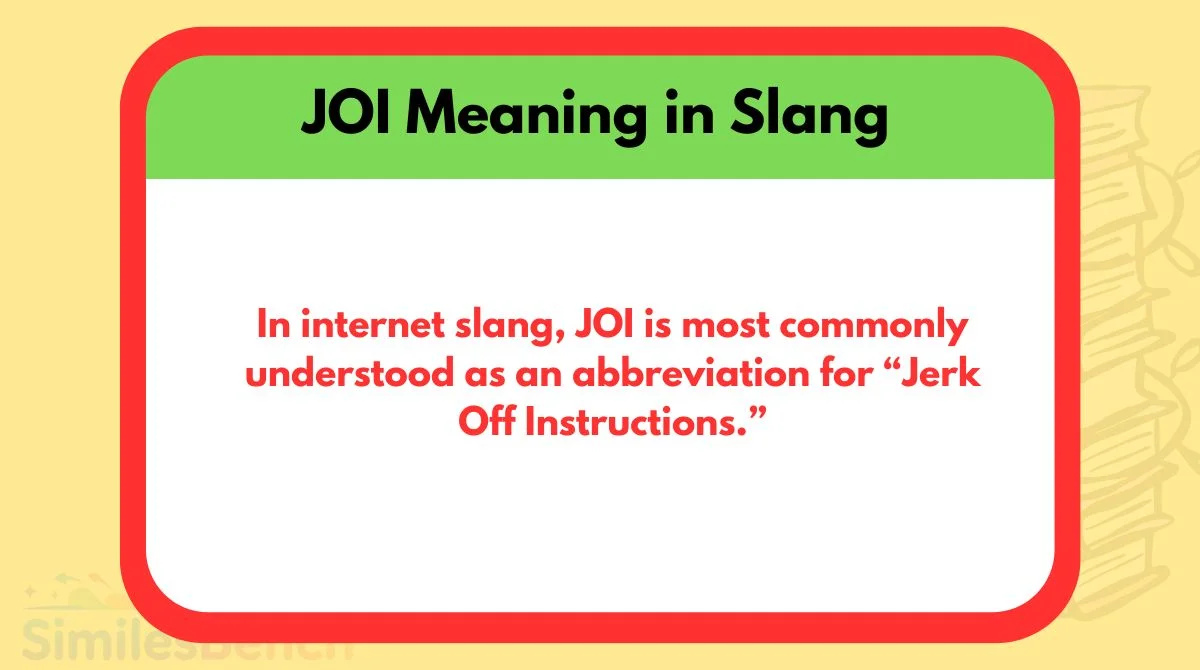
In internet slang, JOI is most commonly understood as an abbreviation for “Jerk Off Instructions.” The phrase is associated with adult-themed online content where one person provides explicit instructions intended to guide another person through a self-directed activity. Because of this association, the term is typically categorized as adult or explicit slang.
Although the abbreviation itself is only three letters, it carries a very specific meaning within certain online communities. Outside of those spaces, people may not recognize the term at all or may assume it represents something unrelated. This is why many individuals search for the phrase online after encountering it in unfamiliar contexts.
It is important to understand that JOI is generally considered NSFW (Not Safe for Work) terminology. This means it is inappropriate for professional settings, educational environments, or formal communication. The term is usually confined to adult entertainment platforms, specialized online forums, or private conversations where explicit language is expected.
Another factor that contributes to confusion is that acronyms often have multiple meanings depending on context. For example, in other fields, the same letters might represent something completely unrelated, such as a technical abbreviation or a personal name. However, in most internet slang discussions, JOI almost always refers to the adult meaning.
For people encountering the term for the first time, recognizing its explicit nature helps avoid misunderstandings and prevents accidental use in inappropriate environments.
Background & History
The slang term JOI emerged alongside the rapid growth of online adult entertainment and digital communities in the early 2000s. As internet forums, streaming platforms, and content-sharing websites became more popular, creators began using abbreviations and tags to categorize different types of material. JOI became one of these labels.
Short acronyms were particularly useful online because they allowed users to quickly identify the type of content they were looking for. Over time, JOI evolved from being a simple descriptive label into a widely recognized piece of internet slang within adult-oriented spaces.
The rise of video-sharing platforms and subscription-based content services further increased the visibility of the term. Content creators often used abbreviated titles or tags to help audiences find specific categories, and JOI became one of those searchable keywords.
Another reason the acronym spread quickly is that internet culture tends to favor short, memorable phrases. Acronyms like LOL, BRB, and DM are widely recognized across many communities. Similarly, JOI became a shorthand expression within certain adult-focused circles.
Despite its popularity in those areas, the term remains largely unknown to people who do not regularly interact with those communities. As a result, many individuals first encounter the abbreviation unexpectedly on social media or in comment sections and then look up its meaning out of curiosity.
Usage in Various Contexts
The JOI slang term appears in several online environments, though its meaning typically remains the same. The difference lies in how openly or frequently it is used.
One of the most common places where the term appears is on adult entertainment platforms. In these environments, it is used as a category label or description to indicate a specific style of content. Users searching for particular content types may encounter the abbreviation frequently.
The term can also appear on discussion forums or online communities that talk about adult topics. In these spaces, members might mention JOI while discussing content trends, creator styles, or personal preferences.
Another context where the acronym sometimes appears is social media platforms. However, due to platform guidelines and content restrictions, the term may be used more subtly or as a hashtag rather than a direct description.
Occasionally, people may use the abbreviation jokingly or sarcastically in casual conversations online. In such cases, the speaker might be referencing the slang term indirectly rather than using it literally.
Because context is crucial, someone encountering the term should consider where it appears. In professional or general conversations, the abbreviation is rarely appropriate and can be misunderstood if used outside adult-related discussions.
Common Misconceptions & Clarifications
Because the acronym JOI is short and ambiguous, several misconceptions often arise when people encounter it online.
One common misunderstanding is that JOI is a harmless internet abbreviation similar to everyday slang like “LOL” or “BTW.” In reality, the term carries an explicit meaning and should not be treated as casual or family-friendly language.
Another misconception is that JOI might represent a technical or gaming term. While many acronyms originate in gaming communities, this particular one is primarily connected to adult content rather than mainstream gaming culture.
Some people also assume the letters could represent a person’s name, brand, or organization. While this may occasionally be true in unrelated contexts, the slang meaning remains the most widely recognized interpretation in online discussions.
It is also worth clarifying that using the term does not automatically indicate someone’s personal interests. Sometimes people reference it simply while explaining internet culture, discussing slang, or asking about meanings.
Understanding these clarifications helps prevent awkward situations where someone might accidentally use or misunderstand the abbreviation.
Similar Terms & Alternatives
Internet slang often evolves in clusters, meaning that many related terms appear within the same communities. JOI is no exception, and several other abbreviations are sometimes used in similar contexts.
For example, NSFW is a common label indicating that content is not appropriate for workplaces or public viewing. While NSFW is broader and not necessarily explicit, it often appears alongside adult-themed slang.
Another related abbreviation is ASMR in certain contexts, though its primary meaning refers to sensory relaxation content. Occasionally, variations of ASMR appear in adult-themed categories, which can lead to overlapping terminology.
Other terms may describe specific styles of content or interactions within adult platforms. These terms function similarly to JOI in that they act as tags or categories rather than everyday conversational slang.
Because internet language constantly evolves, new abbreviations frequently appear while others fade away. However, understanding commonly used ones helps users interpret online discussions more accurately.
How to Respond to This Term
If someone encounters the term JOI in conversation, the best response depends largely on the situation and environment.
In professional or public settings, the safest approach is to avoid engaging with the term or to steer the conversation toward more appropriate topics. Since it is considered explicit slang, responding directly may create discomfort in formal environments.
In casual online discussions, people might simply acknowledge the term or ask for clarification if they are unsure about its meaning. Curiosity is a common reason people ask about slang expressions.
When the term appears in private conversations, individuals should consider their personal comfort level before responding. Not everyone is comfortable discussing explicit topics, and it is acceptable to decline participation in such discussions.
Overall, the key is to evaluate the context and respond in a way that respects social boundaries and platform guidelines.
Regional or Cultural Differences
The interpretation of slang terms like JOI can vary across cultures and regions. In many English-speaking online communities, the meaning is widely recognized within adult-content circles.
However, in regions where English is used as a second language, people may not immediately understand the abbreviation. This often leads to searches for the JOI meaning in slang, especially among younger internet users encountering unfamiliar acronyms.
Cultural attitudes toward explicit language also influence how the term is perceived. In more conservative societies, even discussing such slang openly may be considered inappropriate.
Additionally, translation differences can affect how the term spreads internationally. Some online communities may adopt the acronym directly, while others create local slang equivalents.
These variations demonstrate how internet language evolves differently depending on cultural norms and digital exposure.
Comparison with Similar Terms
When comparing JOI to other slang terms, the most noticeable difference is its specificity. Many internet abbreviations have broad meanings that apply to many situations, but JOI refers to a very particular category of content.
For example, NSFW indicates that something may contain adult or sensitive material, but it does not specify the exact nature of that content. JOI, on the other hand, identifies a specific type of interaction.
Another comparison can be made with DM (Direct Message) or PM (Private Message). These abbreviations describe communication methods rather than content categories, making them much more neutral and widely accepted.
This comparison highlights why JOI remains restricted to certain communities and is rarely used in mainstream digital communication.
Usage in Online Communities & Dating Apps
Within online communities, the term JOI may appear as a tag, keyword, or discussion topic related to adult content. Forums and niche communities sometimes organize discussions around specific types of media, which is where the acronym is most visible.
On dating apps, the term occasionally appears in user bios or private messages. In these cases, it may indicate a specific interest or type of interaction someone is looking for. However, many dating platforms have guidelines that limit explicit language, so the term may be removed or moderated.
Because dating apps are designed for broader audiences, encountering such slang there can sometimes surprise users. Understanding its meaning helps people decide whether they want to engage with someone who uses the term.
Users should also remember that platform policies vary, and explicit terms may violate certain community guidelines.
Hidden or Offensive Meanings
Although JOI primarily refers to adult content, it can still be considered offensive or inappropriate depending on the context. Some individuals may feel uncomfortable when encountering explicit slang unexpectedly.
In public online spaces, using such terms without warning can be seen as disrespectful or intrusive. This is particularly true in mixed communities where people of different ages and backgrounds interact.
Because of these concerns, many platforms restrict explicit keywords or require age verification for adult discussions.
Being aware of these sensitivities helps users communicate responsibly and avoid violating platform rules.
Suitability for Professional Communication
The slang term JOI is not suitable for professional communication. Workplaces, academic environments, and formal discussions require respectful and neutral language.
Using explicit slang in professional emails, meetings, or documents could damage credibility and create uncomfortable situations for colleagues.
For this reason, it is best to avoid the term entirely outside discussions specifically focused on internet slang or digital culture analysis.
Maintaining professionalism in communication ensures clarity, respect, and a positive reputation.
FAQs
1. What does JOI mean in slang?
It usually refers to an explicit adult-content abbreviation.
2. Is JOI appropriate for everyday conversation?
No. It is generally considered explicit slang.
3. Where is the term most commonly used?
Primarily in adult online communities and certain forums.
4. Why do people search for the meaning of JOI?
Many encounter the acronym online without knowing its context.
5. Can JOI have other meanings?
In rare cases it may represent unrelated acronyms, but the slang meaning is the most common online.
Conclusion
The JOI meaning in slang is tied to a specific form of adult online content and is typically used within niche internet communities. While the abbreviation may appear confusing at first glance, understanding its meaning helps users navigate online conversations more confidently.
Because the term is explicit in nature, it is best avoided in professional settings and general public discussions. However, recognizing its context and background can prevent misunderstandings when encountering it online.
As internet language continues to evolve, being aware of slang terms—especially those with sensitive meanings—allows individuals to communicate more effectively and responsibly in digital spaces.