In today’s digital world, online conversations often include short forms and slang that can confuse people who are not familiar with them. One such commonly used term is “LMS.” Many people search for the LMS meaning in text slang because they see it frequently on social media posts, comments, or messages and want to understand what it actually means.
Text slang evolves quickly, especially on platforms where users prefer short and catchy expressions instead of long sentences. “LMS” is a perfect example of how internet language becomes more efficient and interactive. While it may look like just three letters, its meaning can vary depending on the context and platform where it is used.
Understanding this slang can help users communicate more effectively online and avoid misunderstandings. In this article, we will explore the definition, history, usage, misconceptions, and various contexts in which LMS appears, along with helpful examples and explanations.
Definition & Meaning
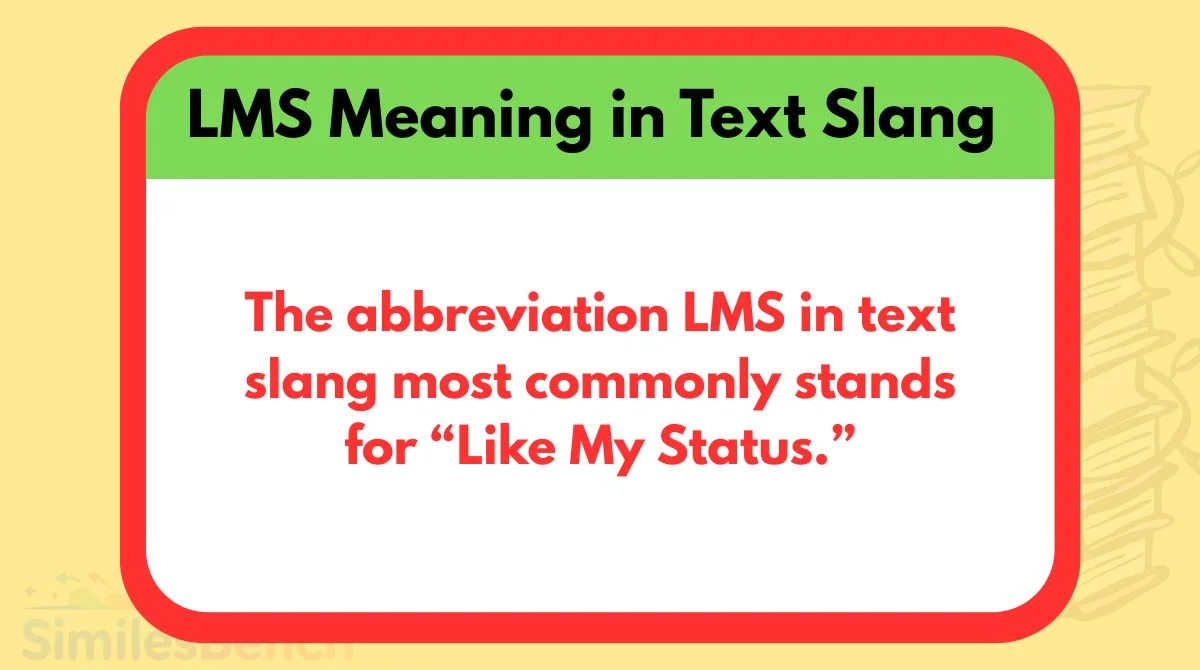
The abbreviation LMS in text slang most commonly stands for “Like My Status.” It is a phrase used mainly on social media platforms where users encourage others to interact with their posts. When someone writes “LMS if you agree” or “LMS for a compliment,” they are asking others to like their post or status update.
This type of phrase is typically used to increase engagement. People use it to invite reactions, responses, or participation from friends and followers. It is often part of interactive posts such as games, challenges, or questions. For example:
- “LMS and I’ll tell you what I think about you.”
- “LMS if you love weekends.”
- “LMS for a truth or dare question.”
In these cases, the abbreviation serves as a call-to-action. It encourages readers to respond quickly with a simple action — liking the post.
Although “Like My Status” is the most common meaning in text slang, LMS can also represent other phrases depending on the situation. For instance, in educational settings, LMS might refer to Learning Management System, which is completely different from its social media meaning.
Because of this, understanding the context is very important. If you see LMS in a casual social media conversation, it almost always refers to liking someone’s post. However, in professional or educational discussions, the meaning can change significantly.
Background & History
The use of abbreviations in online communication started gaining popularity in the early days of internet chat rooms and messaging platforms. As texting and social networking became more common, people began shortening phrases to type faster and save time. This trend eventually led to the creation of many text slang terms, including LMS.
The phrase “Like My Status” became popular during the rise of social networking sites, especially when platforms introduced features that allowed users to “like” posts. When users realized that asking for likes could increase interaction, they started adding phrases such as LMS to their posts.
In the early days of social media, interactive posts were very popular. People would write things like “LMS and I’ll rate your profile” or “LMS and I’ll tell you a secret.” These posts encouraged friends to participate and made online conversations more engaging.
Over time, the abbreviation spread widely across different platforms and became part of internet culture. Teenagers and young social media users played a major role in popularizing this slang because they frequently created interactive games or trends using short phrases like LMS.
Even though online language continues to evolve, LMS remains recognizable to many users. While it may not be used as heavily today as it once was, it still appears in certain communities and social media interactions where engagement and participation are encouraged.
Usage in Various Contexts
The phrase LMS can appear in many different situations depending on the user’s intention. One of the most common contexts is social media engagement posts. People write LMS when they want their friends or followers to like their posts and participate in a small activity.
For example, someone might post:
“LMS and I’ll send you a song that reminds me of you.”
In this case, liking the post becomes a way to join the activity. This kind of interactive content was especially common among younger social media users.
Another context is opinion sharing. People sometimes write something like “LMS if you agree.” This invites others to show agreement by liking the post rather than writing a comment. It makes participation quick and easy.
LMS can also appear in fun challenges or games. For instance:
- “LMS for a question.”
- “LMS and I’ll describe you in three words.”
These posts encourage social interaction and help users connect with friends online.
In rare cases, the abbreviation LMS may appear in private messages. However, it is more commonly used in public posts where many people can interact with the content.
The key idea behind LMS in these contexts is engagement. It helps users turn simple posts into interactive experiences where others can participate with minimal effort.
Common Misconceptions & Clarifications
Because abbreviations can have multiple meanings, people sometimes misunderstand what LMS stands for. One common misconception is assuming that LMS always refers to technology or education. While that meaning exists, it usually applies only in professional or academic discussions.
Another misunderstanding occurs when people think LMS is a demand or command. In most cases, it is simply a friendly invitation rather than a strict request. Users typically include it as part of a playful or engaging post rather than expecting everyone to follow it.
Some people also assume that using LMS is a way to gain popularity or attention online. While it can increase engagement, many users simply use it as part of social media games or conversations with friends.
Additionally, some individuals believe that LMS is outdated slang. While its popularity may have decreased compared to earlier social media trends, it still appears occasionally and remains recognizable to many users.
Understanding these clarifications helps prevent confusion and allows people to interpret the phrase correctly depending on where it appears.
Similar Terms & Alternatives
Many other text slang expressions serve a similar purpose to LMS. These phrases are used to encourage engagement or interaction on social media posts.
One common alternative is “Like for Like (L4L).” This phrase suggests that users will like each other’s posts in return. It focuses on mutual engagement.
Another similar expression is “Comment if you agree.” Instead of asking for likes, it invites people to participate through comments.
Some users also write phrases like “React if you agree” or “Tap like if this is true.” These phrases perform the same function as LMS but use more direct language.
There are also newer engagement strategies that replace older slang. For example, people might create polls, ask questions, or use interactive stickers in modern social media apps. These features allow engagement without relying on abbreviations like LMS.
Although alternatives exist, LMS remains one of the classic examples of text slang used to encourage quick participation online.
How to Respond to This Term
If someone uses LMS in a post, responding is usually very simple. Since the phrase typically means “Like My Status,” the expected response is to like the post.
However, sometimes the post includes an additional activity. For example, a person might say “LMS and I’ll send you a question.” In that case, liking the post signals that you want to participate in the activity.
Another way to respond is by leaving a comment if the post invites further interaction. Some users combine likes and comments to engage more actively with the content.
If you are unsure about the meaning of LMS in a particular post, reading the rest of the message usually clarifies the intention. The surrounding text often explains what the user wants people to do.
Overall, responding to LMS posts is meant to be easy and fun. The purpose is simply to create interaction among friends or followers.
Regional or Cultural Differences
Internet slang often spreads across countries and cultures, but the way it is used can vary slightly depending on the region. LMS is mostly associated with social media communities where interactive posts are common.
In some regions, younger users are more familiar with this abbreviation because they frequently participate in social media games and engagement posts. In other areas, the slang may be less common or replaced by newer expressions.
Cultural differences can also influence how people perceive such requests. Some communities see them as friendly invitations for interaction, while others may view them as unnecessary attempts to gain likes.
Despite these differences, the overall meaning of LMS remains consistent in most English-speaking online spaces.
Comparison with Similar Terms
LMS shares similarities with other internet abbreviations that encourage engagement. However, there are subtle differences in how they are used.
For example, L4L (Like for Like) implies a reciprocal action. Users expect that if they like someone’s post, the other person will return the favor. LMS, on the other hand, usually does not promise anything in return unless the post specifically mentions it.
Another similar phrase is “Tap Like.” This phrase directly asks users to press the like button without using abbreviations.
Compared with these alternatives, LMS is shorter and more casual. It reflects the quick and informal style of internet communication.
Usage in Online Communities & Dating Apps
In online communities, LMS can appear in posts that aim to build interaction among members. People sometimes use it to start conversations, play games, or simply encourage participation.
On dating apps, however, this slang is less common. Users on those platforms usually communicate more directly because the purpose is to build personal connections rather than run engagement posts.
When it does appear, it may be part of a playful profile statement such as “LMS if you like traveling.” This invites potential matches to interact with the profile.
Overall, LMS is far more common on social networking platforms than on dating services.
Hidden or Offensive Meanings
In most situations, LMS does not carry any hidden or offensive meaning. It is generally considered harmless and friendly internet slang.
However, the phrase can sometimes be used excessively to chase attention or engagement. Some users may find repetitive “LMS” posts annoying because they appear to focus only on collecting likes.
Aside from that, the abbreviation itself is not offensive and does not usually contain negative connotations.
Suitability for Professional Communication
LMS is considered informal internet slang, so it is not suitable for professional or formal communication. In workplace emails, academic writing, or official discussions, abbreviations like LMS should be avoided.
Professional communication requires clear and complete language to ensure everyone understands the message. Using casual slang can create confusion or appear unprofessional.
Therefore, LMS should mainly be used in friendly conversations, social media posts, or casual online interactions.
FAQs
1. What does LMS mean in text slang?
It usually means “Like My Status,” asking others to like a social media post.
2. Where is LMS most commonly used?
It is most common on social networking platforms where users share posts with friends.
3. Does LMS have other meanings?
Yes, in professional contexts it can also mean “Learning Management System.”
4. Is LMS still popular today?
Its popularity has declined somewhat, but it is still recognized in online slang.
5. Should I use LMS in professional messages?
No, it is considered informal and better suited for casual online conversations.
Conclusion
Understanding internet slang can make online communication easier and more enjoyable. The phrase LMS is a simple abbreviation that encourages engagement on social media by asking others to like a post. While it may appear small, it reflects a broader trend in digital communication where users prefer short and interactive expressions.
By learning its meaning, history, and contexts, users can better understand how this slang functions in online conversations. Whether used in fun social media games or casual posts, LMS remains a recognizable part of internet culture.