Feelings can be hard to explain, especially when they live inside our minds. That’s where similes help. Similes compare one thing to another using “like” or “as.” They turn confusing emotions into clear pictures.
In this article, you’ll learn simple, powerful mental health similes that students and writers can use in stories, poems, essays, or even songs. Let’s make feelings easier to understand—one comparison at a time.
What Is a Simile?
A simile compares two things using the words like or as.
It helps readers picture feelings or ideas more clearly.
Similes make writing more colorful and easier to understand.
Full List of Mental Health Similes (13)
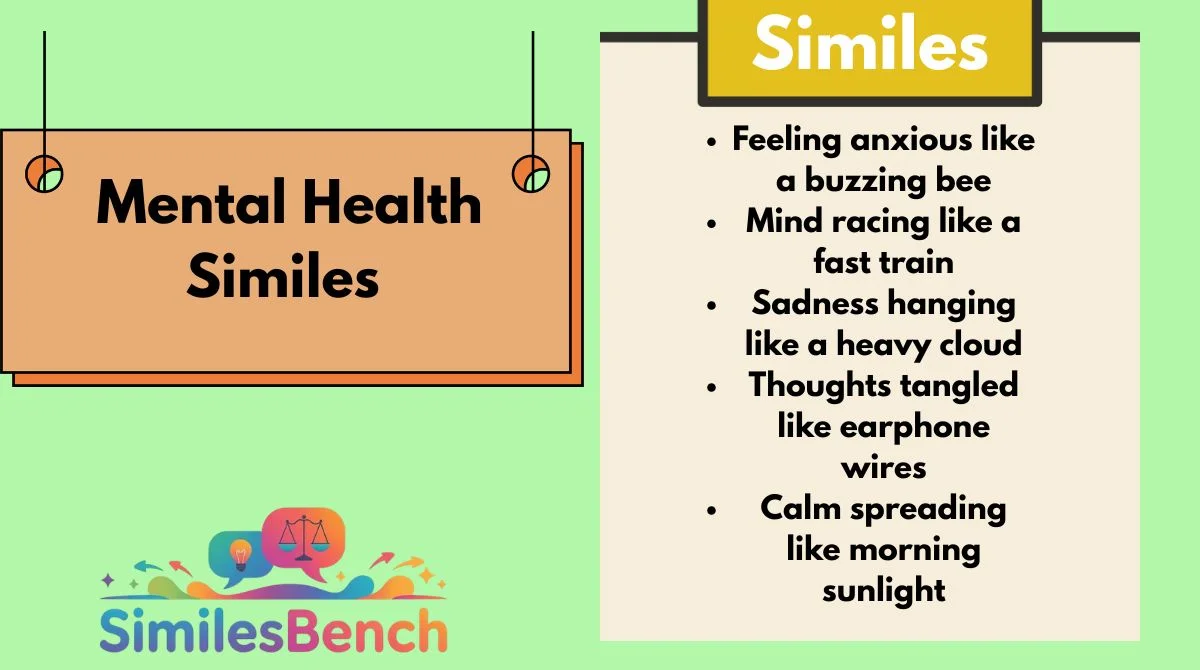
- Feeling anxious like a buzzing bee
- Mind racing like a fast train
- Sadness hanging like a heavy cloud
- Thoughts tangled like earphone wires
- Calm spreading like morning sunlight
- Stress piling up like dirty laundry
- Hope flickering like a candle
- Depression feeling like a deep hole
- Confidence growing like a young plant
- Fear clinging like a shadow
- Happiness bursting like fireworks
- Loneliness echoing like an empty room
- Peace settling like fresh snow
1. Feeling anxious like a buzzing bee
Meaning: Anxiety that won’t sit still.
Explanation: This simile shows nervous energy that keeps moving.
Examples:
- Before the exam, my thoughts buzzed like a bee trapped in a jar.
- She felt anxious like a buzzing bee while waiting for the phone to ring.
2. Mind racing like a fast train
Meaning: Thinking too quickly to relax.
Explanation: It compares fast thoughts to a speeding train.
Examples:
- At night, his mind raced like a fast train that missed every stop.
- My head felt loud, with ideas rushing like a train through a tunnel.
3. Sadness hanging like a heavy cloud
Meaning: Long-lasting sadness.
Explanation: This simile shows sadness that stays and blocks light.
Examples:
- After the bad news, sadness hung like a heavy cloud over her day.
- His room felt darker, as if a cloud of sadness followed him inside.
4. Thoughts tangled like earphone wires
Meaning: Confused or mixed-up thinking.
Explanation: It compares messy thoughts to knotted wires.
Examples:
- During the argument, her thoughts tangled like earphone wires in a pocket.
- I tried to focus, but my ideas stayed twisted and tight.
5. Calm spreading like morning sunlight
Meaning: Peace slowly filling the mind.
Explanation: This simile shows calm arriving gently.
Examples:
- After a deep breath, calm spread like morning sunlight in her chest.
- The quiet music helped peace move through him little by little.
6. Stress piling up like dirty laundry
Meaning: Small worries adding up.
Explanation: It shows how stress grows when ignored.
Examples:
- Homework, chores, and pressure piled up like dirty laundry.
- She felt lighter once she dealt with the stress she kept pushing aside.
7. Hope flickering like a candle
Meaning: Weak but still alive hope.
Explanation: This simile shows hope that can grow or fade.
Examples:
- Even on hard days, hope flickered like a candle in the dark.
- His smile returned when that small light refused to go out.
8. Depression feeling like a deep hole
Meaning: Feeling stuck and low.
Explanation: It compares depression to being trapped below ground.
Examples:
- Depression felt like a deep hole he struggled to climb out of.
- Some mornings, the world seemed far away and heavy.
9. Confidence growing like a young plant
Meaning: Confidence building slowly.
Explanation: It shows growth with care and time.
Examples:
- Her confidence grew like a young plant after kind words from her teacher.
- Each success added another leaf to his strength.
10. Fear clinging like a shadow
Meaning: Fear that follows everywhere.
Explanation: This simile shows fear that’s hard to escape.
Examples:
- Fear clung like a shadow during his walk home.
- Even in bright moments, doubt stayed close.
11. Happiness bursting like fireworks
Meaning: Sudden, strong joy.
Explanation: It compares happiness to bright explosions.
Examples:
- When she saw her best friend, happiness burst like fireworks inside her.
- The good news lit up his whole face.
12. Loneliness echoing like an empty room
Meaning: Feeling alone and unheard.
Explanation: It shows loneliness as a hollow space.
Examples:
- After school, loneliness echoed like an empty room.
- No messages made the silence feel louder.
13. Peace settling like fresh snow
Meaning: Quiet, gentle peace.
Explanation: This simile shows calm covering everything softly.
Examples:
- After talking things out, peace settled like fresh snow.
- Her mind finally felt still and clean.
Creative Writing Tips
Similes are tools, not decorations. Use them to show, not just tell.
In stories:
Use similes to reveal how a character feels inside without saying it directly. One strong simile can replace a long explanation.
In poems:
Choose images from nature or daily life. Simple pictures often feel more powerful than fancy words.
In essays:
A careful simile can make your opinion clearer and more memorable. Don’t overuse them—one or two is enough.
In songs:
Similes help emotions connect with listeners. Think about sounds, light, and movement.
Helpful tips:
- Keep similes relatable.
- Match the simile to the mood.
- Read your sentence aloud. If it feels natural, it works.
FAQs
What are mental health similes?
Mental health similes compare feelings or thoughts to everyday things. They help explain emotions clearly and gently.
Why are similes useful for students?
Similes make writing more interesting and help students explain feelings they can’t easily name.
Can similes help with emotional expression?
Yes. Similes turn emotions into pictures, making them easier to share and understand.
Are similes good for essays?
Absolutely. When used carefully, similes make essays clearer and more engaging.
How many similes should I use in writing?
Use a few strong similes instead of many weak ones. Quality matters more than quantity.
Conclusion
Similes give feelings a voice. They help students, writers, and everyday people explain what’s happening inside their minds. Mental health similes turn invisible emotions into clear images that others can understand.
By using them thoughtfully, you can write with more honesty, warmth, and power. Keep practicing, stay curious, and let your words care for feelings—yours and others’.