In today’s fast-moving digital world, slang evolves quickly, and one term that has gained massive popularity is “meta.” You’ve probably seen it used in memes, gaming, social media, or even casual conversations. But what does it actually mean in slang, and why do people use it so often?
The term “meta” has become a versatile expression, often used to describe something self-aware, strategic, or trending within a specific context. People search for its meaning because it can be confusing—its interpretation depends heavily on where and how it’s used. From gaming strategies to ironic humor, “meta” carries layered meanings that go beyond its original definition.
Understanding this term can help you stay relevant in online conversations, avoid misunderstandings, and even use it cleverly yourself. Let’s break it down in a clear, structured way so you can fully grasp its meaning and usage.
Definition & Meaning
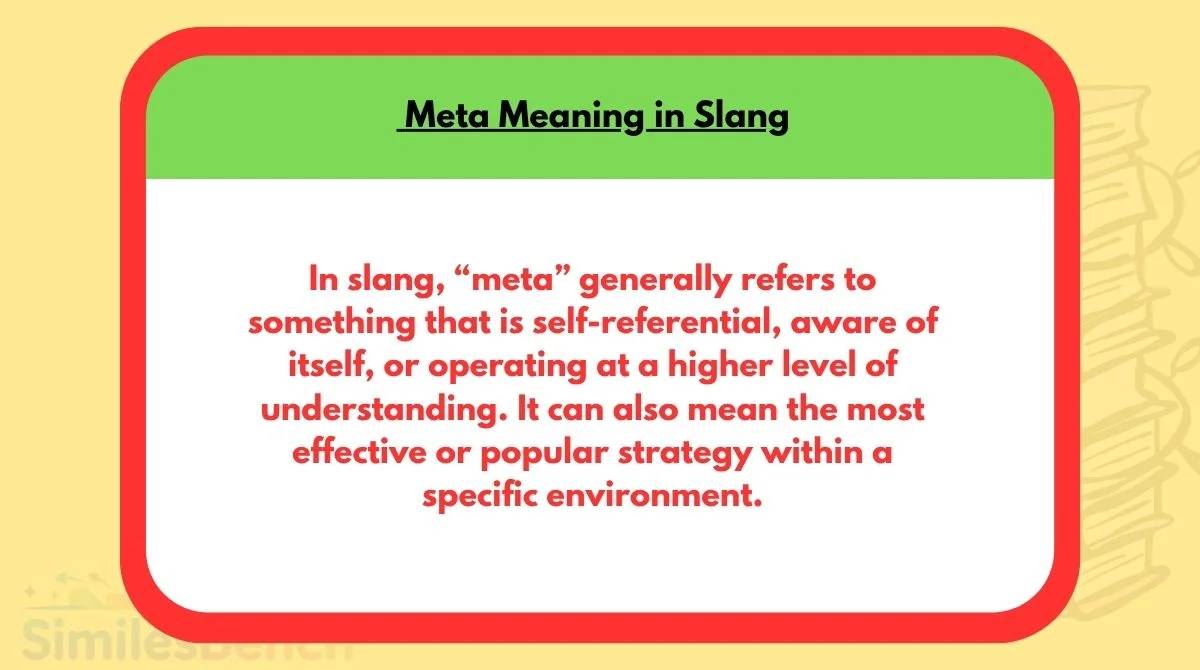
In slang, “meta” generally refers to something that is self-referential, aware of itself, or operating at a higher level of understanding. It can also mean the most effective or popular strategy within a specific environment.
For example:
- In gaming, “meta” means the best tactics currently used by players.
- In social media, it can describe content that is aware of trends or even makes fun of them.
At its core, “meta” is about stepping outside the usual perspective and looking at something from a broader or more strategic viewpoint.
Background & History
The word “meta” originates from Greek, meaning “beyond” or “after.” Over time, it entered academic and philosophical discussions, where it described thinking about thinking (like “metacognition”).
Its modern slang usage grew largely from:
- Gaming communities
- Internet forums
- Meme culture
As online culture expanded, people started using “meta” casually to describe trends, strategies, or humor that refers to itself.
Usage in Various Contexts
“Meta” can mean different things depending on the context:
Gaming:
Refers to the most effective tactics available (often called “the meta”).
Social Media:
Used to describe content that references trends or mocks them.
Movies & TV:
Describes scenes where characters are aware they’re in a story.
Daily Conversation:
People may use it humorously to describe something self-aware or ironic.
Common Misconceptions & Clarifications
Many people misunderstand “meta” as simply meaning “trendy” or “popular.” While it can include those meanings, it’s more nuanced.
Clarifications:
- It doesn’t always mean “best”—it depends on context.
- It’s not limited to gaming.
- It doesn’t always involve humor, though it often does online.
Similar Terms & Alternatives
Some related slang or expressions include:
- Self-aware
- Ironic
- Strategic
- Trend-based
- Fourth-wall breaking
While these overlap, none fully replace “meta,” as it combines multiple ideas into one concept.
How to Respond to This Term
If someone uses “meta” in conversation, your response depends on context:
- In gaming: Acknowledge the strategy or discuss alternatives.
- In jokes: Play along with the self-awareness.
- In casual chat: Ask for clarification if unsure.
A simple response could be:
“That’s pretty meta,” or “Yeah, that makes sense in this meta.”
Regional or Cultural Differences
“Meta” is mostly used in global online communities rather than tied to a specific region. However:
- Western internet culture uses it widely in memes and humor.
- Gaming communities worldwide use it consistently.
- In some regions, it may still sound technical or unfamiliar.
Comparison with Similar Terms
“Meta” differs from other slang in important ways:
- Vs. Trendy: Meta involves awareness, not just popularity.
- Vs. Ironic: Meta can include irony but isn’t limited to it.
- Vs. Strategic: Meta includes strategy but also cultural context.
This makes it a flexible and layered term.
Usage in Online Communities & Dating Apps
In online spaces, “meta” is often used humorously or strategically:
- Memes: Jokes about jokes (meta humor).
- Gaming Forums: Discussions about current best strategies.
- Dating Apps: Sometimes used to describe self-aware bios or prompts.
Example:
“This profile is so meta” (meaning it’s aware of typical dating clichés).
Hidden or Offensive Meanings
Generally, “meta” is not offensive. However, tone matters.
- It can sound dismissive if used sarcastically.
- In some contexts, it may imply overthinking or trying too hard.
Still, it is usually safe and neutral.
Suitability for Professional Communication
“Meta” is not ideal for formal or professional settings unless used correctly.
- Acceptable in tech, gaming, or creative industries
- Avoid in formal writing or business communication
- Use clearer terms like “strategy” or “self-referential” instead
FAQs
What does meta mean in simple words?
It means being self-aware or referring to itself.
Is meta only used in gaming?
No, it’s used in social media, memes, and everyday conversations.
Does meta mean something is popular?
Not exactly; it means it’s strategically or culturally relevant.
Is meta a positive or negative term?
It’s usually neutral and depends on context.
Can I use meta in daily conversation?
Yes, especially in casual or online discussions.
Is meta slang or a real word?
It’s both—a real word adapted into modern slang.
Conclusion
“Meta” is a powerful and flexible slang term that reflects how people think, communicate, and engage with content in the digital age.
Whether it’s describing top gaming strategies, self-aware humor, or cultural trends, the term adds depth and nuance to conversations. By understanding its meaning and context, you can use it more effectively and confidently in both online and everyday interactions.