Similes help us explain feelings that are hard to put into plain words. Nervo usness is one of those feelings. We all feel it before a test, a speech, or a big moment.
In this article, you’ll learn easy, creative similes that describe nervous feelings in a clear and natural way. Whether you’re a student or a writer, these examples will help your words feel more alive and real.
What Is a Simile?
A simile compares two things using “like” or “as.”
It helps readers picture a feeling or idea more clearly.
Similes make writing more colorful and easier to understand.
Full List of Nervous Similes
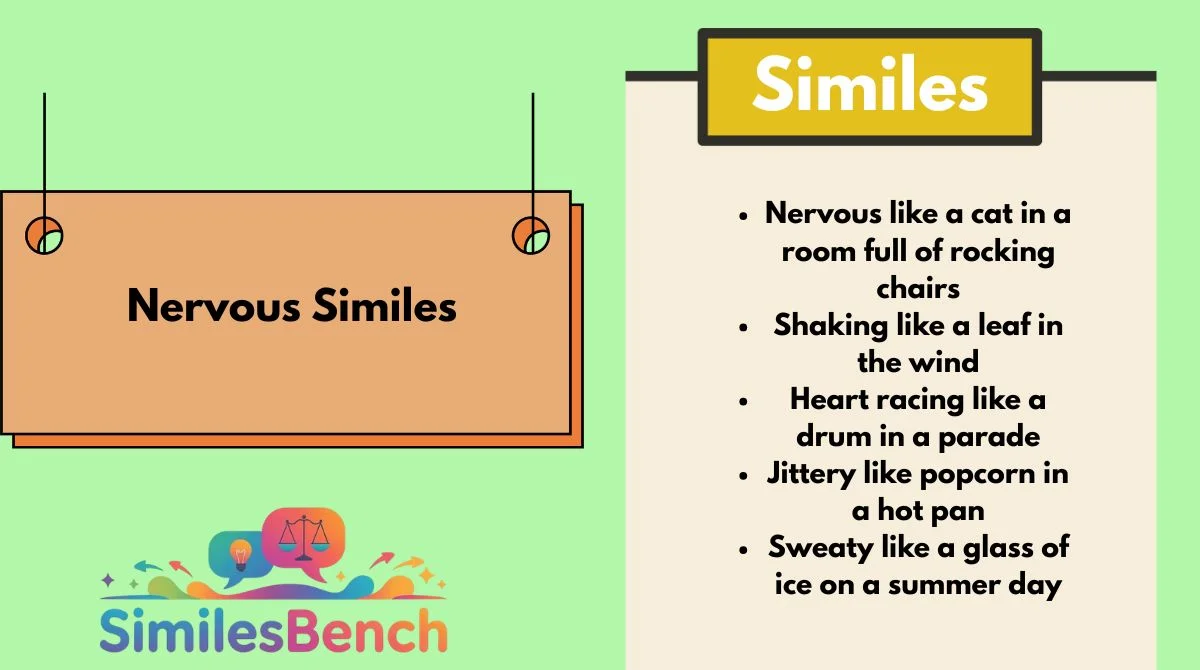
- Nervous like a cat in a room full of rocking chairs
- Shaking like a leaf in the wind
- Heart racing like a drum in a parade
- Jittery like popcorn in a hot pan
- Sweaty like a glass of ice on a summer day
- Tight as a knot in a rope
- Jumping like a startled rabbit
- Breathing fast like a runner at the finish line
- Hands cold like winter air
- Mind buzzing like a beehive
- Fidgety like a kid waiting for recess
- Quiet as a mouse before a storm
- Stiff like a board
- Thoughts spinning like a merry-go-round
- Wobbly like jelly on a plate
- Wide-eyed like a deer in headlights
- Tense as a stretched rubber band
- Pacing like a caged tiger
- Stomach flipping like a coin in the air
1. Nervous like a cat in a room full of rocking chairs
Meaning: Feeling alert and uneasy
This simile shows fear mixed with careful watching.
She sat there, nervous like a cat in a room full of rocking chairs.
He kept checking the door, nervous like a cat in a room full of rocking chairs.
2. Shaking like a leaf in the wind
Meaning: Physically trembling from fear
It paints a clear picture of weak, shaky nerves.
Before her turn to speak, she was shaking like a leaf in the wind.
His hands moved, shaking like a leaf in the wind.
3. Heart racing like a drum in a parade
Meaning: Fast heartbeat from anxiety
This simile adds sound and movement to the feeling.
My heart was racing like a drum in a parade before the test.
She felt her chest pound, heart racing like a drum in a parade.
4. Jittery like popcorn in a hot pan
Meaning: Unable to stay still
It shows nervous energy bouncing around.
He was jittery like popcorn in a hot pan while waiting.
She tapped her feet, jittery like popcorn in a hot pan.
5. Sweaty like a glass of ice on a summer day
Meaning: Sweating due to nerves
This simile feels familiar and real.
His palms were sweaty like a glass of ice on a summer day.
She wiped her hands, sweaty like a glass of ice on a summer day.
6. Tight as a knot in a rope
Meaning: Feeling tense
It suggests pressure and stress building up.
My chest felt tight as a knot in a rope.
He spoke softly, tight as a knot in a rope.
7. Jumping like a startled rabbit
Meaning: Easily scared
This simile shows sudden nervous reactions.
She jumped like a startled rabbit when her name was called.
He reacted fast, jumping like a startled rabbit.
8. Breathing fast like a runner at the finish line
Meaning: Short, quick breaths
It connects nerves to physical effort.
She was breathing fast like a runner at the finish line.
His chest rose and fell, breathing fast like a runner at the finish line.
9. Hands cold like winter air
Meaning: Loss of warmth from fear
Cold hands often come with anxiety.
My hands felt cold like winter air.
She rubbed her fingers, hands cold like winter air.
10. Mind buzzing like a beehive
Meaning: Overthinking
This simile shows thoughts rushing around.
His mind was buzzing like a beehive before the interview.
She couldn’t focus, mind buzzing like a beehive.
11. Fidgety like a kid waiting for recess
Meaning: Restless and uneasy
It feels playful but true.
He was fidgety like a kid waiting for recess.
She shifted in her seat, fidgety like a kid waiting for recess.
12. Quiet as a mouse before a storm
Meaning: Silent due to fear
It shows nervous stillness.
She grew quiet as a mouse before a storm
The room felt tense, quiet as a mouse before a storm.
13. Stiff like a board
Meaning: Body frozen with nerves
This simile shows fear stopping movement.
He stood stiff like a board during the speech.
Her shoulders locked, stiff like a board.
14. Thoughts spinning like a merry-go-round
Meaning: Confused thinking
It shows mental overload.
Her thoughts were spinning like a merry-go-round.
He paused, thoughts spinning like a merry-go-round.
15. Wobbly like jelly on a plate
Meaning: Weak legs
This simile shows shaky balance.
My knees felt wobbly like jelly on a plate.
She stood up, wobbly like jelly on a plate.
16. Wide-eyed like a deer in headlights
Meaning: Shocked and nervous
It shows surprise and fear together.
He froze, wide-eyed like a deer in headlights.
She stared ahead, wide-eyed like a deer in headlights.
17. Tense as a stretched rubber band
Meaning: Ready to snap
It shows strong inner pressure.
The room felt tense as a stretched rubber band.
He waited, tense as a stretched rubber band.
18. Pacing like a caged tiger
Meaning: Nervous movement
This simile adds energy and strength.
She paced the hall, pacing like a caged tiger.
He couldn’t sit still, pacing like a caged tiger.
19. Stomach flipping like a coin in the air
Meaning: Feeling sick with nerves
It shows uncertainty and fear.
My stomach was flipping like a coin in the air.
She swallowed hard, stomach flipping like a coin in the air.
Creative Writing Tips
Similes work best when they feel natural. In stories, use them to show emotions instead of naming them. In poems, choose similes that match the mood. Essays can use simple similes to explain feelings clearly. Songs often use short, strong similes that stick in the listener’s mind. Always think about your reader. Ask yourself if the simile helps them feel what the character feels.
FAQs
What are nervous similes?
Nervous similes compare feelings of anxiety to familiar things. They help readers understand emotions better.
Why should students use similes?
Similes make writing clearer and more interesting. They help ideas stand out.
Can similes be used in essays?
Yes. Simple similes can explain feelings or ideas in a clear way.
How do I make my own similes?
Think about the feeling, then compare it to something people know well.
Are similes good for creative writing?
They are great tools for stories, poems, and songs because they add emotion and detail.
Conclusion
Similes give writers a powerful way to explain nervous feelings without sounding dull. They help readers see, feel, and understand emotions better. By using these nervous similes, your writing can become more expressive and confident. Keep practicing, try new comparisons, and let your words show how feelings really feel.