In today’s fast-paced digital world, new slang terms emerge constantly, often leaving people confused about their meanings. One such term gaining popularity across social media, gaming, and online conversations is “NPC.” Many people search for this term because they encounter it in memes, comments, or even directed at them, and they want to understand whether it’s harmless, humorous, or offensive.
“NPC” stands for “Non-Playable Character,” but its slang usage has evolved far beyond gaming. It’s now used to describe behavior, personality, or even opinions in a way that can be playful—or sometimes critical. Understanding this term helps you navigate online interactions more effectively and avoid misunderstandings.
This article breaks down the meaning of NPC in slang, its origins, how it’s used today, and whether you should take it seriously. By the end, you’ll have a clear understanding of what it means and how to respond when you encounter it.
Definition & Meaning
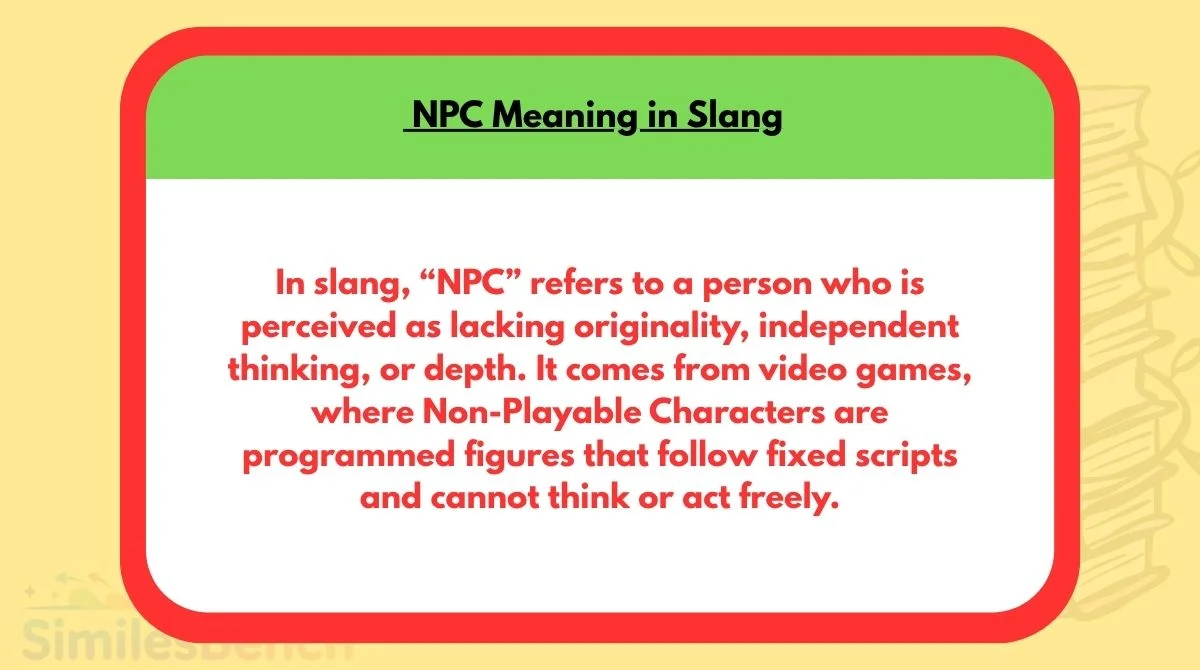
In slang, “NPC” refers to a person who is perceived as lacking originality, independent thinking, or depth. It comes from video games, where Non-Playable Characters are programmed figures that follow fixed scripts and cannot think or act freely.
When used in everyday conversation, calling someone an “NPC” suggests they are behaving predictably or repeating common ideas without critical thought. For example, someone might use the term to describe people who blindly follow trends, repeat popular opinions, or act without questioning things.
However, the meaning can vary depending on tone and context. In some cases, it’s used jokingly among friends to tease someone for being repetitive or overly routine. In other cases, it can carry a negative implication, suggesting someone lacks individuality or awareness.
It’s important to note that slang often evolves quickly, and meanings can shift based on how communities use it. While “NPC” started as a gaming term, it has now become a broader cultural label applied to behavior rather than identity.
Overall, the slang meaning of NPC revolves around the idea of someone acting like they’re “on autopilot” rather than actively thinking or engaging with the world around them.
Background & History
The term “NPC” originates from video games, where it has been used for decades. In gaming, NPCs are characters controlled by the game’s programming rather than the player. These characters typically follow repetitive scripts, offer quests, or provide background interaction in the game world.
The transition from gaming terminology to internet slang began in online communities and forums. Gamers started using “NPC” metaphorically to describe people who seemed predictable or robotic in their behavior. Over time, the term spread beyond gaming circles into mainstream social media platforms like TikTok, Twitter, and Reddit.
Around the late 2010s, “NPC” became more widely recognized due to memes and viral discussions. These memes often depicted people as expressionless or repeating scripted phrases, reinforcing the idea that they lacked independent thought.
As the internet culture evolved, the term became more nuanced. While initially tied closely to gaming culture, it now applies to a wide range of situations, from politics to everyday social interactions.
Today, “NPC” is part of a larger trend where gaming language influences everyday communication. Just like terms such as “level up” or “spawn,” NPC has crossed over into general slang, reflecting how digital culture shapes the way people describe real-world behavior.
Usage in Various Contexts
The slang term “NPC” is used in a variety of contexts, depending on the platform and intent of the speaker. One of the most common places you’ll see it is on social media, where users comment on videos or posts by labeling someone as an NPC if they seem repetitive or overly predictable.
In gaming communities, the term is often used humorously. Players might call each other NPCs when someone repeats the same actions or phrases, mimicking the behavior of in-game characters. This usage is typically lighthearted and not meant to offend.
In everyday conversations, especially online, the term can take on a more critical tone. For example, someone might describe people who follow trends without questioning them as NPCs. This usage can imply a lack of independent thinking, making it more controversial.
The term also appears in meme culture, where exaggerated portrayals of NPC behavior—such as repeating the same dialogue—are used for comedic effect. These memes often highlight the absurdity of routine or predictable behavior.
Additionally, NPC is sometimes used in discussions about society, where individuals are described as acting “programmed” by social norms or media influence. This usage tends to be more philosophical or critical.
Overall, the meaning of NPC depends heavily on context. It can range from playful teasing to serious critique, making it important to understand how and where it’s being used.
Common Misconceptions & Clarifications
One major misconception about the term “NPC” is that it always implies stupidity or lack of intelligence. In reality, the term is more about behavior than intellect. Someone might be called an NPC not because they are unintelligent, but because they appear to follow routines or repeat common ideas without much variation.
Another misunderstanding is that the term is always meant as an insult. While it can be offensive in certain contexts, it is often used jokingly among friends. Tone plays a significant role in determining whether the term is playful or critical.
Some people also believe that being labeled an NPC means having no personality at all. This is not entirely accurate. The slang typically refers to specific actions or moments rather than a person’s entire identity.
There’s also confusion about whether the term applies only to online behavior. In reality, it can be used to describe both online and offline actions, especially when someone appears to be acting mechanically or predictably.
Clarifying these misconceptions helps prevent overreaction or misunderstanding. Like many slang terms, “NPC” is flexible and depends on context, tone, and intent.
Similar Terms & Alternatives
Several slang terms share similarities with “NPC,” each with its own nuance. One common alternative is “sheeple,” which refers to people who follow others blindly. While similar, “sheeple” carries a stronger negative connotation and is often used in more serious or critical contexts.
Another related term is “basic,” which describes someone who follows popular trends without much individuality. Unlike NPC, “basic” is often used in a lighter, more social context, especially in discussions about fashion or lifestyle.
“Bot” is also frequently used as a synonym. It suggests someone is acting automatically or without genuine thought, similar to how NPC implies scripted behavior. However, “bot” can sometimes imply artificial or fake activity rather than human behavior.
Additionally, phrases like “on autopilot” or “going through the motions” capture similar ideas in a more neutral tone. These expressions focus on behavior without the potentially negative edge of slang.
Understanding these alternatives helps you choose the right term depending on the situation and the level of formality required.
How to Respond to This Term
If someone calls you an “NPC,” your response should depend on the context and tone. If it’s used jokingly among friends, you can respond playfully or ignore it altogether. Humor often works well in such situations.
If the term is used critically or offensively, it’s important not to react impulsively. Instead, consider whether the comment has any constructive meaning or if it’s simply meant to provoke. In many cases, ignoring the remark is the best approach.
You can also choose to respond calmly by asking for clarification. This can shift the conversation from confrontation to understanding.
Another option is to reflect on the situation. If the comment points to repetitive behavior, it might be an opportunity for self-awareness and growth.
Ultimately, how you respond depends on your comfort level and the intent behind the comment. Staying composed and thoughtful is always the best strategy.
Regional or Cultural Differences
The use of “NPC” as slang varies across regions and cultures. In Western online communities, especially in the United States and Europe, the term is widely recognized and frequently used in memes and discussions.
In regions like South Asia, including Pakistan, the term is becoming more popular due to the influence of global social media platforms. However, not everyone may fully understand its meaning, leading to occasional confusion.
Cultural context also affects how the term is perceived. In some cultures, calling someone an NPC might be seen as harmless teasing, while in others, it could be considered disrespectful.
Language barriers can also influence interpretation. Since “NPC” is derived from English gaming terminology, its meaning may not translate directly into other languages, requiring explanation.
Overall, while the term is globally გავრცელ, its usage and impact can differ depending on cultural norms and familiarity with internet slang.
Comparison with Similar Terms
When compared to similar slang, “NPC” stands out because it emphasizes scripted behavior rather than just conformity. For example, “sheeple” focuses on blind following, while “basic” highlights lack of uniqueness.
“NPC,” on the other hand, suggests a more passive role—someone who is not actively shaping their actions or thoughts. This makes it more closely related to the idea of being programmed or predictable.
Compared to “bot,” NPC is more human-focused, while “bot” can imply automation or artificial activity.
These distinctions are subtle but important. They show how different slang terms capture different aspects of behavior, even when they seem similar on the surface.
Usage in Online Communities & Dating Apps
In online communities, “NPC” is often used in comments, memes, and discussions to describe behavior that appears repetitive or unoriginal. It’s particularly common on platforms like TikTok, Reddit, and Twitter.
On dating apps, the term can be used to describe profiles that seem generic or lacking personality. For example, someone might call a profile “NPC-like” if it uses clichés or doesn’t stand out.
However, using this term in dating contexts can be risky, as it may come across as judgmental or dismissive. It’s generally better to use more constructive language when interacting with others in personal settings.
Despite this, the term continues to grow in popularity, reflecting how digital culture influences even personal relationships.
Hidden or Offensive Meanings
While “NPC” can be harmless, it can also carry offensive implications depending on how it’s used. In some cases, it may be used to dismiss someone’s opinions or reduce their individuality.
This can make the term feel dehumanizing, as it compares a person to a programmed character without agency.
Because of this, it’s important to use the term carefully and be aware of how it might affect others. What seems like a joke to one person may feel insulting to another.
Understanding this hidden layer of meaning helps ensure respectful communication.
Suitability for Professional Communication
“NPC” is generally not suitable for professional or formal communication. It is informal slang and can be misunderstood or perceived as disrespectful in workplace or academic settings.
In professional environments, it’s better to use clear and respectful language to describe behavior or concerns. Terms like “predictable,” “routine,” or “lacking initiative” are more appropriate and less likely to cause offense.
Using slang like NPC in formal contexts can harm credibility and create unnecessary tension.
FAQs
What does NPC mean in slang?
It refers to someone acting predictable or lacking independent thought.
Is calling someone an NPC offensive?
It can be, depending on tone and context.
Where did the term NPC come from?
It originated from video games meaning Non-Playable Character.
Is NPC used only online?
No, it can be used both online and in real-life conversations.
Can NPC be used as a joke?
Yes, among friends it’s often used humorously.
Should I use NPC in professional settings?
No, it’s informal and not appropriate for professional use.
Conclusion
The slang term “NPC” has evolved from gaming into a widely used expression that reflects modern digital culture. While it can be humorous and insightful, it also carries the potential to offend if used carelessly. Understanding its meaning, context, and implications allows you to use it appropriately and respond wisely when you encounter it. Like many slang terms, its impact depends on how and where it is used.