Language evolves constantly, especially in informal and online spaces where slang terms emerge and spread rapidly. One such term that often sparks curiosity is “pegging.” Many people search for its meaning because they encounter it in conversations, social media, or modern dating discussions but may not fully understand its context. While it belongs to adult vocabulary, it’s still important to explain it in a clear, respectful, and informative way.
Understanding slang like this helps improve communication, avoid misunderstandings, and navigate conversations more confidently—whether online or offline. This article provides a structured and easy-to-understand explanation, covering its definition, origin, usage, and cultural nuances. The goal is to inform without being explicit, ensuring clarity while maintaining a professional tone.
Definition & Meaning
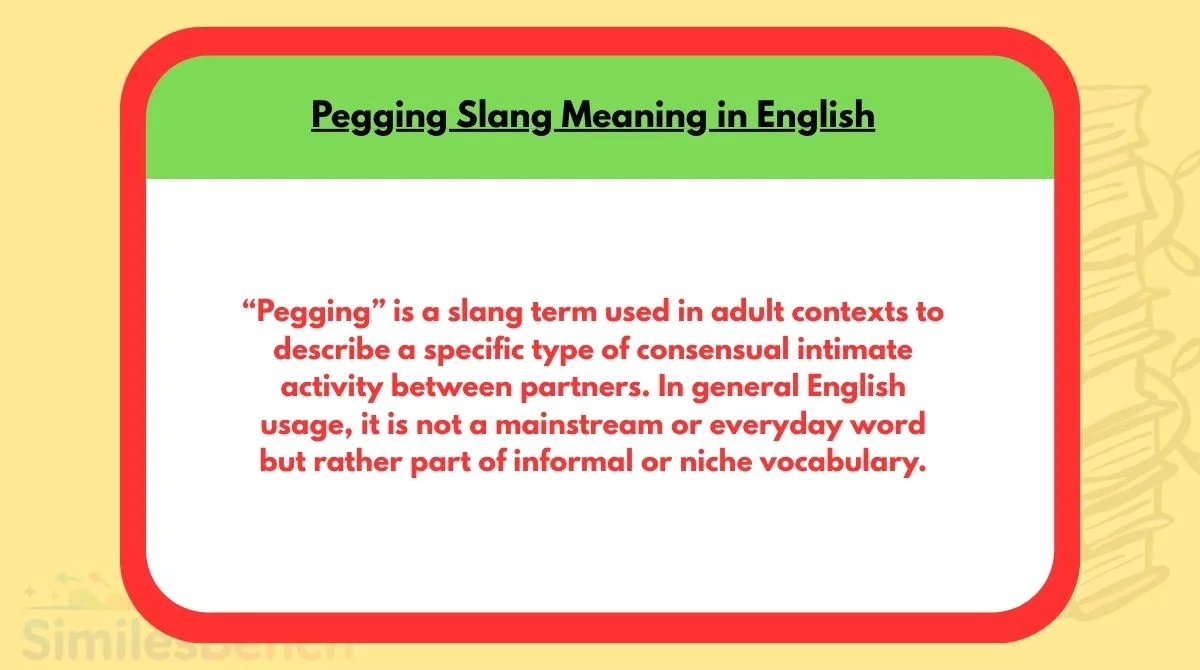
“Pegging” is a slang term used in adult contexts to describe a specific type of consensual intimate activity between partners. In general English usage, it is not a mainstream or everyday word but rather part of informal or niche vocabulary.
Outside of its adult meaning, the word “peg” in standard English can mean to fix something in place, score points, or categorize something. However, the slang meaning is entirely different and context-dependent.
Because of its sensitive nature, the term is typically used in private conversations, certain online communities, or discussions about relationships and personal preferences. It’s not appropriate for general or professional communication.
Background & History
The slang meaning of “pegging” became more widely recognized in the early 2000s. It gained popularity after being introduced in a media discussion where people were invited to suggest a term for a previously unnamed concept. Over time, the term spread through internet forums, blogs, and pop culture references.
As digital communication expanded, the word became more commonly recognized, especially among younger audiences and those active on social media platforms. Despite this, it remains a niche term rather than a universally understood one.
Its rise reflects how language adapts to cultural openness around discussing relationships and personal preferences, even though such discussions are still considered private in many societies.
Usage in Various Contexts
The term is primarily used in informal and adult-oriented contexts. You might encounter it in:
- Online forums discussing relationships
- Social media posts or memes
- Dating app conversations
- Adult education discussions
It is rarely used in formal writing or everyday conversation. When it does appear, the tone is usually casual, humorous, or exploratory.
Understanding context is essential because the meaning can be misunderstood or seem inappropriate if used incorrectly.
Common Misconceptions & Clarifications
Many people misunderstand the term due to lack of context or exposure. Some common misconceptions include:
- It’s widely used in everyday language: In reality, it is quite niche.
- It has multiple general meanings: The slang meaning is specific, though the base word “peg” has unrelated meanings.
- It’s always offensive: It’s not inherently offensive but can be inappropriate depending on the setting.
Clarifying these points helps reduce confusion and prevents awkward situations.
Similar Terms & Alternatives
There are no exact synonyms for this slang term, but it belongs to a broader category of relationship and intimacy-related language.
In more general discussions, people may use neutral phrases like:
- “Role reversal in relationships”
- “Alternative relationship preferences”
These alternatives are often used in educational or professional contexts to maintain a respectful tone.
How to Respond to This Term
If someone uses this term in conversation, your response depends on the setting:
- Casual setting: You can ask for clarification if unsure
- Professional setting: It’s best to avoid engaging with the topic
- Online discussions: Respond politely or ignore if uncomfortable
Maintaining respect and boundaries is key when dealing with sensitive language.
Regional or Cultural Differences
The understanding and acceptance of such slang vary widely across cultures.
- In more open societies, it may be discussed more freely
- In conservative regions, it may be considered taboo or inappropriate
- In multilingual contexts, the term may not have a direct translation
Cultural awareness is important when interpreting or using such terms.
Comparison with Similar Terms
Compared to other relationship-related slang, this term is:
- More specific in meaning
- Less commonly used
- More likely to appear in niche discussions
Unlike general dating slang, it carries a more private and sensitive connotation.
Usage in Online Communities & Dating Apps
On online platforms, the term may appear in:
- User bios or preferences
- Relationship discussions
- Humor or meme culture
However, not all users are familiar with it, so misinterpretation is common. Clear communication is always recommended when discussing personal topics online.
Hidden or Offensive Meanings
While the term itself is not inherently offensive, it can become inappropriate if:
- Used without context
- Directed at someone disrespectfully
- Introduced in formal or public discussions
Tone and intent play a major role in how it is perceived.
Suitability for Professional Communication
This term is not suitable for professional or workplace communication. It falls under informal and adult slang, making it inappropriate for:
- Business emails
- Academic writing
- Workplace conversations
Using neutral and respectful language is always preferred in professional environments.
FAQs
What does the term mean in simple words?
It refers to a specific adult relationship concept used in informal contexts.
Is it appropriate to use in daily conversation?
No, it’s best kept for private or informal discussions.
Why do people search for this term?
Mostly out of curiosity after seeing it online or in conversations.
Is it offensive?
Not inherently, but it can be inappropriate depending on context.
Can it be used professionally?
No, it’s not suitable for formal communication.
Does it have different meanings in other cultures?
Its recognition and acceptance vary, and it may not be widely understood everywhere.
Conclusion
Understanding slang like this helps you stay informed and avoid confusion in modern communication. While the term has a specific and sensitive meaning, its usage is limited to informal and adult contexts. Being aware of when and where such language is appropriate ensures respectful and effective interaction. Always consider your audience and setting before using or responding to unfamiliar slang.