Pain is hard to explain. Sometimes, plain words are not enough. That is where similes help. They compare pain to something familiar, making feelings easier to understand and imagine.
Students, storytellers, poets, and songwriters all use similes to show pain in a clear and emotional way. In this guide, you will learn simple similes for pain and how to use them naturally in your writing.
What Is a Simile?
A simile compares two things using “like” or “as.”
It helps readers picture feelings, actions, or ideas more clearly.
Writers use similes to make sentences more colorful and alive.
Full List of Similes for Pain
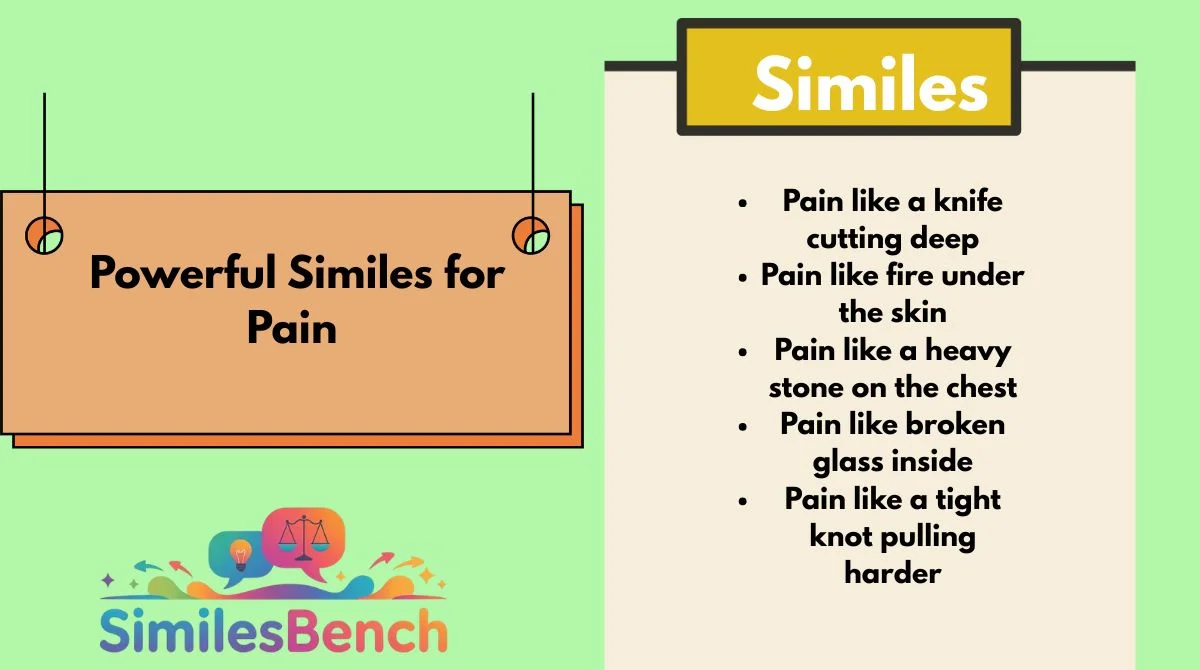
- Pain like a knife cutting deep
- Pain like fire under the skin
- Pain like a heavy stone on the chest
- Pain like broken glass inside
- Pain like a tight knot pulling harder
- Pain like ice freezing the bones
- Pain like thunder crashing suddenly
- Pain like a burning sun on bare skin
- Pain like a sharp thorn in the foot
- Pain like waves smashing the shore
- Pain like a drum beating nonstop
- Pain like salt on an open wound
- Pain like a cracked bell ringing
- Pain like a storm trapped inside
- Pain like a needle piercing slowly
- Pain like chains pulling downward
- Pain like a dark cloud pressing low
- Pain like hot metal on skin
- Pain like teeth grinding together
- Pain like a scream stuck inside
1. Pain like a knife cutting deep
Meaning: Very sharp and sudden pain
Explanation: This simile shows pain that strikes fast and hard.
Example:
The pain hit her like a knife cutting deep, stealing her breath.
He winced as the memory came back, sharp and cruel.
2. Pain like fire under the skin
Meaning: Burning pain
Explanation: Used for pain that feels hot and spreading.
Example:
After the fall, pain like fire under the skin spread through his arm.
Her fever made every touch feel unbearable.
3. Pain like a heavy stone on the chest
Meaning: Crushing emotional or physical pain
Explanation: Often used for sadness or pressure.
Example:
Grief sat on him like a heavy stone on the chest.
She struggled to breathe under the weight of worry.
4. Pain like broken glass inside
Meaning: Jagged and harsh pain
Explanation: Shows pain that hurts from every movement.
Example:
Every step felt like broken glass inside her leg.
His words left sharp pieces in her heart.
5. Pain like a tight knot pulling harder
Meaning: Pain that grows stronger
Explanation: Often used for stress or stomach pain.
Example:
Fear twisted inside him like a tight knot pulling harder.
The cramps worsened as the night went on.
6. Pain like ice freezing the bones
Meaning: Cold, numbing pain
Explanation: Used for deep or chilling pain.
Example:
The winter wind brought pain like ice freezing the bones.
Shock left her stiff and silent.
7. Pain like thunder crashing suddenly
Meaning: Sudden and loud pain
Explanation: Shows pain that arrives without warning.
Example:
The headache came like thunder crashing suddenly.
One wrong move sent pain through his back.
8. Pain like a burning sun on bare skin
Meaning: Strong, steady pain
Explanation: Often used for sunburn or long-lasting pain.
Example:
The rash burned like a blazing sun.
Embarrassment stung her face all day.
9. Pain like a sharp thorn in the foot
Meaning: Small but constant pain
Explanation: Shows pain that will not go away.
Example:
His guilt stayed like a sharp thorn in the foot.
The splinter bothered her all afternoon.
10. Pain like waves smashing the shore
Meaning: Pain that comes and goes
Explanation: Often used for emotional pain.
Example:
Sadness hit her in waves, strong and sudden.
Each memory brought another crash.
11. Pain like a drum beating nonstop
Meaning: Repeating pain
Explanation: Good for headaches or stress.
Example:
The pain thumped in his head like a drum.
Her thoughts refused to slow down.
12. Pain like salt on an open wound
Meaning: Pain made worse
Explanation: Often used for emotional hurt.
Example:
His joke felt like salt on an open wound.
The reminder deepened her sadness.
13. Pain like a cracked bell ringing
Meaning: Sharp and echoing pain
Explanation: Suggests pain that keeps returning.
Example:
Her ears rang like a cracked bell.
The insult echoed in his mind.
14. Pain like a storm trapped inside
Meaning: Strong emotional pain
Explanation: Shows inner struggle.
Example:
Anger swirled inside him like a storm.
She smiled, hiding the chaos within.
15. Pain like a needle piercing slowly
Meaning: Slow, sharp pain
Explanation: Often used for injections or fear.
Example:
The truth sank in slowly, sharp and cold.
He dreaded the moment.
16. Pain like chains pulling downward
Meaning: Heavy and tiring pain
Explanation: Used for exhaustion or sadness.
Example:
Depression dragged her down like chains.
His legs felt heavy with every step.
17. Pain like a dark cloud pressing low
Meaning: Ongoing emotional pain
Explanation: Suggests sadness that lingers.
Example:
A dark mood followed him all day.
Hope felt far away.
18. Pain like hot metal on skin
Meaning: Extreme burning pain
Explanation: Used for injuries or shock.
Example:
The burn felt like hot metal.
Fear spread instantly.
19. Pain like teeth grinding together
Meaning: Tense pain
Explanation: Shows stress or anger.
Example:
He clenched his jaw, holding it in.
The pressure grew with each second.
20. Pain like a scream stuck inside
Meaning: Silent emotional pain
Explanation: Used for hidden suffering.
Example:
She carried her pain quietly.
No one noticed her struggle.
Creative Writing Tips
Similes work best when they feel natural. In stories, use them to show emotions instead of naming them. In poems, keep them short and strong. Essays need simple, clear comparisons that support your idea. Songs often use similes that repeat feelings or images. Always choose comparisons your readers know. One good simile is better than many weak ones.
FAQs About Similes for Pain
What is a simile in simple words?
A simile compares two things using “like” or “as” to help readers understand better.
Why do writers use similes for pain?
They make pain easier to imagine and feel.
Can similes show emotional pain?
Yes, many similes describe sadness, fear, or stress.
Are similes good for school writing?
Yes, teachers like them when they are clear and meaningful.
Can I create my own similes?
Absolutely. Think about how pain feels to you and compare it.
Conclusion
Similes give pain a voice. They turn feelings into images readers can see and feel. Whether you are writing a story, poem, essay, or song, similes help your words connect with others. Practice using them slowly and thoughtfully. With time, your writing will sound stronger, clearer, and more alive.