In recent years, internet culture has introduced many new slang terms that quickly spread across social media platforms, forums, and messaging apps. One term that has gained widespread attention is “sigma.” Many people search for the sigma meaning in slang because they frequently see it used in memes, TikTok videos, online discussions, and dating advice content.
The slang version of sigma often describes a specific type of personality—usually someone independent, self-reliant, and unconcerned with social hierarchies. However, the meaning can vary depending on context. Sometimes it’s used seriously to describe a mindset, while other times it appears in humorous or exaggerated memes.
Understanding the sigma slang meaning helps people interpret online conversations correctly and avoid confusion when encountering the term. This article explains the definition, origins, contexts of use, common misconceptions, and how the word functions in digital culture today.
Definition & Meaning
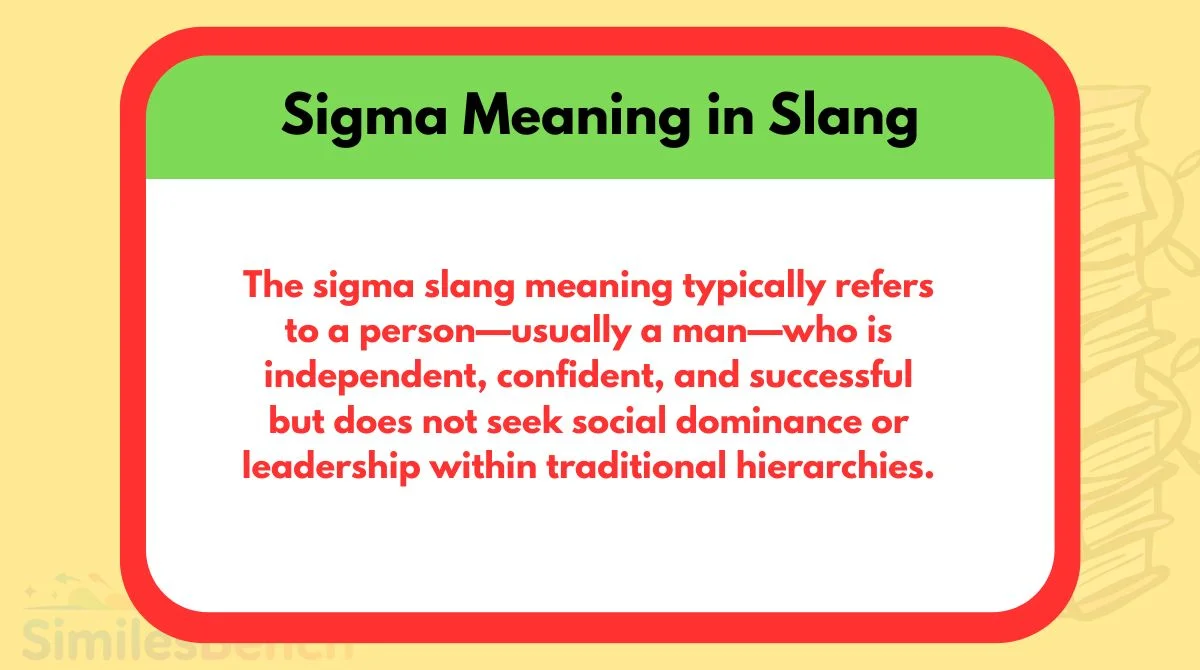
The sigma slang meaning typically refers to a person—usually a man—who is independent, confident, and successful but does not seek social dominance or leadership within traditional hierarchies.
In simplified terms, a “sigma” personality is often described as someone who:
- Operates outside social status systems
- Is self-reliant and independent
- Does not need approval from others
- Focuses on personal goals rather than popularity
- Prefers solitude or small circles over large social groups
This concept is commonly contrasted with the so-called “alpha male,” who is portrayed as a dominant leader within a group. In internet slang, the sigma personality is often portrayed as someone who succeeds quietly without needing recognition or authority.
Online, the term can be used in several ways:
- Serious personality description – referring to someone who values independence.
- Motivational concept – encouraging self-reliance and focus.
- Humorous meme format – exaggerating mysterious or silent characters.
Because of meme culture, the word can sometimes be used ironically rather than literally.
Background & History
The idea behind sigma personalities developed from discussions about social hierarchies, especially in online communities focused on self-development, psychology, and masculinity.
The concept appeared in internet discussions during the 2010s, where people categorized personality types using labels such as:
- Alpha
- Beta
- Sigma
- Omega
These labels were inspired by simplified interpretations of dominance hierarchies often discussed in animal behavior studies. However, internet communities adapted these ideas into human personality categories.
The sigma archetype gained popularity around 2020–2022, largely due to social media platforms where short videos and memes amplified the concept. Content creators began sharing motivational edits featuring characters portrayed as silent, self-reliant individuals who follow their own path.
As these videos spread, the term quickly entered mainstream internet slang. Many people began identifying with the sigma label as a symbol of independence and nonconformity.
Despite its popularity, it is important to note that the sigma personality concept is not a formal psychological classification. Instead, it exists mainly as an internet idea shaped by online culture and meme trends.
Usage in Various Contexts
The sigma slang meaning can change depending on the situation in which it appears. Online conversations often use the term in multiple contexts.
1. Social Media Memes
On platforms like TikTok, Instagram, and YouTube, sigma often appears in motivational or humorous edits. These videos usually portray characters as quiet, confident individuals who succeed independently.
Example:
- “He didn’t follow the crowd—true sigma behavior.”
2. Personality Descriptions
Some people use the term to describe a lifestyle focused on independence and self-improvement.
Example:
- “He’s not interested in popularity, he’s more of a sigma.”
3. Gaming Communities
In gaming forums and chats, sigma may describe players who prefer solo strategies or independent playstyles.
4. Humor and Irony
In many cases, the word is used sarcastically. For example, someone might jokingly call themselves “sigma” after doing something trivial alone.
Because of these varied uses, understanding tone and context is important when interpreting the term.
Common Misconceptions & Clarifications
Many misunderstandings exist about sigma slang because it became popular through memes rather than clear explanations.
Misconception 1: Sigma means antisocial.
Being independent does not necessarily mean avoiding people entirely. The slang meaning usually implies self-sufficiency rather than isolation.
Misconception 2: Sigma is a scientific personality type.
The term is not recognized in psychology. It is mainly an internet concept.
Misconception 3: Sigma is superior to other personality types.
Online discussions sometimes portray sigma as “better” than others, but this is subjective and not based on research.
Misconception 4: Only men can be sigma.
While the term is often used in discussions about masculinity, independence and self-reliance can apply to anyone.
Clarifying these misconceptions helps people understand the slang more realistically.
Similar Terms & Alternatives
Several other slang or descriptive terms share similarities with the sigma concept.
Alpha – Often described as a dominant leader who controls social groups.
Beta – Sometimes used online to describe someone perceived as less assertive.
Lone Wolf – A person who prefers independence rather than group participation.
Independent thinker – Someone who forms opinions without social pressure.
Nonconformist – A person who rejects common expectations or trends.
Although these terms overlap in meaning, they emphasize different aspects of personality and behavior.
How to Respond to This Term
If someone uses the sigma slang term in conversation, the appropriate response depends on the context.
Casual conversation
You can acknowledge it humorously or ask what they mean.
Example:
- “Are you using sigma seriously or as a meme?”
Online discussions
If the word is used in debates about personality, it can be helpful to clarify that it is mostly an internet concept rather than a scientific label.
Social media
Many users simply treat the term as entertainment or meme culture, responding with jokes or reactions.
Understanding the tone of the conversation helps avoid misunderstandings.
Regional or Cultural Differences
The sigma slang meaning generally stays similar across regions, but cultural interpretations can vary.
In Asian and European internet spaces, sigma may appear mostly in meme formats rather than serious personality discussions.
In South Asian online communities, the word is often used humorously or in reference to viral internet trends.
Because slang spreads through the internet rather than geography, the differences are usually cultural rather than linguistic.
Comparison with Similar Terms
Comparing sigma with other internet personality labels can clarify its meaning.
| Term | Main Idea |
|---|---|
| Alpha | Group leader who dominates social hierarchy |
| Beta | Follower or non-leader in a group |
| Sigma | Independent person outside the hierarchy |
| Lone Wolf | Individual who prefers solitude |
The key difference is that the sigma archetype is portrayed as outside the hierarchy rather than competing within it.
Usage in Online Communities & Dating Apps
The sigma concept sometimes appears in dating advice content and online communities discussing relationships.
In these spaces, the term may describe someone who:
- Focuses on self-development
- Avoids chasing social validation
- Maintains personal boundaries
However, many users treat these ideas more as motivational themes than strict personality categories.
On dating apps, people might jokingly describe themselves as sigma to signal independence or confidence.
Hidden or Offensive Meanings
Generally, the sigma slang meaning is not inherently offensive. However, in some contexts it can become controversial.
Certain online communities may use the term in ways that promote extreme ideas about social dominance or gender roles. When used this way, discussions can become polarizing.
In most everyday situations, though, the term is simply part of internet meme culture and does not carry harmful intent.
Understanding the tone of the conversation helps determine whether the usage is harmless or problematic.
Suitability for Professional Communication
Using sigma slang in professional environments is usually not recommended.
Reasons include:
- It may confuse people unfamiliar with internet slang.
- The meaning can vary widely depending on context.
- Professional communication benefits from clear and neutral language.
Instead of slang terms, professional settings usually prefer direct descriptions such as:
- Independent worker
- Self-motivated individual
- Strong critical thinker
These alternatives communicate the intended meaning more clearly.
FAQs
What does sigma mean in slang?
In slang, sigma refers to a person who is independent, self-reliant, and operates outside traditional social hierarchies.
Is sigma a real personality type?
No. It is mainly an internet concept rather than a scientifically recognized psychological classification.
Why is sigma popular online?
The term became popular through social media memes and motivational content portraying independent characters.
Is sigma the same as alpha?
No. Alpha describes someone who leads within a hierarchy, while sigma is portrayed as independent from that hierarchy.
Can the term be used jokingly?
Yes. Many people use sigma humorously in memes or ironic online comments.
Conclusion
The sigma meaning in slang reflects a modern internet concept centered on independence, self-reliance, and operating outside traditional social hierarchies. Although it began in online discussions about personality types, its popularity grew mainly through memes and social media trends.
Today, the term appears in many contexts—from motivational content to humorous online posts. While some people use it seriously, others treat it purely as entertainment. Because the concept is not scientifically recognized, it should be understood as part of digital culture rather than formal psychology.
Learning the meaning behind this slang helps people better understand online conversations and recognize how internet communities create and spread new language trends.