The term “sigma” has recently gained popularity across social media platforms, online communities, and everyday conversations. Many people search for its meaning because it often appears in memes, videos, and discussions about personality types, especially among younger audiences. While it may seem like just another internet trend, “sigma” carries a specific cultural and behavioral implication that intrigues users.
In simple terms, it is often used to describe a certain kind of independent personality—someone who doesn’t follow traditional social hierarchies. However, its meaning can shift depending on context, which is why it’s frequently misunderstood. This article breaks down the meaning, origin, usage, and deeper implications of the sigma slang so you can fully understand how and when to use it correctly.
Definition & Meaning
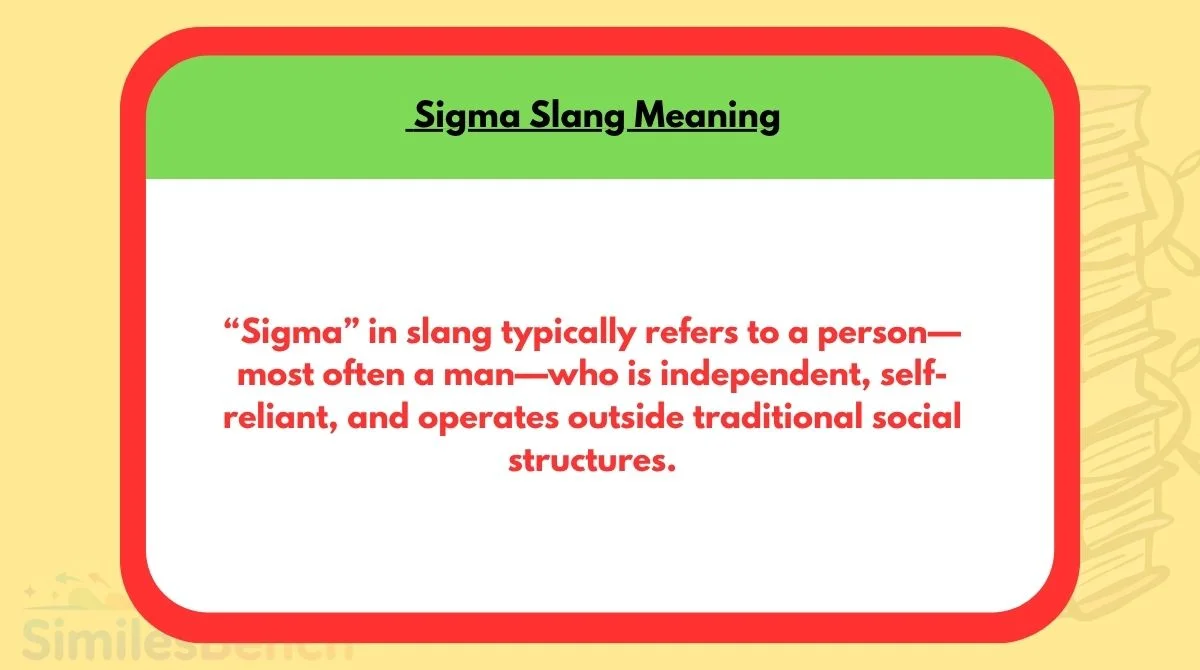
“Sigma” in slang typically refers to a person—most often a man—who is independent, self-reliant, and operates outside traditional social structures. Unlike “alpha” personalities, who are seen as dominant leaders, a sigma individual is someone who doesn’t seek validation or leadership roles but still commands respect.
This term is often associated with quiet confidence, introversion, and a strong sense of self. A sigma person is portrayed as someone who follows their own path rather than conforming to societal expectations. They don’t necessarily compete for attention but still stand out due to their mindset and behavior.
In online culture, “sigma male” is the most common variation. It is used both seriously and humorously to describe individuals who value solitude, independence, and personal success. However, the term is not limited to gender and can describe anyone who fits the characteristics.
At its core, the slang highlights autonomy and nonconformity. It suggests strength without the need for dominance, making it appealing to those who prefer a quieter, more introspective lifestyle.
Background & History
The concept of sigma originates from discussions about social hierarchies, particularly the “alpha” and “beta” personality framework. These ideas were loosely inspired by interpretations of animal behavior, later adapted into human social psychology—though not scientifically accurate.
The term “sigma male” began circulating in niche online forums and blogs in the early 2010s. It gained traction as an alternative to the alpha-beta classification, offering a new identity for individuals who didn’t fit into traditional roles.
Its popularity exploded in the 2020s through platforms like TikTok, YouTube, and Reddit. Viral videos often portrayed sigma personalities as mysterious, lone wolves who succeed without relying on others. This portrayal resonated with audiences who valued independence or felt disconnected from social norms.
Memes played a huge role in spreading the term. It became associated with cinematic characters, minimal dialogue, and a calm, calculated demeanor. Over time, the meaning evolved, blending serious personality discussion with humor and exaggeration.
Today, “sigma” is both a cultural label and an internet joke, depending on how it’s used.
Usage in Various Contexts
The sigma slang appears in different settings, each with slightly different meanings. In casual conversations, it may be used to compliment someone’s independence or self-confidence. For example, calling someone “sigma” can imply they are self-sufficient and don’t rely on others for validation.
On social media, the term is often used in memes or captions. It might describe someone ignoring trends, focusing on personal goals, or choosing solitude over socializing. In this context, it is often exaggerated for entertainment.
In motivational content, “sigma” is used to promote self-improvement and independence. It encourages people to prioritize their own goals and avoid unnecessary competition.
However, it can also be used sarcastically. Sometimes people label ordinary behavior as “sigma” to mock how overused or misunderstood the term has become.
In everyday language, its tone depends on context—ranging from admiration to humor. Understanding the intent behind its use is key to interpreting it correctly.
Common Misconceptions & Clarifications
One major misconception is that being “sigma” means being antisocial or emotionally detached. In reality, it simply refers to independence, not isolation. A sigma individual can still maintain healthy relationships while valuing personal space.
Another misunderstanding is that sigma is “better” than alpha or beta. These labels are not scientifically valid personality categories, and treating them as rigid classifications can be misleading.
Some people also assume sigma means introversion only. While many sigma traits align with introversion, extroverted individuals can also display independence and self-reliance.
Additionally, the internet often exaggerates sigma traits, portraying them as overly dramatic or unrealistic. This can distort the original idea and turn it into a stereotype.
Clarifying these misconceptions helps ensure the term is used thoughtfully rather than blindly adopted.
Similar Terms & Alternatives
Several slang terms share similarities with “sigma,” though each carries a unique nuance. “Alpha” refers to dominant, leadership-oriented individuals, while “beta” describes those who are more passive or cooperative.
“Lone wolf” is closely related to sigma, emphasizing independence and solitude. “Independent thinker” is a more neutral and widely accepted alternative.
Other related terms include “nonconformist” and “self-made,” which highlight similar qualities without relying on internet slang.
These alternatives can be more appropriate in professional or formal contexts, where slang may not be suitable.
How to Respond to This Term
When someone uses the term “sigma,” your response should depend on the context. If it’s used as a compliment, a simple acknowledgment like “Thanks” or a lighthearted response works well.
If it’s used humorously, you can respond in a playful tone to match the conversation. For example, you might joke about being independent or not following trends.
In more serious discussions, it’s helpful to clarify what the speaker means, as interpretations can vary. Asking for context ensures better understanding and avoids confusion.
Overall, responding naturally and matching the tone of the conversation is the best approach.
Regional or Cultural Differences
The sigma slang is primarily rooted in Western internet culture but has spread globally through social media. In different regions, its interpretation may vary based on cultural values.
Language barriers also influence how the term is adopted. In non-English-speaking regions, it may be used mainly in online spaces rather than everyday conversation.
Despite these differences, the core idea of independence remains consistent across cultures.
Comparison with Similar Terms
Comparing sigma with alpha and beta helps clarify its meaning. Alpha personalities are typically leaders who seek control and recognition. Beta personalities are more cooperative and supportive.
Sigma stands apart by rejecting the hierarchy altogether. Instead of competing for dominance, sigma individuals operate independently.
This distinction makes sigma appealing to those who prefer autonomy over leadership or submission. However, it’s important to remember that these categories are simplified and not scientifically proven.
Understanding these differences prevents overgeneralization and misuse of the term.
Usage in Online Communities & Dating Apps
In online communities, “sigma” is often used to describe personality traits or behaviors in a humorous or exaggerated way. It appears in memes, comments, and short-form videos.
On dating apps, some users include “sigma” in their profiles to signal independence, confidence, or a nontraditional lifestyle. It may attract people who value similar traits.
However, its meaning can vary widely, so not everyone interprets it the same way. Some may see it as attractive, while others may view it as cliché or overused.
Using the term thoughtfully can help avoid misunderstandings in these spaces.
Hidden or Offensive Meanings
While generally harmless, “sigma” can sometimes carry negative connotations. In certain contexts, it may be used to justify arrogance, emotional detachment, or disregard for others.
Some online groups may use the term in ways that promote unhealthy attitudes, such as avoiding relationships or dismissing social responsibility.
It’s important to recognize these potential misuses and avoid adopting harmful interpretations. The term should not be used to excuse disrespectful or antisocial behavior.
Being mindful of context ensures respectful communication.
Suitability for Professional Communication
“Sigma” is considered informal slang and is not suitable for professional or academic settings. Using it in formal communication may appear unprofessional or unclear.
Instead, terms like “independent,” “self-motivated,” or “autonomous” are more appropriate and widely understood.
In casual workplace conversations, it may be acceptable among peers, but caution is advised. Clarity and professionalism should always be prioritized.
Choosing the right language for the situation helps maintain credibility and effective communication.
FAQs
What does sigma mean in slang?
It refers to an independent person who doesn’t follow social hierarchies.
Is sigma a compliment?
Yes, it often implies confidence and self-reliance.
Is sigma better than alpha?
No, they are just different personality concepts, not rankings.
Can women be sigma?
Yes, the term can apply to anyone, regardless of gender.
Is sigma scientifically proven?
No, it’s a social and internet-based concept, not a scientific classification.
Why is sigma popular online?
Because memes and social media made it widely recognizable.
Conclusion
The sigma slang meaning reflects a modern fascination with independence and individuality. While it started as a niche concept, it has evolved into a widely recognized term through internet culture. Understanding its true meaning, context, and limitations helps prevent misuse and confusion. Whether used seriously or humorously, sigma highlights the idea of living life on one’s own terms—an idea that continues to resonate with many people today.