Have you ever read a sentence that made a picture pop into your head right away? That magic often comes from similes. Similes help students and writers explain feelings, actions, and ideas in a clear and colorful way.
They make writing more fun to read and easier to understand. In this guide, you’ll explore 15+ similes examples for students, explained simply, with warm examples you can actually use in school and creative writing.
What Is a Simile?
A simile is a way to compare two things using the words “like” or “as.”
It helps the reader imagine something better.
Similes make writing more lively and clear.
Full List of Similes (15)
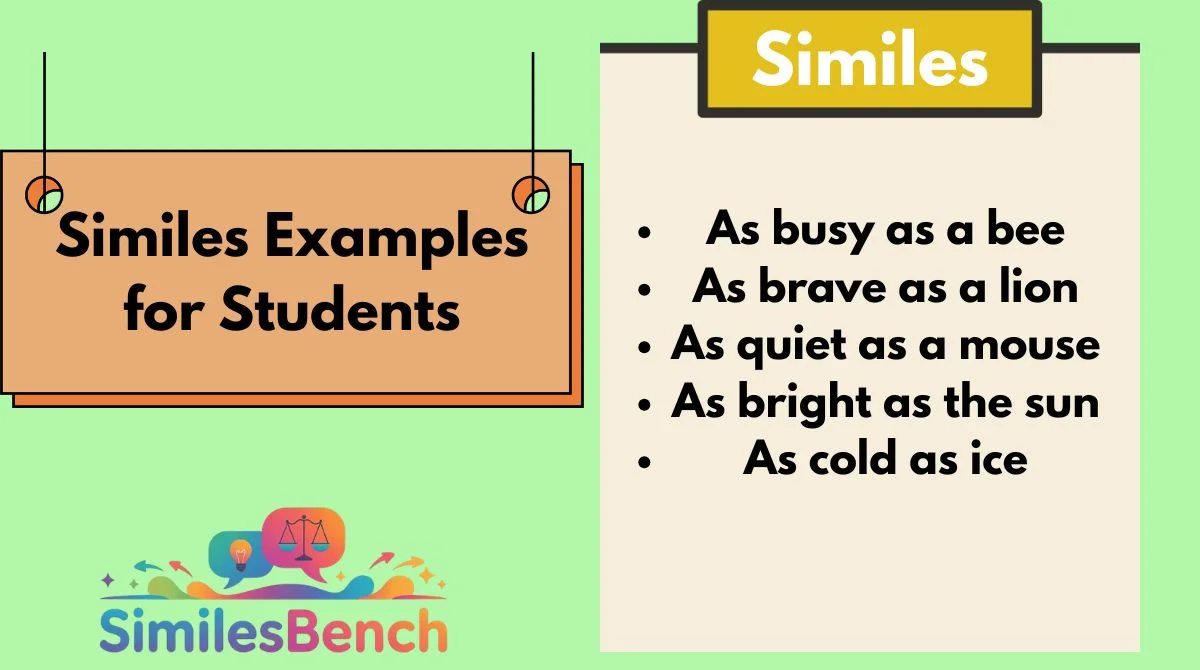
- As busy as a bee
- As brave as a lion
- As quiet as a mouse
- As bright as the sun
- As cold as ice
- As fast as lightning
- As light as a feather
- As strong as an ox
- As happy as a clam
- As slow as a snail
- Like a fish out of water
- Like a shining star
- Like a broken record
- Like a warm blanket
- Like thunder in the sky
1. As busy as a bee
Meaning: Very active and always working
Explanation: This simile describes someone who never seems to stop.
Example sentences:
- Maya was as busy as a bee while getting ready for the school fair.
- The classroom felt alive as everyone moved around, busy as a bee before the bell rang.
2. As brave as a lion
Meaning: Very courageous and fearless
Explanation: It compares a person’s courage to a lion’s strength.
Example sentences:
- He was as brave as a lion when he stood up for his friend.
- Even though she was nervous, she walked on stage as brave as a lion.
3. As quiet as a mouse
Meaning: Extremely silent
Explanation: This simile shows how quietly someone behaves.
Example sentences:
- The baby slept as quiet as a mouse in his crib.
- We sat as quiet as a mouse during the surprise test.
4. As bright as the sun
Meaning: Very shiny or cheerful
Explanation: Often used to describe smiles, light, or happiness.
Example sentences:
- Her smile was as bright as the sun on a summer morning.
- The classroom felt warmer when his mood turned as bright as the sun.
5. As cold as ice
Meaning: Extremely cold or unfriendly
Explanation: This simile can describe weather or feelings.
Example sentences:
- The water felt as cold as ice when I dipped my toes in.
- His voice sounded as cold as ice after the argument.
6. As fast as lightning
Meaning: Very quick
Explanation: It shows speed using nature as a comparison.
Example sentences:
- She ran as fast as lightning to catch the bus.
- The news spread through school as fast as lightning.
7. As light as a feather
Meaning: Very lightweight
Explanation: Used when something feels easy to lift.
Example sentences:
- The balloon was as light as a feather in my hand.
- After dropping his heavy bag, he felt as light as a feather walking home.
8. As strong as an ox
Meaning: Very powerful
Explanation: This simile compares strength to a farm animal known for power.
Example sentences:
- Dad lifted the box like he was as strong as an ox.
- She surprised everyone by pulling the cart, strong as an ox.
9. As happy as a clam
Meaning: Very joyful and content
Explanation: It shows calm and deep happiness.
Example sentences:
- He felt as happy as a clam playing with his dog.
- On vacation, she walked along the beach, happy as a clam.
10. As slow as a snail
Meaning: Very slow
Explanation: Often used in a playful way.
Example sentences:
- The line moved as slow as a snail on Monday morning.
- Homework time felt slow as a snail after a long day.
11. Like a fish out of water
Meaning: Feeling uncomfortable or out of place
Explanation: This simile describes awkward moments.
Example sentences:
- On his first day at the new school, he felt like a fish out of water.
- Wearing a costume to class made her feel like a fish out of water.
12. Like a shining star
Meaning: Standing out in a good way
Explanation: Used to praise someone’s talent or effort.
Example sentences:
- She performed like a shining star during the play.
- His kindness made him stand out like a shining star.
13. Like a broken record
Meaning: Repeating the same thing again and again
Explanation: This simile adds humor to repetition.
Example sentences:
- Mom sounded like a broken record reminding us to clean our room.
- He kept asking the same question like a broken record.
14. Like a warm blanket
Meaning: Comforting and safe
Explanation: Often used to describe feelings or memories.
Example sentences:
- Her words felt like a warm blanket on a hard day.
- The smell of home wrapped around him like a warm blanket.
15. Like thunder in the sky
Meaning: Loud and powerful
Explanation: This simile adds drama and sound to writing.
Example sentences:
- Applause crashed through the hall like thunder in the sky.
- His footsteps echoed like thunder in the sky.
Creative Writing Tips: How to Use Similes Well
Similes are tools, not decorations. When used well, they make writing stronger and clearer.
In stories:
Use similes to show feelings instead of telling them. Saying “she was nervous” is fine, but “her heart raced like a drum” paints a picture.
In poems:
Similes add music and emotion. Choose comparisons that match the mood of your poem, whether it’s joyful, sad, or calm.
In essays:
A simple simile can explain an idea better than a long sentence. Just don’t overuse them. One strong simile is enough.
In songs:
Similes help listeners feel emotions quickly. Many song lyrics compare love, pain, or joy to everyday things.
Helpful tips:
- Pick comparisons your reader knows well
- Keep similes short and clear
- Avoid mixing too many in one paragraph
- Read your sentence out loud to see if it sounds natural
FAQs About Similes
What is a simile in simple words?
A simile compares two things using “like” or “as” to help the reader imagine better.
What is the difference between a simile and a metaphor?
A simile uses “like” or “as.” A metaphor compares directly without those words.
Why do students need to learn similes?
Similes make writing more interesting, creative, and easier to understand.
Can similes be used in essays?
Yes. When used carefully, similes can explain ideas clearly in essays.
How many similes should I use in one paragraph?
Usually one is enough. Too many can confuse the reader.
Conclusion
Similes are simple, powerful tools that help students express ideas with color and feeling. They turn plain sentences into memorable ones and help readers connect with your words.
By practicing these 15+ similes examples for students, you can grow more confident in writing stories, poems, and school assignments. Keep experimenting, stay curious, and let your words paint pictures that others can enjoy.