Have you ever felt nervous and struggled to explain it in words? That’s where similes come in. Similes help us compare feelings to familiar things, making emotions easier to understand and imagine.
Learning 20+ similes for anxious can help students, storytellers, and everyday writers describe worry in a clear, creative way. Let’s explore these comparisons together and make anxious feelings easier to express.
What Is a Simile?
A simile is a comparison using “like” or “as.”
It helps describe something by comparing it to something familiar.
Similes make writing clearer, stronger, and more interesting.
Full List of Similes for Anxious
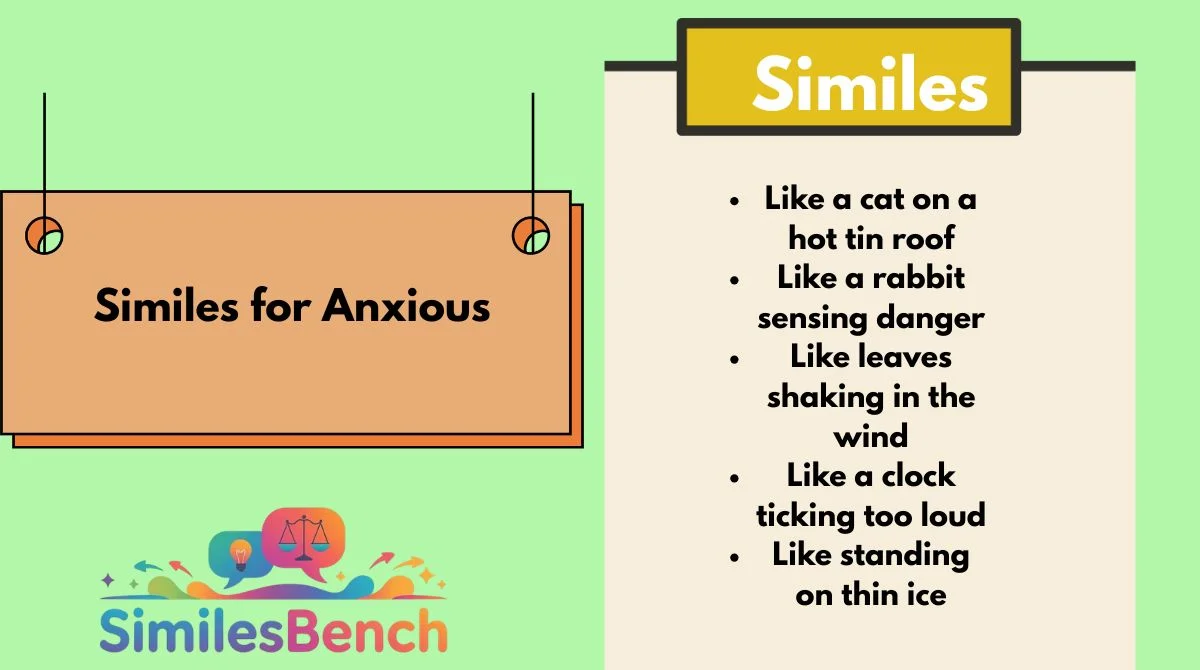
- Like a cat on a hot tin roof
- Like a rabbit sensing danger
- Like leaves shaking in the wind
- Like a clock ticking too loud
- Like standing on thin ice
- Like a balloon ready to pop
- Like ants crawling under the skin
- Like waiting for thunder to strike
- Like a bird trapped in a room
- Like a drum beating too fast
- Like a phone about to ring
- Like walking through a dark hallway
- Like holding your breath underwater
- Like a storm cloud overhead
- Like shoes on the wrong feet
- Like sitting before a big exam
- Like a knot that won’t loosen
- Like a deer in headlights
- Like buzzing wires
- Like a shaky ladder
1. Like a cat on a hot tin roof
Meaning: Feeling restless and unable to relax.
Explanation: Shows physical and mental discomfort caused by worry.
She paced the room like a cat on a hot tin roof.
Before the interview, he felt like a cat on a hot tin roof.
2. Like a rabbit sensing danger
Meaning: Being alert and jumpy.
Explanation: Compares anxiety to an animal ready to flee.
She looked around like a rabbit sensing danger.
His voice shook, like a rabbit sensing danger nearby.
3. Like leaves shaking in the wind
Meaning: Feeling nervous and weak.
Explanation: Shows visible trembling caused by anxiety.
His hands fluttered like leaves shaking in the wind.
She stood there, like leaves shaking in the wind.
4. Like a clock ticking too loud
Meaning: Being painfully aware of time.
Explanation: Describes anxious waiting.
The silence felt like a clock ticking too loud.
During the test, his thoughts raced like a clock ticking too loud.
5. Like standing on thin ice
Meaning: Feeling unsafe or unsure.
Explanation: Suggests fear of making a mistake.
She spoke carefully, like standing on thin ice.
Every step felt like standing on thin ice.
6. Like a balloon ready to pop
Meaning: Feeling overwhelmed.
Explanation: Shows pressure building up.
He felt like a balloon ready to pop before the speech.
Her nerves made her feel like a balloon ready to pop.
7. Like ants crawling under the skin
Meaning: Feeling extremely uneasy.
Explanation: Describes uncomfortable nervous energy.
Waiting made him feel like ants crawling under his skin.
She couldn’t sit still, like ants crawling under her skin.
8. Like waiting for thunder to strike
Meaning: Expecting something bad.
Explanation: Shows fear of the unknown.
The call felt like waiting for thunder to strike.
He sat there, like waiting for thunder to strike.
9. Like a bird trapped in a room
Meaning: Feeling panicked and stuck.
Explanation: Shows anxiety with no escape.
Her thoughts flapped like a bird trapped in a room.
He felt like a bird trapped in a room during the meeting.
10. Like a drum beating too fast
Meaning: Heart racing from fear.
Explanation: Focuses on physical signs of anxiety.
Her chest felt like a drum beating too fast.
His heart pounded like a drum beating too fast.
11. Like a phone about to ring
Meaning: Feeling tense and alert.
Explanation: Shows anxious anticipation.
She waited like a phone about to ring.
The room felt quiet, like a phone about to ring.
12. Like walking through a dark hallway
Meaning: Feeling unsure and fearful.
Explanation: Shows anxiety about what comes next.
Starting the new school felt like walking through a dark hallway.
He spoke slowly, like walking through a dark hallway.
13. Like holding your breath underwater
Meaning: Feeling stressed and tense.
Explanation: Shows pressure and discomfort.
The secret made her feel like holding her breath underwater.
He waited, like holding his breath underwater.
14. Like a storm cloud overhead
Meaning: Feeling constant worry.
Explanation: Suggests anxiety that won’t go away.
Anxiety followed her like a storm cloud overhead.
The news hung over him like a storm cloud overhead.
15. Like shoes on the wrong feet
Meaning: Feeling uncomfortable and uneasy.
Explanation: Shows something feels off.
The situation felt like shoes on the wrong feet.
He smiled, but inside it felt like shoes on the wrong feet.
16. Like sitting before a big exam
Meaning: Feeling nervous anticipation.
Explanation: A relatable school-based comparison.
She felt like sitting before a big exam.
The silence reminded him of sitting before a big exam.
17. Like a knot that won’t loosen
Meaning: Feeling tight worry.
Explanation: Shows ongoing tension.
Her stomach felt like a knot that wouldn’t loosen.
The worry stayed like a knot that wouldn’t loosen.
18. Like a deer in headlights
Meaning: Feeling frozen by fear.
Explanation: Shows shock and anxiety.
He stood like a deer in headlights.
She froze, like a deer in headlights.
19. Like buzzing wires
Meaning: Feeling mentally overloaded.
Explanation: Shows restless thoughts.
His mind felt like buzzing wires.
She tried to sleep, but her thoughts were like buzzing wires.
20. Like a shaky ladder
Meaning: Feeling unstable.
Explanation: Shows fear of falling or failing.
The plan felt like climbing a shaky ladder.
She spoke carefully, like standing on a shaky ladder.
Creative Writing Tips
Similes work best when they feel natural and fit the mood. In stories, use them to show emotions instead of explaining them. In poems, choose images that match the feeling you want readers to sense. Essays can use similes to make ideas clearer, especially when describing personal experiences. Songs often use simple, emotional similes that listeners recognize right away. Always pick comparisons your reader understands, and don’t overuse them. One strong simile is better than many weak ones.
FAQs
What is the easiest simile for anxious?
A simple one is like a deer in headlights. It’s easy to picture and very clear.
Can similes help with emotional writing?
Yes. They help readers feel emotions instead of just reading about them.
Are similes used in school essays?
Yes. When used carefully, they make writing more engaging and clear.
How many similes should I use in one paragraph?
Usually one is enough. Too many can confuse the reader.
Are similes and metaphors the same?
They are similar, but similes use “like” or “as,” while metaphors do not.
Conclusion
Similes turn anxious feelings into clear pictures that readers can understand. They help students explain emotions, writers deepen their stories, and readers connect more easily.
Learning and practicing similes builds stronger writing skills and confidence. Try using these comparisons in your own work and notice how your words become more vivid and expressive.