Similes are one of the easiest and most beautiful tools in the English language. They help us explain feelings by comparing them to something familiar. Caring is a feeling we all know, but it can be hard to describe in words.
That’s where similes help. In this guide, you’ll learn simple, heartfelt similes for caring that students, writers, and everyday speakers can use with confidence.
What Is a Simile
A simile compares two things using the words “like” or “as.”
It helps readers picture feelings, actions, or ideas more clearly.
Similes make writing more colorful and alive.
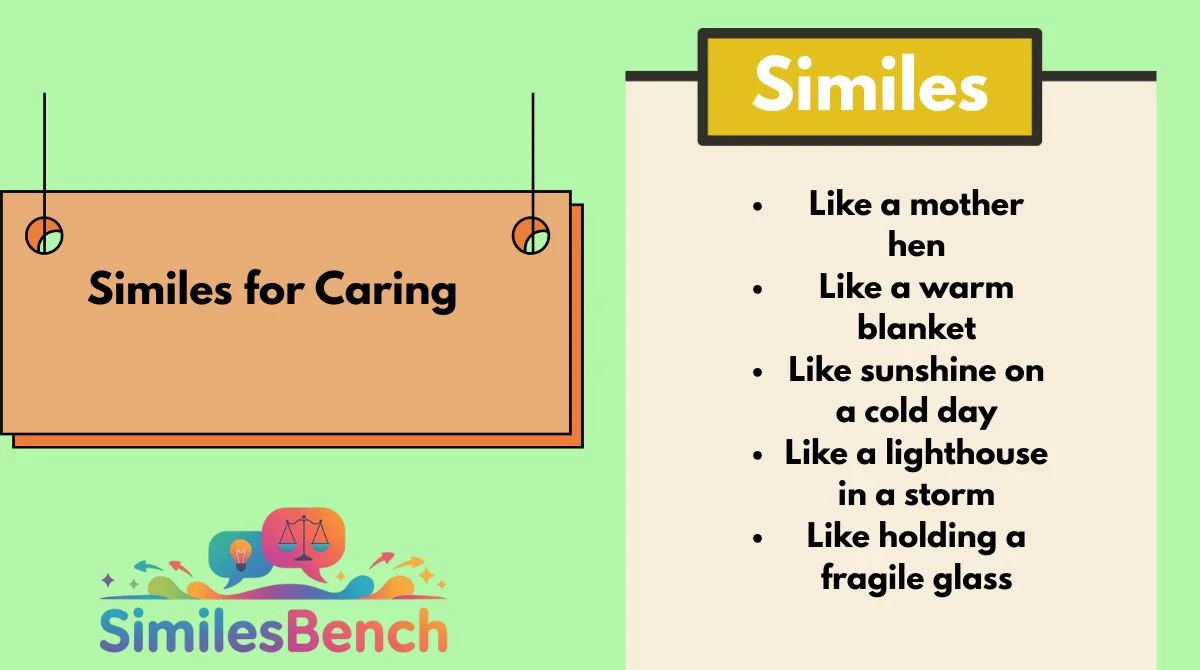
Full List of Similes for Caring
- Like a mother hen
- Like a warm blanket
- Like sunshine on a cold day
- Like a lighthouse in a storm
- Like holding a fragile glass
- Like watering a growing plant
- Like a nurse to a patient
- Like a shelter from the rain
- Like a soft pillow
- Like a guiding hand
- Like a steady heartbeat
- Like home after a long journey
- Like a gardener with flowers
- Like a candle in the dark
- Like a watchful guardian
- Like a gentle hug
- Like a calm voice in chaos
1. Like a Mother Hen
Meaning: Showing protective and loving care.
Explanation: This simile is often used when someone worries and looks after others closely.
Examples:
She watched over the new students like a mother hen on the first day of school.
My aunt checks on everyone like a mother hen, even when we say we’re fine.
2. Like a Warm Blanket
Meaning: Making someone feel safe and comforted.
Explanation: It suggests emotional warmth and security.
Examples:
His kind words felt like a warm blanket on a hard day.
Being with her was like a warm blanket when life felt heavy.
3. Like Sunshine on a Cold Day
Meaning: Bringing happiness and relief.
Explanation: This simile shows how caring can lift someone’s mood.
Examples:
Her smile was like sunshine on a cold day during my worst week.
The teacher’s praise felt like sunshine on a cold day for the shy student.
4. Like a Lighthouse in a Storm
Meaning: Offering guidance and support in hard times.
Explanation: It shows steady care when everything feels confusing.
Examples:
My dad was like a lighthouse in a storm when I felt lost.
Her advice stood like a lighthouse in a storm of emotions.
5. Like Holding a Fragile Glass
Meaning: Being very gentle and careful.
Explanation: This simile fits emotional or physical care.
Examples:
He treated her feelings like holding a fragile glass.
The nurse moved his injured arm like holding a fragile glass.
6. Like Watering a Growing Plant
Meaning: Helping someone grow with patience.
Explanation: Caring is shown as steady support over time.
Examples:
Good teachers care like watering a growing plant every day.
She encouraged her brother like watering a growing plant.
7. Like a Nurse to a Patient
Meaning: Providing careful and attentive help.
Explanation: It shows responsibility and kindness.
Examples:
She stayed by his side like a nurse to a patient.
He listened to her worries like a nurse to a patient.
8. Like a Shelter from the Rain
Meaning: Protecting someone from harm or stress.
Explanation: This simile shows emotional safety.
Examples:
Her friendship felt like a shelter from the rain.
The library became a shelter from the rain of noisy thoughts.
9. Like a Soft Pillow
Meaning: Offering comfort and rest.
Explanation: It suggests gentle emotional support.
Examples:
His voice was like a soft pillow after a tiring day.
The quiet room felt like a soft pillow for her mind.
10. Like a Guiding Hand
Meaning: Leading with care and patience.
Explanation: It shows support without control.
Examples:
The coach helped the team like a guiding hand.
She learned to cook with her mother’s guiding hand.
11. Like a Steady Heartbeat
Meaning: Constant and dependable care.
Explanation: This simile highlights reliability.
Examples:
His support was like a steady heartbeat in her life.
The routine felt like a steady heartbeat during change.
12. Like Home After a Long Journey
Meaning: Feeling deeply safe and accepted.
Explanation: It shows emotional belonging.
Examples:
Talking to her felt like home after a long journey.
The familiar laugh was like home after a long journey.
13. Like a Gardener with Flowers
Meaning: Caring with patience and attention.
Explanation: This simile fits nurturing relationships.
Examples:
She treated her students like a gardener with flowers.
He handled friendships like a gardener with flowers.
14. Like a Candle in the Dark
Meaning: Giving hope and warmth.
Explanation: Caring becomes a small but powerful light.
Examples:
Her kindness was like a candle in the dark.
The letter felt like a candle in the dark weeks.
15. Like a Watchful Guardian
Meaning: Protecting quietly and constantly.
Explanation: It shows silent care.
Examples:
He stood by his sister like a watchful guardian.
The teacher acted like a watchful guardian during recess.
16. Like a Gentle Hug
Meaning: Showing love without words.
Explanation: It focuses on emotional closeness.
Examples:
Her presence was like a gentle hug.
The message felt like a gentle hug from afar.
17. Like a Calm Voice in Chaos
Meaning: Bringing peace during stress.
Explanation: This simile shows emotional control and care.
Examples:
His advice was like a calm voice in chaos.
She became a calm voice in chaos during the emergency.
Creative Writing Tips
Using similes well can turn simple writing into something special. Even songs use similes to express feelings quickly.
When using similes, choose comparisons your readers understand. Keep them natural. Don’t force them into every sentence. One strong simile is better than five weak ones. Read your writing aloud to see if it sounds smooth and real.
FAQs
What are similes used for?
Similes help describe feelings, actions, and ideas in a clear and vivid way.
Are similes and metaphors the same?
No. Similes use “like” or “as.” Metaphors do not.
Can similes be used in essays?
Yes. When used carefully, similes make essays more engaging.
Are similes good for students?
Absolutely. They help students explain ideas creatively and clearly.
How do I write my own similes?
Think of a feeling, then compare it to something familiar using “like” or “as.”
Conclusion
Similes make caring easier to explain and more powerful to feel. They help writers show kindness, love, and support through simple comparisons. Whether you’re writing a story, poem, or school essay, these similes can bring warmth to your words. Practice using them, trust your voice, and let your writing connect with readers on a deeper level.