Cold has a way of making us feel things—shivers, silence, loneliness, or even comfort. Writers love using similes to describe cold because they turn a simple feeling into a clear picture.
In this guide, you’ll learn what similes are, explore 13 powerful similes for cold, and see how to use them naturally in writing. Whether you’re a student, teacher, or creative writer, this list will help your words feel alive.
What Is a Simile?
A simile is a comparison using “like” or “as.”
It helps readers imagine something more clearly by comparing it to something familiar.
Similes make writing more colorful and easier to understand.
Full List of Similes for Cold
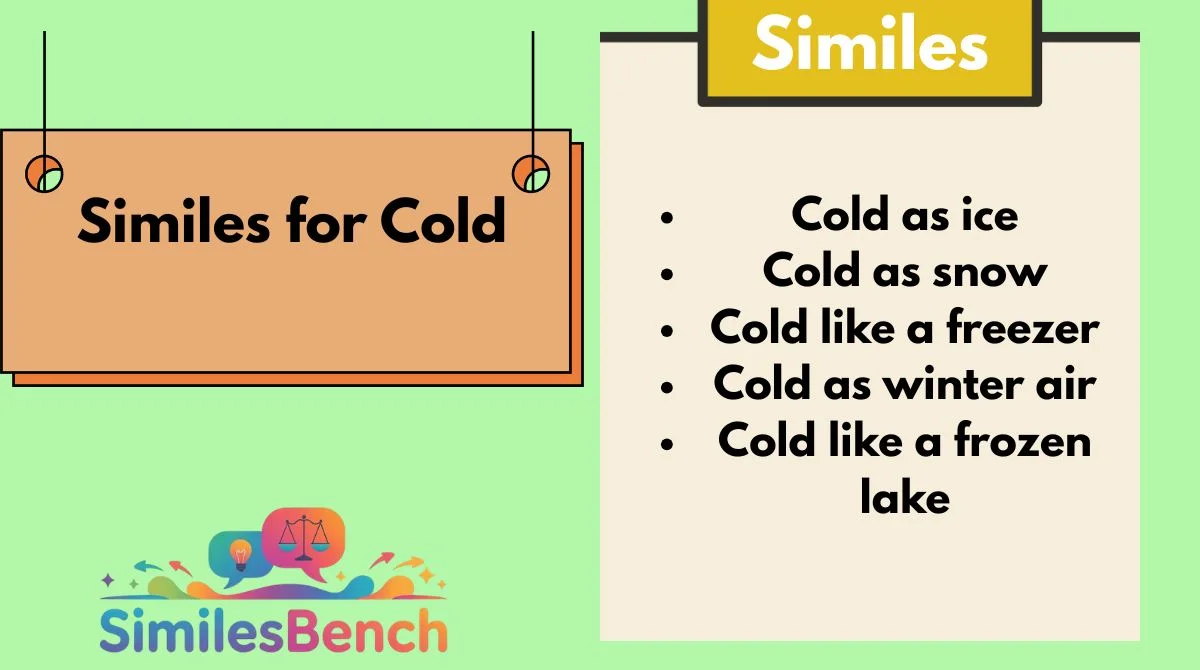
- Cold as ice
- Cold as snow
- Cold like a freezer
- Cold as winter air
- Cold like a frozen lake
- Cold as a block of ice
- Cold like a grave
- Cold as steel
- Cold like an ice cube
- Cold as a winter night
- Cold like Antarctica
- Cold as frost
- Cold like a ghost’s touch
1. Cold as ice
Meaning: Extremely cold, both physically and emotionally.
Explanation: Ice is one of the coldest things we know, so this simile feels strong and clear.
Example sentences:
The water was cold as ice, and it shocked my feet the moment I stepped in.
His voice sounded cold as ice when he refused to listen.
2. Cold as snow
Meaning: Very cold, often in a soft or quiet way.
Explanation: Snow feels gentle, but it holds deep cold inside.
Example sentences:
The morning air was cold as snow, wrapping around my face.
Her hands were cold as snow after playing outside all afternoon.
3. Cold like a freezer
Meaning: Sharp, biting cold that hits all at once.
Explanation: A freezer blasts cold instantly, making this simile very relatable.
Example sentences:
The classroom felt cold like a freezer because the heater was broken.
When I opened the door, cold like a freezer rushed into the room.
4. Cold as winter air
Meaning: Natural outdoor cold, often fresh and crisp.
Explanation: Winter air is clean, sharp, and hard to ignore.
Example sentences:
The breeze was cold as winter air and filled my lungs.
I woke up early to air that felt cold as winter air against my skin.
5. Cold like a frozen lake
Meaning: Deep, dangerous, and still cold.
Explanation: Frozen lakes look calm but hide intense cold underneath.
Example sentences:
His stare was cold like a frozen lake, silent and distant.
The water felt cold like a frozen lake even through my boots.
6. Cold as a block of ice
Meaning: Solid, unwelcoming cold.
Explanation: A block of ice feels heavy and harsh to touch.
Example sentences:
The metal bench was cold as a block of ice.
Her reply felt cold as a block of ice, with no warmth at all.
7. Cold like a grave
Meaning: Cold with a feeling of fear or sadness.
Explanation: This simile adds an emotional tone, not just temperature.
Example sentences:
The room was quiet and cold like a grave.
His silence felt cold like a grave between us.
8. Cold as steel
Meaning: Hard, emotionless cold.
Explanation: Steel doesn’t bend or soften, making this simile powerful.
Example sentences:
Her eyes were cold as steel when she spoke.
The knife felt cold as steel in my shaking hand.
9. Cold like an ice cube
Meaning: Small but intense cold.
Explanation: Ice cubes are tiny, but their cold is sharp and quick.
Example sentences:
His fingers were cold like an ice cube.
The wind touched my neck cold like an ice cube.
10. Cold as a winter night
Meaning: Deep, quiet, lingering cold.
Explanation: Winter nights feel longer and colder than days.
Example sentences:
The street was empty and cold as a winter night.
Her house felt cold as a winter night without the lights on.
11. Cold like Antarctica
Meaning: Extremely cold beyond comfort.
Explanation: Antarctica is known as one of the coldest places on Earth.
Example sentences:
The weather felt cold like Antarctica this morning.
My hands went numb in air cold like Antarctica.
12. Cold as frost
Meaning: Light but biting cold.
Explanation: Frost looks gentle but burns the skin with chill.
Example sentences:
The grass was cold as frost under my shoes.
His smile felt cold as frost, thin and sharp.
13. Cold like a ghost’s touch
Meaning: Sudden, eerie cold.
Explanation: This simile adds mystery and emotion to the feeling of cold.
Example sentences:
The wind brushed my arm cold like a ghost’s touch.
Fear ran through me, cold like a ghost’s touch in the dark.
Creative Writing Tips
Similes are tools, not decorations. Use them with care.
In stories:
Choose similes that match the mood. A scary scene needs colder, darker comparisons.
In poems:
Keep similes short and emotional. One strong simile is better than many weak ones.
In essays:
Use similes sparingly. They work best in introductions or conclusions.
In songs:
Simple similes sound natural and easy to remember.
Helpful tip:
Read your simile out loud. If it sounds forced, rewrite it in simpler words.
FAQs
What is a simile in simple words?
A simile compares two things using “like” or “as” to make writing clearer.
Why do writers use similes?
Similes help readers imagine feelings, places, and actions more easily.
Can similes show emotions too?
Yes. Many similes describe feelings like coldness, sadness, or kindness.
Are similes used in school writing?
Yes. Teachers encourage similes in stories, poems, and descriptive essays.
How can I make better similes?
Think about your senses—touch, sound, and feeling—then compare them to real things.
Conclusion
Similes turn simple ideas into vivid pictures. When you describe cold using creative comparisons, your writing becomes stronger and more emotional. These 13 similes for cold can help students, writers, and teachers add life to their words. Try using one in your next story or poem. With practice, similes will feel natural and fun, not forced.