Similes are one of the easiest and most fun ways to make writing more colorful. They help readers feel emotions instead of just reading about them. Excitement, especially, can sound flat if we only say “I was excited.”
That’s where similes shine. In this guide, you’ll learn simple, creative similes for excited feelings and how to use them naturally in stories, poems, essays, and everyday writing.
What Is a Simile?
A simile compares two things using “like” or “as.”
It helps readers imagine feelings or actions more clearly.
Similes make writing lively and easy to picture.
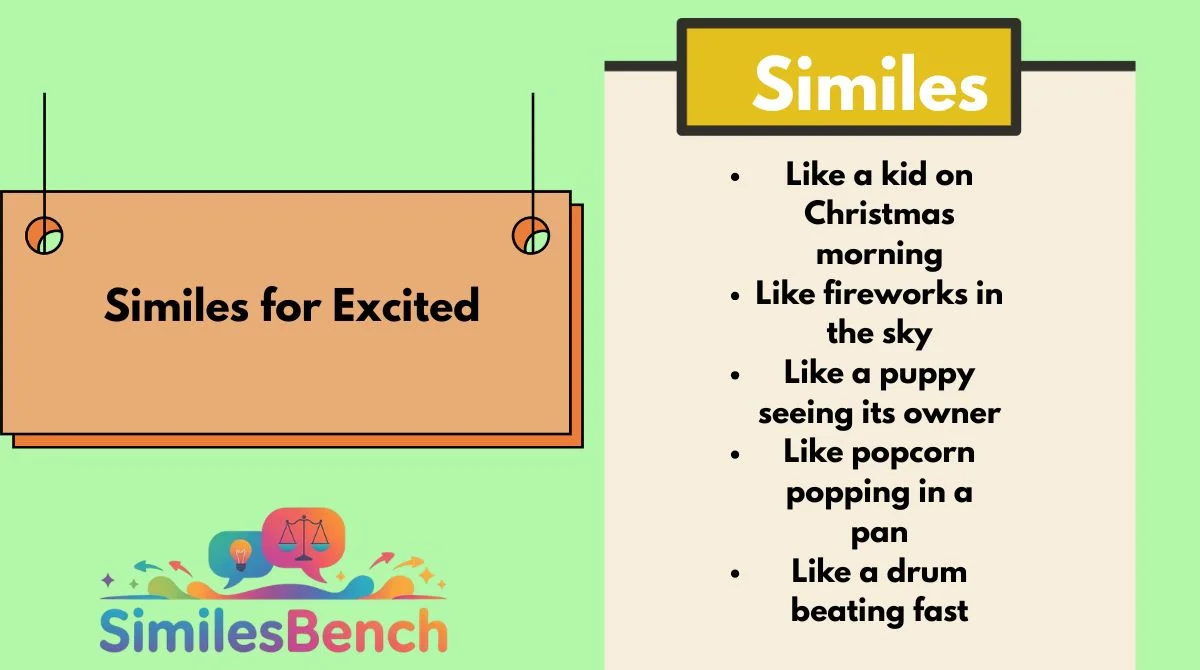
Full List of Similes for Excited (20)
- Like a kid on Christmas morning
- Like fireworks in the sky
- Like a puppy seeing its owner
- Like popcorn popping in a pan
- Like a drum beating fast
- Like a rocket ready to launch
- Like butterflies dancing in the stomach
- Like a buzzing bee
- Like a race car at the starting line
- Like a balloon about to burst
- Like lightning in the air
- Like a bell ringing loudly
- Like a spark catching fire
- Like waves crashing on shore
- Like a bird ready to fly
- Like music turned all the way up
- Like soda fizzing over
- Like a crowd cheering at a game
- Like a child seeing snow for the first time
- Like sunshine breaking through clouds
1. Like a kid on Christmas morning
Meaning: Very happy and full of excitement
Explanation: This simile shows pure joy and eager waiting.
Examples:
She woke up smiling, feeling like a kid on Christmas morning.
He couldn’t sit still before the trip, just like a kid on Christmas morning.
2. Like fireworks in the sky
Meaning: Sudden and bright excitement
Explanation: It compares excitement to colorful explosions.
Examples:
When her name was called, excitement burst like fireworks in the sky.
The surprise party lit him up like fireworks in the sky.
3. Like a puppy seeing its owner
Meaning: Uncontrolled happiness
Explanation: Puppies show joy without holding back.
Examples:
She ran toward her friends like a puppy seeing its owner.
He greeted the news with joy like a puppy seeing its owner.
4. Like popcorn popping in a pan
Meaning: Fast-growing excitement
Explanation: Thoughts and feelings jump quickly, one after another.
Examples:
Ideas popped in her head like popcorn in a pan.
His excitement grew like popcorn popping in a pan.
5. Like a drum beating fast
Meaning: Strong, pounding excitement
Explanation: Often used to describe a racing heart.
Examples:
Her heart felt like a drum beating fast before the show.
He waited nervously, his chest like a drum beating fast.
6. Like a rocket ready to launch
Meaning: Ready to explode with excitement
Explanation: Shows energy that can’t be held back.
Examples:
She stood backstage like a rocket ready to launch.
The team felt like a rocket ready to launch before the match.
7. Like butterflies dancing in the stomach
Meaning: Nervous but happy excitement
Explanation: A gentle, fluttery feeling inside.
Examples:
He had butterflies dancing in his stomach before the speech.
She smiled through the butterflies dancing in her stomach.
8. Like a buzzing bee
Meaning: Constant, energetic excitement
Explanation: Shows movement and sound.
Examples:
He moved around the room like a buzzing bee.
Her thoughts buzzed like a bee all afternoon.
9. Like a race car at the starting line
Meaning: Excited and ready to go
Explanation: Waiting energy, full of focus.
Examples:
She waited for the results like a race car at the starting line.
The class felt like race cars ready to speed off.
10. Like a balloon about to burst
Meaning: Too excited to contain
Explanation: Emotions feel stretched and full.
Examples:
He laughed, feeling like a balloon about to burst.
Her excitement swelled like a balloon about to burst.
11. Like lightning in the air
Meaning: Sharp, electric excitement
Explanation: A sudden rush of energy.
Examples:
The news hit her like lightning in the air.
Excitement crackled like lightning in the air.
12. Like a bell ringing loudly
Meaning: Clear, strong excitement
Explanation: Something impossible to ignore.
Examples:
His excitement rang like a bell ringing loudly.
The announcement echoed like a loud bell.
13. Like a spark catching fire
Meaning: Excitement that grows quickly
Explanation: Starts small and spreads fast.
Examples:
Her idea spread like a spark catching fire.
Excitement grew like fire in dry grass.
14. Like waves crashing on shore
Meaning: Repeated waves of excitement
Explanation: Comes again and again.
Examples:
Excitement hit her like waves crashing on shore.
Each cheer felt like another wave.
15. Like a bird ready to fly
Meaning: Light, hopeful excitement
Explanation: Shows freedom and joy.
Examples:
She felt like a bird ready to fly.
His heart lifted like wings.
16. Like music turned all the way up
Meaning: Loud, joyful excitement
Explanation: Hard to ignore or quiet down.
Examples:
The room felt alive like music turned all the way up.
His mood blasted like loud music.
17. Like soda fizzing over
Meaning: Bubbling excitement
Explanation: Energy that spills out.
Examples:
She giggled like soda fizzing over.
His excitement bubbled and spilled.
18. Like a crowd cheering at a game
Meaning: Shared excitement
Explanation: Many people feeling joy together.
Examples:
The class erupted like a cheering crowd.
The room buzzed with shared joy.
19. Like a child seeing snow for the first time
Meaning: Fresh, magical excitement
Explanation: Wonder and amazement.
Examples:
She stared in awe like a child seeing snow.
His eyes sparkled with first-time joy.
20. Like sunshine breaking through clouds
Meaning: Warm, hopeful excitement
Explanation: Joy after waiting or worry.
Examples:
Good news felt like sunshine breaking through clouds.
Her smile appeared like sudden sunlight.
Creative Writing Tips
Similes work best when they feel natural. In stories, use them to show emotions instead of naming them. In poems, choose similes that sound musical and fit the mood. For essays, use them sparingly to add clarity and interest. In songs, simple similes make feelings easy to remember. Always pick comparisons your readers know well. If it feels forced, try a simpler image.
FAQs
What is a simile for excited?
A simile for excited compares excitement using “like” or “as,” such as like a kid on Christmas morning.
Why are similes important in writing?
They help readers imagine feelings and make writing more interesting.
Can students use similes in essays?
Yes. When used carefully, similes make essays clearer and more engaging.
How many similes should I use in one paragraph?
Usually one is enough. Too many can feel confusing.
Are similes and metaphors the same?
No. Similes use “like” or “as,” while metaphors do not.
Conclusion
Similes turn plain sentences into pictures full of life. When you use similes for excited feelings, your writing becomes warmer and more expressive.
Whether you’re telling a story, writing a poem, or working on school assignments, these comparisons help readers feel what you feel. Practice using them, have fun with words, and let your excitement shine through your writing.