Similes are one of the easiest and most fun tools in English writing. They help us explain feelings, weather, and moments by comparing them to something familiar.
Hot weather, in particular, gives writers a lot to play with. From sweaty afternoons to burning sunrays, similes bring those scenes to life. Whether you’re a student, teacher, or creative writer, these similes will help your words feel more alive and real.
What Is a Simile?
A simile is a comparison using the words “like” or “as.”
It helps readers imagine something more clearly by linking it to a common experience.
Full List of Similes for Hot Weather
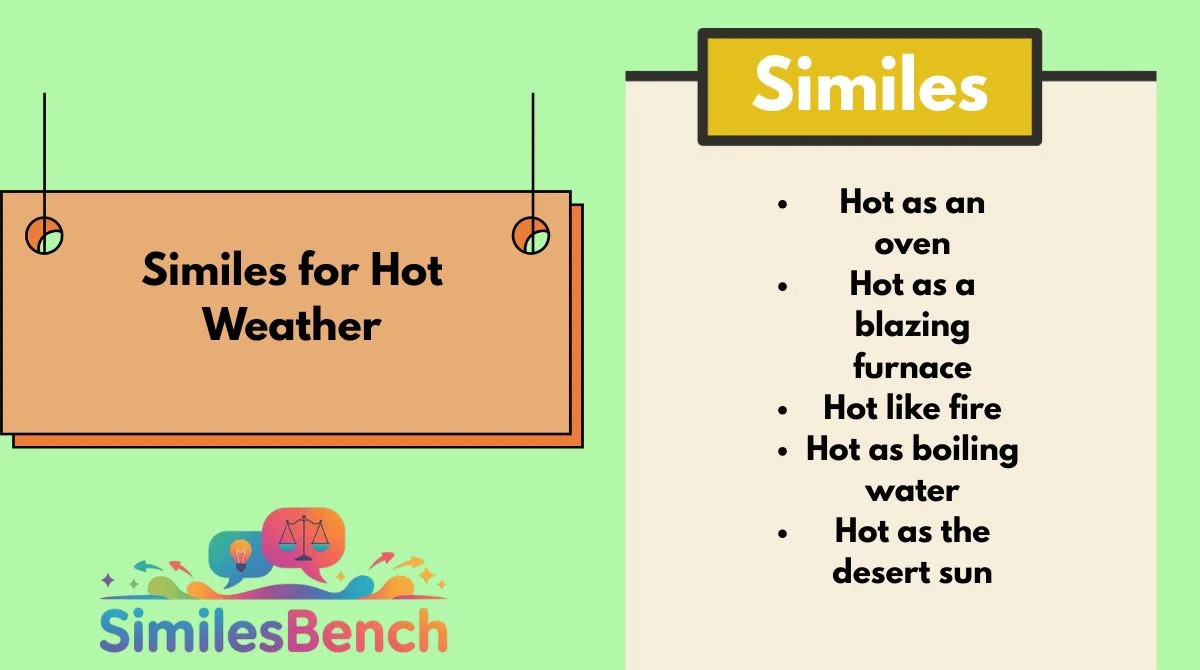
- Hot as an oven
- Hot as a blazing furnace
- Hot like fire
- Hot as boiling water
- Hot as the desert sun
- Hot like a burning coal
- Hot as a summer afternoon
- Hot like a frying pan
- Hot as molten lava
- Hot like a heated iron
- Hot as a tropical jungle
- Hot like a sauna
- Hot as a sun-baked road
- Hot like a roaring flame
- Hot as a heatwave in July
- Hot like a closed car in summer
- Hot as scorched earth
- Hot like a burning candle
1. Hot as an oven
Meaning: Extremely hot, trapped heat
Explanation: The heat feels closed in and heavy, like standing near an oven.
The kitchen felt hot as an oven when the power went out.
By noon, the classroom was hot as an oven, and everyone looked tired.
2. Hot as a blazing furnace
Meaning: Intense, powerful heat
Explanation: Used to show heat that feels almost unbearable.
The metal roof was hot as a blazing furnace under the sun.
Walking outside felt hot as a blazing furnace, even for a few minutes.
3. Hot like fire
Meaning: Sharp, burning heat
Explanation: Often used for sudden or painful heat.
The sand was hot like fire under my bare feet.
His skin felt hot like fire after sitting in the sun too long.
4. Hot as boiling water
Meaning: Steaming and uncomfortable heat
Explanation: Compares heat to water that is bubbling and steaming.
The bathroom felt hot as boiling water after a long shower.
The city air stayed hot as boiling water all afternoon.
5. Hot as the desert sun
Meaning: Dry, powerful heat
Explanation: Suggests heat that drains energy quickly.
The open field was hot as the desert sun by midday.
Her skin burned hot as the desert sun after hours outside.
6. Hot like a burning coal
Meaning: Small but intense heat
Explanation: Works well for objects or surfaces.
The black seatbelt was hot like a burning coal.
The handle felt hot like a burning coal in my hand.
7. Hot as a summer afternoon
Meaning: Natural seasonal heat
Explanation: Soft and familiar, good for storytelling.
The town square was hot as a summer afternoon.
By lunch, the air turned hot as a summer afternoon.
8. Hot like a frying pan
Meaning: Strong surface heat
Explanation: Often used for roads, metal, or sand.
The playground slide was hot like a frying pan.
The pavement stayed hot like a frying pan even after sunset.
9. Hot as molten lava
Meaning: Extreme, dangerous heat
Explanation: Creates a dramatic image of burning heat.
The rocks were hot as molten lava in the sun.
The factory floor felt hot as molten lava during summer shifts.
10. Hot like a heated iron
Meaning: Direct and pressing heat
Explanation: Suggests heat that touches and burns quickly.
The steering wheel was hot like a heated iron.
The door handle felt hot like a heated iron at noon.
11. Hot as a tropical jungle
Meaning: Humid and heavy heat
Explanation: Shows sticky, hard-to-escape warmth.
The room felt hot as a tropical jungle after the rain.
The air grew hot as a tropical jungle, making it hard to breathe.
12. Hot like a sauna
Meaning: Thick, trapped heat
Explanation: Perfect for closed spaces.
The bus felt hot like a sauna without air-conditioning.
The small shop became hot like a sauna by afternoon.
13. Hot as a sun-baked road
Meaning: Dry, lingering heat
Explanation: Focuses on heat that lasts long.
The street was hot as a sun-baked road.
The ground stayed hot as a sun-baked road well into the night.
14. Hot like a roaring flame
Meaning: Fierce, active heat
Explanation: Adds movement and strength to the image.
The wind felt hot like a roaring flame.
The air rushed in hot like a roaring flame through the window.
15. Hot as a heatwave in July
Meaning: Seasonal extreme heat
Explanation: Clear and relatable for most readers.
The city was hot as a heatwave in July.
The day felt hot as a heatwave in July, with no relief.
16. Hot like a closed car in summer
Meaning: Suffocating heat
Explanation: Shows trapped and unsafe warmth.
The small room felt hot like a closed car in summer.
The tent grew hot like a closed car in summer by noon.
17. Hot as scorched earth
Meaning: Dry, burned heat
Explanation: Often used for landscapes or fields.
The field was hot as scorched earth after weeks without rain.
The air felt hot as scorched earth, dry and rough.
18. Hot like a burning candle
Meaning: Focused, steady heat
Explanation: Gentle but constant warmth.
The wax dripped hot like a burning candle.
The afternoon sun felt hot like a burning candle on my skin.
Creative Writing Tips
Similes work best when they feel natural, not forced. In stories, use them to show emotion—heat can reflect anger, tension, or exhaustion. In poems, shorter similes often sound stronger and more musical. Essays benefit from simple similes that explain ideas clearly without distraction. For songs, choose similes that are easy to picture and easy to remember. Always think about your reader and pick comparisons they already understand.
FAQs
What is a simile in simple words?
A simile compares two things using “like” or “as” to make ideas clearer.
Why are similes important in writing?
They help readers imagine scenes and feel emotions more strongly.
Can students use similes in exams?
Yes, simple similes can improve descriptions without sounding too fancy.
How many similes should I use in one paragraph?
One or two is enough. Too many can confuse the reader.
Are similes and metaphors the same?
No. Similes use “like” or “as,” while metaphors do not.
Conclusion
Similes turn plain sentences into vivid pictures. When writing about hot weather, they help readers feel the heat instead of just reading about it.
By choosing clear and relatable comparisons, your writing becomes stronger and more enjoyable. Practice using similes in small ways, and soon they’ll feel natural. Let your words carry warmth, emotion, and life onto the page.