Similes make writing brighter, funnier, and easier to imagine. When we compare laughter to familiar things, readers can hear and feel it right away.
That’s why learning similes for laughing is so useful for students, storytellers, and anyone who enjoys words. In this friendly guide, you’ll explore clear examples, simple meanings, and real sentences that show how laughter can leap off the page.
What Is a Simile?
A simile compares two things using “like” or “as.”
It helps readers picture feelings, sounds, or actions more clearly.
For example, “laughing like a child” shows joy in a quick, simple way.
Full List of Similes (17)
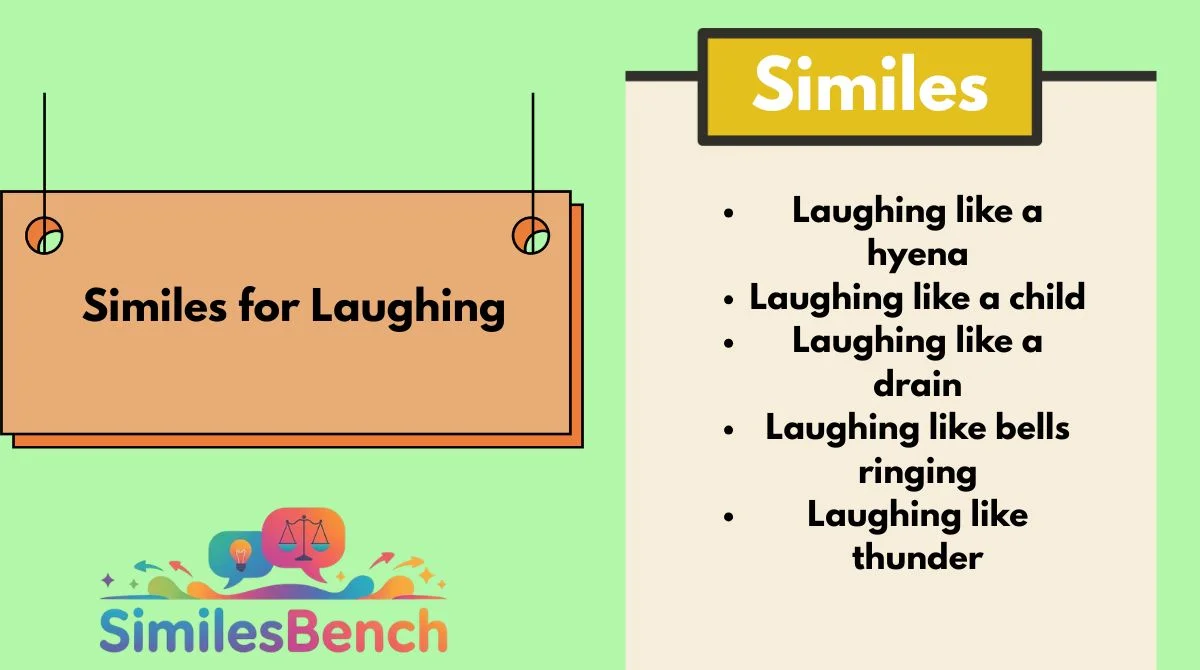
- Laughing like a hyena
- Laughing like a child
- Laughing like a drain
- Laughing like bells ringing
- Laughing like thunder
- Laughing like bubbles popping
- Laughing like a broken engine
- Laughing like a monkey
- Laughing like music
- Laughing like fireworks
- Laughing like a loon
- Laughing like a creek in spring
- Laughing like popcorn popping
- Laughing like a puppy
- Laughing like a witch’s cackle
- Laughing like a burst balloon
- Laughing like sunshine breaking through clouds
1. Laughing like a hyena
Meaning: Loud, wild laughter
Explanation: This simile shows laughter that is hard to stop and full of energy.
Examples:
She laughed like a hyena when she heard the joke, bending over and wiping tears from her eyes.
The whole room turned to look as he started laughing like a hyena at the silly video.
2. Laughing like a child
Meaning: Pure, happy laughter
Explanation: It shows innocent joy without worry or fear.
Examples:
Grandma laughed like a child while playing cards with her grandchildren.
He laughed like a child the first time he saw snow fall from the sky.
3. Laughing like a drain
Meaning: Noisy, rough laughter
Explanation: This describes laughter that sounds harsh or echoing.
Examples:
He laughed like a drain, surprising everyone in the quiet classroom.
Her laugh came out like a drain, loud and sudden in the small café.
4. Laughing like bells ringing
Meaning: Light, cheerful laughter
Explanation: It suggests a pleasant sound that lifts the mood.
Examples:
She laughed like bells ringing as she skipped down the path.
His laughter, like bells ringing, filled the house with warmth.
5. Laughing like thunder
Meaning: Deep, powerful laughter
Explanation: This simile shows laughter that is strong and booming.
Examples:
Dad laughed like thunder when he heard the old family story.
The coach laughed like thunder, shaking the benches around him.
6. Laughing like bubbles popping
Meaning: Soft, playful laughter
Explanation: It feels light and gentle, not loud or rough.
Examples:
She laughed like bubbles popping as the puppy chased its tail.
His laugh came out like bubbles popping during the quiet game.
7. Laughing like a broken engine
Meaning: Uneven or strange laughter
Explanation: This simile fits laughter that stops and starts.
Examples:
He laughed like a broken engine, gasping between sounds.
Her laughter, like a broken engine, made everyone laugh even more.
8. Laughing like a monkey
Meaning: Silly, playful laughter
Explanation: It shows fun and mischief.
Examples:
The kids laughed like monkeys during recess.
She laughed like a monkey after pulling a harmless prank.
9. Laughing like music
Meaning: Pleasant, smooth laughter
Explanation: This simile makes laughter feel beautiful and calming.
Examples:
Her laugh sounded like music in the quiet room.
He laughed like music, making everyone feel at ease.
10. Laughing like fireworks
Meaning: Sudden, exciting laughter
Explanation: It shows laughter that bursts out quickly.
Examples:
She laughed like fireworks when she won the game.
His laughter went off like fireworks during the surprise party.
11. Laughing like a loon
Explanation: This simile shows laughter that feels a bit wild.
Examples:
He laughed like a loon after staying up too late.
She laughed like a loon at the joke no one else understood.
12. Laughing like a creek in spring
Meaning: Gentle, natural laughter
Explanation: It feels calm and flowing.
Examples:
She laughed like a creek in spring while telling her story.
His laughter, like a creek in spring, sounded peaceful and warm.
13. Laughing like popcorn popping
Meaning: Quick, repeated laughter
Explanation: It shows short bursts of laughter.
Examples:
The class laughed like popcorn popping during the funny play.
Her laughter popped like popcorn as the jokes kept coming.
14. Laughing like a puppy
Meaning: Excited, joyful laughter
Explanation: This simile feels full of energy and happiness.
Examples:
He laughed like a puppy seeing its owner after a long day.
She laughed like a puppy while opening her birthday gifts.
15. Laughing like a witch’s cackle
Meaning: Sharp, eerie laughter
Explanation: It often feels spooky or teasing.
Examples:
She laughed like a witch’s cackle during the scary movie.
His laugh sounded like a witch’s cackle in the dark hallway.
16. Laughing like a burst balloon
Meaning: Sudden, loud laughter
Explanation: This simile shows laughter that comes out all at once.
Examples:
He laughed like a burst balloon when he heard the surprise.
Her laughter popped like a burst balloon in the silent room.
17. Laughing like sunshine breaking through clouds
Meaning: Warm, comforting laughter
Explanation: It shows laughter that brings relief and happiness.
Examples:
She laughed like sunshine breaking through clouds after a hard day.
His laugh felt like sunshine breaking through clouds in the tense meeting.
Creative Writing Tips
Similes work best when they match the feeling of your writing. In stories, use them to show emotions instead of explaining them. Let readers hear the laughter rather than telling them someone is happy. In poems, choose similes that create strong pictures or sounds. Short and clear comparisons work well.
For essays, use similes carefully. One good simile can make an example more memorable. In songs, focus on rhythm and feeling. A musical simile can make lyrics stick in the listener’s mind. Always pick comparisons your readers know and can imagine easily.
FAQs
What is the difference between a simile and a metaphor?
A simile uses “like” or “as” to compare things. A metaphor compares them directly without those words.
Why are similes important in writing?
They help readers picture ideas clearly and make writing more interesting.
Can similes be used in school essays?
Yes. When used correctly, similes can improve descriptions and show creativity.
How do I choose a good simile?
Think about the feeling you want to show and compare it to something familiar.
Are similes only used in stories?
No. Similes appear in poems, songs, speeches, and everyday conversation.
Conclusion
Similes turn simple laughter into something readers can see, hear, and feel. By learning and using these comparisons, students and writers can make their work more colorful and alive. Try adding one or two similes to your next story or poem. With practice, your writing will sound more natural, expressive, and fun to read.