Similes are one of the easiest and most fun ways to make writing come alive. They help readers see pictures in their minds and feel emotions more clearly.
When we describe legs using similes, we can show strength, fear, beauty, tiredness, or speed without using long explanations. This guide is perfect for students, teachers, and writers who want simple, creative, and natural examples that actually sound human.
What Is a Simile?
A simile is a comparison using the words “like” or “as.”
It helps explain something by comparing it to something familiar.
Similes make writing clearer, more colorful, and more interesting.
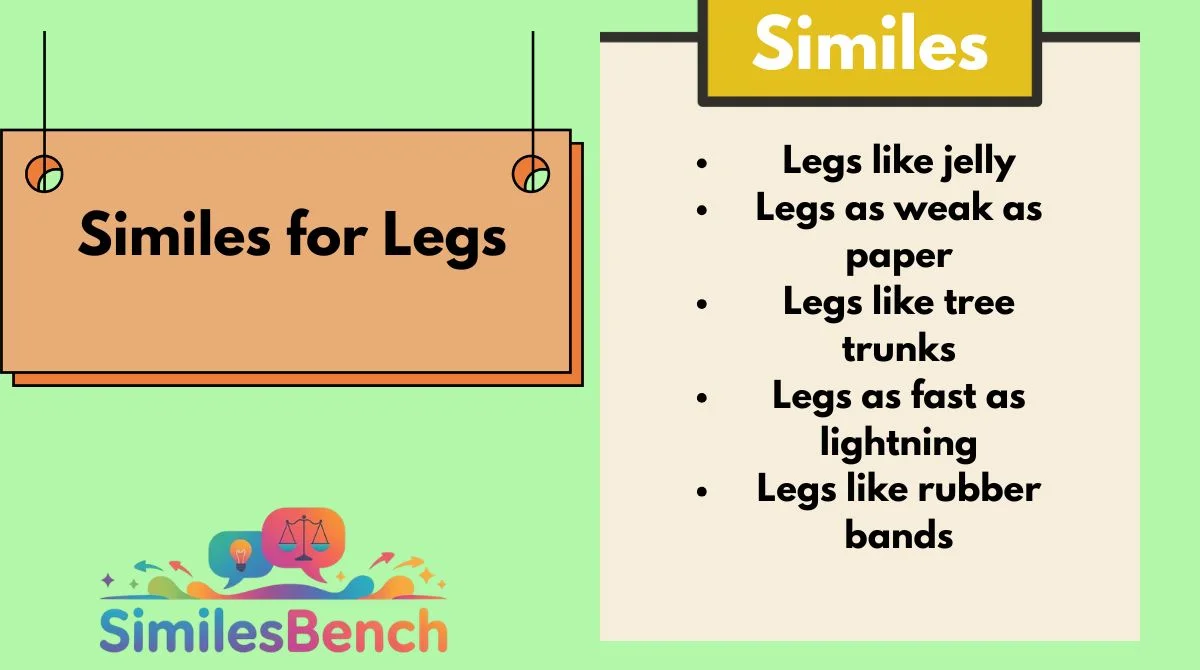
Full List of Similes for Legs
- Legs like jelly
- Legs as weak as paper
- Legs like tree trunks
- Legs as fast as lightning
- Legs like rubber bands
- Legs as heavy as stone
- Legs like sticks
- Legs as strong as iron
- Legs like feathers
- Legs as shaky as leaves
- Legs like springs
- Legs as stiff as wood
- Legs like noodles
- Legs as steady as rocks
1. Legs like jelly
Meaning: Legs feel weak and wobbly.
Explanation: Often used when someone is scared, tired, or nervous.
After the long speech, her legs felt like jelly as she stepped off the stage.
When the roller coaster stopped, he laughed, but his legs were still like jelly.
2. Legs as weak as paper
Meaning: Very weak legs with no strength.
Explanation: Shows extreme tiredness or fear.
After running all day, his legs were as weak as paper.
She tried to stand, but her legs felt as weak as paper beneath her.
3. Legs like tree trunks
Meaning: Thick, strong legs.
Explanation: Often used to describe strength or power.
The wrestler stood tall with legs like tree trunks.
Years of farm work gave her legs like tree trunks.
4. Legs as fast as lightning
Meaning: Very fast legs.
Explanation: Used for speed and quick movement.
With legs as fast as lightning, he won the race easily.
She dashed through the rain, her legs as fast as lightning.
5. Legs like rubber bands
Meaning: Flexible or bouncy legs.
Explanation: Shows energy or sudden movement.
The dancer jumped again, her legs like rubber bands.
After resting, his legs felt like rubber bands, ready to move.
6. Legs as heavy as stone
Meaning: Very tired or hard to move legs.
Explanation: Common after hard work or long walks.
By sunset, her legs were as heavy as stone.
He climbed the hill slowly, his legs feeling as heavy as stone.
7. Legs like sticks
Meaning: Very thin or weak-looking legs.
Explanation: Often used in appearance descriptions.
The scarecrow stood with legs like sticks.
As a child, he worried his legs were too much like sticks.
8. Legs as strong as iron
Meaning: Extremely strong legs.
Explanation: Shows power and endurance.
The mountain climber relied on legs as strong as iron.
Years of training built her legs as strong as iron.
9. Legs like feathers
Meaning: Light and easy to move legs.
Explanation: Shows happiness, rest, or energy.
After the good news, she walked home with legs like feathers.
He skipped down the path, his legs feeling like feathers.
10. Legs as shaky as leaves
Meaning: Trembling legs.
Explanation: Often used for fear or nervousness.
Before the exam, his legs were as shaky as leaves.
Standing on the tall bridge, her legs felt as shaky as leaves.
11. Legs like springs
Meaning: Energetic and jumpy legs.
Explanation: Shows excitement or readiness.
The young puppy ran with legs like springs.
She bounced onto the stage, her legs like springs.
12. Legs as stiff as wood
Meaning: Legs that don’t bend easily.
Explanation: Used for cold, injury, or long sitting.
After the long flight, his legs were as stiff as wood.
She stood up slowly, her legs stiff as wood.
13. Legs like noodles
Meaning: Weak and floppy legs.
Explanation: Often playful or humorous.
After laughing too hard, her legs felt like noodles.
He sat down quickly when his legs turned like noodles.
14. Legs as steady as rocks
Meaning: Strong and balanced legs.
Explanation: Shows confidence and control.
The guard stood firm with legs as steady as rocks.
During the storm, she planted her legs as steady as rocks.
Creative Writing Tips
Similes work best when they feel natural, not forced. In stories, use them to show emotions instead of telling them. Instead of saying a character is scared, show their legs shaking like leaves. In poems, similes add rhythm and images that stay in the reader’s mind. Choose comparisons that match the mood.
For essays, simple similes can make descriptions clearer without sounding childish. Use them sparingly. In songs, similes help listeners feel emotions quickly, especially feelings like love, fear, or excitement. Always pick similes that fit the moment and the character’s feelings.
FAQs
What are similes used for in writing?
Similes help readers understand ideas by comparing them to familiar things. They make writing more interesting and emotional.
Are similes only used in poems?
No. Similes are used in stories, essays, songs, and everyday speech.
How is a simile different from a metaphor?
A simile uses “like” or “as.” A metaphor does not.
Can students use similes in school writing?
Yes. Teachers often encourage similes because they improve description and creativity.
How many similes should I use in one piece?
A few strong similes are better than many weak ones. Use them where they add meaning.
Conclusion
Similes turn simple sentences into vivid pictures. When used well, they help readers feel emotions, imagine scenes, and connect with writing.
Learning different similes for legs gives students and writers more ways to describe movement, strength, fear, and energy. Try using a few in your next story or poem, and watch your writing grow more alive and expressive.