Life can be confusing, beautiful, heavy, and surprising—all at the same time. That’s why writers often use similes to explain life in a way that feels real and easy to understand.
Similes help us turn big ideas into clear pictures in the reader’s mind. Whether you’re a student, a poet, or just someone who loves words, learning similes for life can make your writing more colorful and meaningful.
What Is a Simile
A simile is a comparison using “like” or “as.”
It helps describe something by comparing it to something familiar.
Similes make writing clearer, stronger, and more interesting.
Full List of Similes for Life
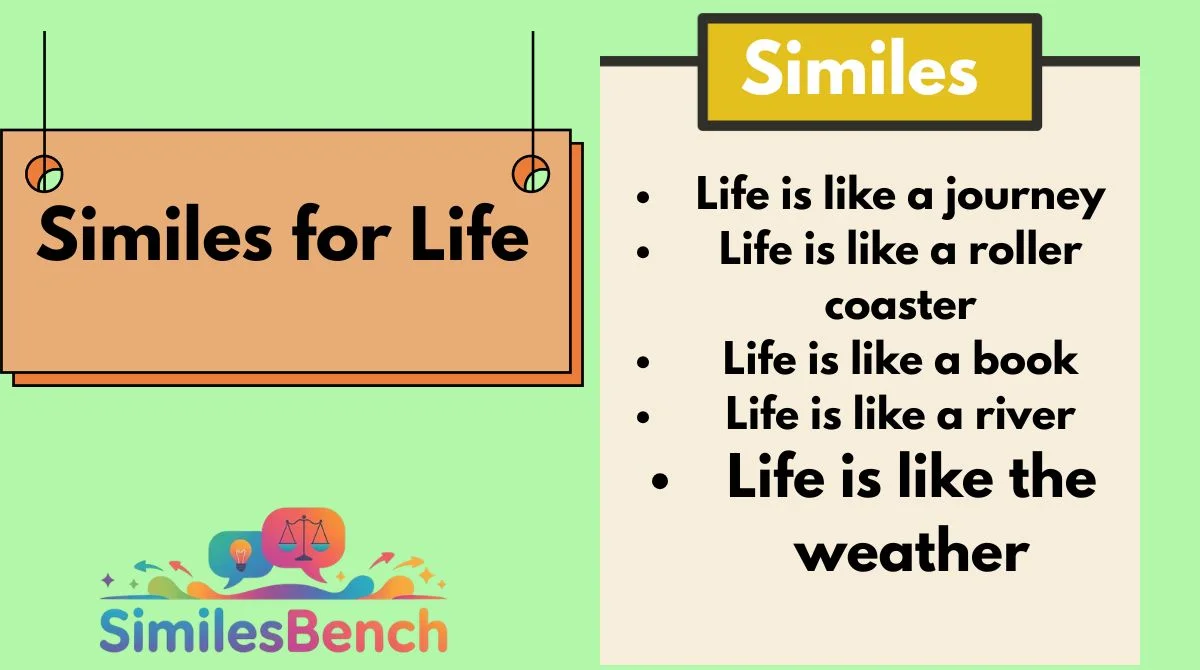
- Life is like a journey
- Life is like a roller coaster
- Life is like a book
- Life is like a river
- Life is like the weather
- Life is like a puzzle
- Life is like a mirror
- Life is like a garden
- Life is like a classroom
- Life is like a race
- Life is like a balancing act
- Life is like a box of chocolates
1. Life is like a journey
Meaning: Life has a beginning, a path, and many stops along the way.
Explanation: Just like a trip, life includes choices, delays, and unexpected turns.
Examples:
- Life is like a journey, and every mistake teaches us where not to go next.
- She learned that life is like a journey, not a race to the finish.
2. Life is like a roller coaster
Meaning: Life has highs and lows.
Explanation: Some moments feel exciting, while others feel scary or sad.
Examples:
- Teen years taught him that life is like a roller coaster with sudden drops.
- Life felt like a roller coaster that year, full of joy and tears.
3. Life is like a book
Meaning: Life is made of chapters and stories.
Explanation: Every phase of life is like a new chapter with lessons to learn.
Examples:
- She closed one chapter and reminded herself that life is like a book still being written.
- Life is like a book, and each day adds a new page.
4. Life is like a river
Meaning: Life keeps moving forward.
Explanation: You can’t stop time, just like you can’t stop a river from flowing.
Examples:
- He accepted change, knowing life is like a river that never stands still.
- Life flowed like a river, carrying her toward new dreams.
5. Life is like the weather
Meaning: Life changes often and without warning.
Explanation: Good days and bad days come and go.
Examples:
- She stayed hopeful because life is like the weather—it always changes.
- Life felt stormy then, but the sunshine returned.
6. Life is like a puzzle
Meaning: Life takes time to understand.
Explanation: Some pieces don’t make sense at first, but they fit later.
Examples:
- Life is like a puzzle, and patience helps you find the right pieces.
- He trusted that life’s puzzle would eventually come together.
7. Life is like a mirror
Meaning: Life reflects what you give.
Explanation: Kindness often brings kindness back.
Examples:
- She believed life is like a mirror, smiling back when you smile first.
- Life reflected his honesty through the people he met.
8. Life is like a garden
Meaning: Life needs care to grow.
Explanation: Hard work and patience help good things bloom.
Examples:
- Life is like a garden, and effort is the water it needs.
- She treated her goals like plants, knowing life grows slowly.
9. Life is like a classroom
Meaning: Life teaches lessons every day.
Explanation: Mistakes help us learn and improve.
Examples:
- He learned that life is like a classroom where failures are teachers.
- Life taught her lessons no textbook ever could.
10. Life is like a race
Meaning: Life moves at different speeds for everyone.
Explanation: There’s no need to rush or compare yourself.
Examples:
- She stopped comparing herself and remembered life is like a race with no finish line.
- Life felt calmer when he ran at his own pace.
11. Life is like a balancing act
Meaning: Life requires careful choices.
Explanation: You must balance work, rest, and relationships.
Examples:
- Life became easier once she accepted it’s a balancing act.
- He struggled to keep balance as life pulled him in different directions.
12. Life is like a box of chocolates
Meaning: Life is full of surprises.
Explanation: You never know what’s coming next.
Examples:
- Life surprised her again, proving it’s like a box of chocolates.
- He opened each day with curiosity, knowing life is unpredictable.
Creative Writing Tips
Similes work best when they feel natural, not forced. In stories, use similes to show emotions instead of explaining them directly. In poems, choose strong images that match the mood. For essays, similes can help explain big ideas in a simple way. In songs, similes make lyrics emotional and memorable. Always choose comparisons your reader can picture easily, and don’t use too many at once.
FAQs
What is the difference between a simile and a metaphor?
A simile uses “like” or “as.” A metaphor compares directly without those words.
Why are similes important in writing?
They make ideas clearer, more emotional, and easier to imagine.
Can similes be used in essays?
Yes. They help explain ideas and keep writing interesting.
Are similes only used in poems?
No. Similes are used in stories, songs, speeches, and everyday speech.
How do I make my own similes?
Think of how something feels, then compare it to something familiar.
Conclusion
Similes help us explain life in a way that feels honest and human. They turn thoughts into pictures and emotions into words. By using similes, writers can connect with readers more deeply and clearly. Practice using them in your writing, and you’ll soon notice how your words come alive. Life may be complex, but similes make it easier to understand.