Have you ever tried to describe a sunset, a storm, or a quiet forest and felt your words fall flat? That’s where similes come in.
Similes help us compare nature to everyday things so readers can see and feel what we mean. Whether you’re a student, teacher, or creative writer, learning similes for nature can make your writing clearer, warmer, and more fun to read.
What Is a Simile?
A simile compares two things using “like” or “as.”
It helps readers imagine something better by linking it to something familiar.
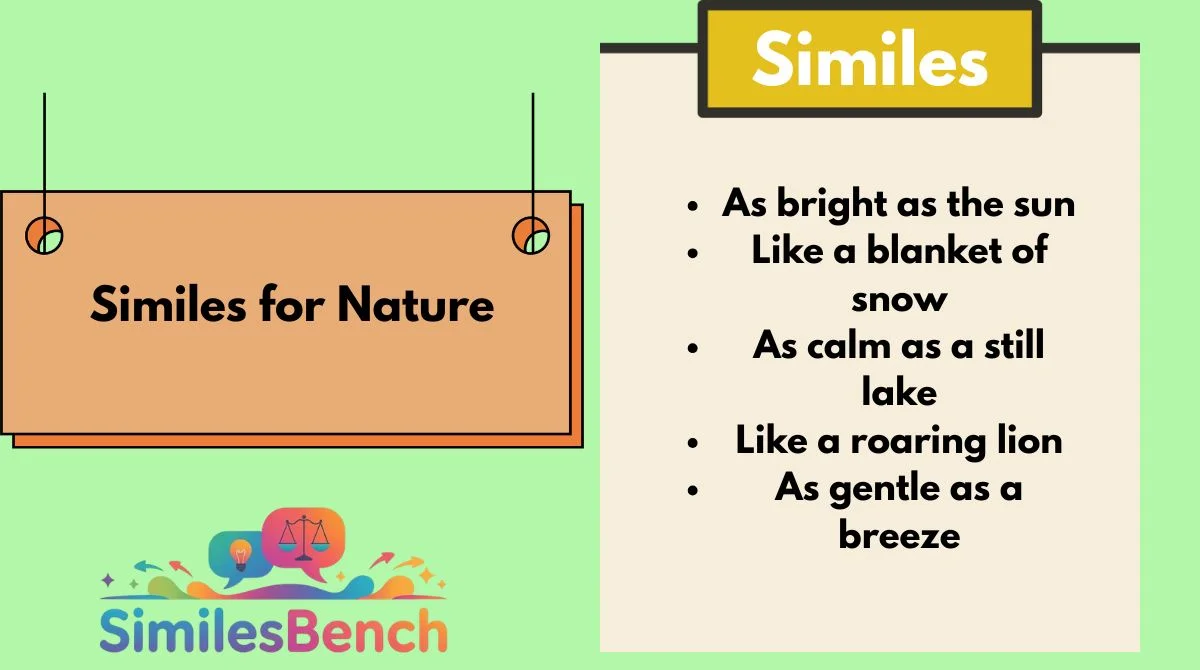
Full List of Similes for Nature
- As bright as the sun
- Like a blanket of snow
- As calm as a still lake
- Like a roaring lion
- As gentle as a breeze
- Like a painting
- As tall as the sky
- Like a silver ribbon
- As wild as the ocean
- Like a sleeping giant
- As fresh as morning dew
- Like a mirror
- As fast as lightning
- Like a green carpet
- As quiet as falling snow
- Like a warm hug
1. As bright as the sun
Meaning: Extremely bright or cheerful
Explanation: This simile compares strong light or happiness to the sun’s glow.
Examples:
The child’s smile was as bright as the sun on a summer day.
Yellow flowers shone as bright as the sun in the open field.
2. Like a blanket of snow
Meaning: Covering something fully and softly
Explanation: Snow is compared to a blanket because it spreads gently over the ground.
Examples:
Overnight, the yard disappeared under a blanket of snow.
The hills rested quietly, like a blanket of snow tucked them in.
3. As calm as a still lake
Meaning: Very peaceful and quiet
Explanation: A lake without waves shows deep calm.
Examples:
The forest felt as calm as a still lake at dawn.
Her mind grew calm as a still lake after the rain stopped.
4. Like a roaring lion
Meaning: Very loud and powerful
Explanation: Nature sounds are compared to a lion’s roar.
Examples:
The waterfall crashed like a roaring lion below the cliff.
Thunder rolled through the sky like a roaring lion.
5. As gentle as a breeze
Meaning: Soft and light
Explanation: A breeze shows quiet and gentle movement.
Examples:
The wind touched my face as gentle as a breeze.
Her voice flowed through the room as gentle as a breeze.
6. Like a painting
Meaning: Very beautiful to look at
Explanation: Nature scenes are compared to artwork.
Examples:
The sunset spread across the sky like a painting.
The valley looked like a painting filled with green and gold.
7. As tall as the sky
Meaning: Extremely tall
Explanation: This simile shows great height.
Examples:
The mountains stood as tall as the sky around us.
The old trees rose as tall as the sky above the path.
8. Like a silver ribbon
Meaning: Long, smooth, and shining
Explanation: Rivers often look shiny and flowing like ribbons.
Examples:
The river curved through the land like a silver ribbon.
Moonlight turned the stream into a silver ribbon at night.
9. As wild as the ocean
Meaning: Uncontrolled and powerful
Explanation: The ocean shows strength and motion.
Examples:
The storm grew as wild as the ocean during high tide.
His thoughts felt wild as the ocean on windy days.
10. Like a sleeping giant
Meaning: Large but quiet
Explanation: Big mountains or hills can feel calm and still.
Examples:
The volcano rested like a sleeping giant.
The dark clouds waited like a sleeping giant in the sky.
11. As fresh as morning dew
Meaning: Clean and new
Explanation: Dew represents freshness and early mornings.
Examples:
The air felt as fresh as morning dew after the rain.
Her ideas sounded fresh as morning dew.
12. Like a mirror
Meaning: Very clear and reflective
Explanation: Water often reflects like a mirror.
Examples:
The lake shone like a mirror under the sun.
Ice covered the road like a mirror of glass.
13. As fast as lightning
Meaning: Extremely fast
Explanation: Lightning moves quicker than almost anything.
Examples:
The storm arrived as fast as lightning.
The deer ran as fast as lightning through the trees.
14. Like a green carpet
Meaning: Thick and spread out
Explanation: Grass can look smooth and wide like carpet.
Examples:
The field rolled out like a green carpet.
Moss covered the forest floor like a green carpet.
15. As quiet as falling snow
Meaning: Very silent
Explanation: Snow falls without sound.
Examples:
The night felt as quiet as falling snow.
The village rested as quiet as falling snow.
16. Like a warm hug
Meaning: Comforting and safe
Explanation: Nature can bring comfort like a hug.
Examples:
The sunshine wrapped around me like a warm hug.
The forest felt like a warm hug on a cold day.
Creative Writing Tips
Similes work best when they feel natural and clear.
In stories:
Use similes to show emotions through nature. Instead of saying a character is scared, describe the storm around them.
In poems:
Keep similes short and musical. One strong image is better than many weak ones.
In essays:
Use similes to explain ideas. They help readers understand difficult thoughts.
In songs:
Similes add feeling. Compare love, sadness, or hope to nature.
Helpful tips:
- Don’t force similes into every sentence
- Choose images your reader knows
- Match the mood of your writing
- Read your line out loud—if it sounds natural, it works
FAQs
What is a simile in simple words?
A simile compares two things using “like” or “as” to make writing clearer.
Why are similes used in writing?
They help readers imagine pictures and feel emotions.
Are similes only used in poems?
No. Similes are used in stories, essays, songs, and everyday speech.
What is the difference between a simile and a metaphor?
A simile uses “like” or “as.” A metaphor does not.
How can students practice similes?
By describing nature, emotions, or daily life using comparisons.
Conclusion
Similes help turn simple writing into something readers remember. When you compare nature to familiar ideas, your words feel alive and real. Students gain confidence, and writers connect better with readers.
Try using one or two similes in your next piece of writing and notice how your sentences grow warmer, clearer, and more exciting.