Similes make writing colorful and alive. Instead of saying something plain, similes help us paint pictures with words. They compare one thing to another using like or as, making ideas easier to imagine.
Learning similes for body parts, like the nose, is fun and useful for stories, poems, and school writing. Whether you’re a student or a creative writer, these examples will spark your imagination and boost your confidence.
What Is a Simile?
A simile is a comparison using the words like or as.
It helps readers imagine something clearly.
Similes make writing more interesting and expressive.
Full List of Similes
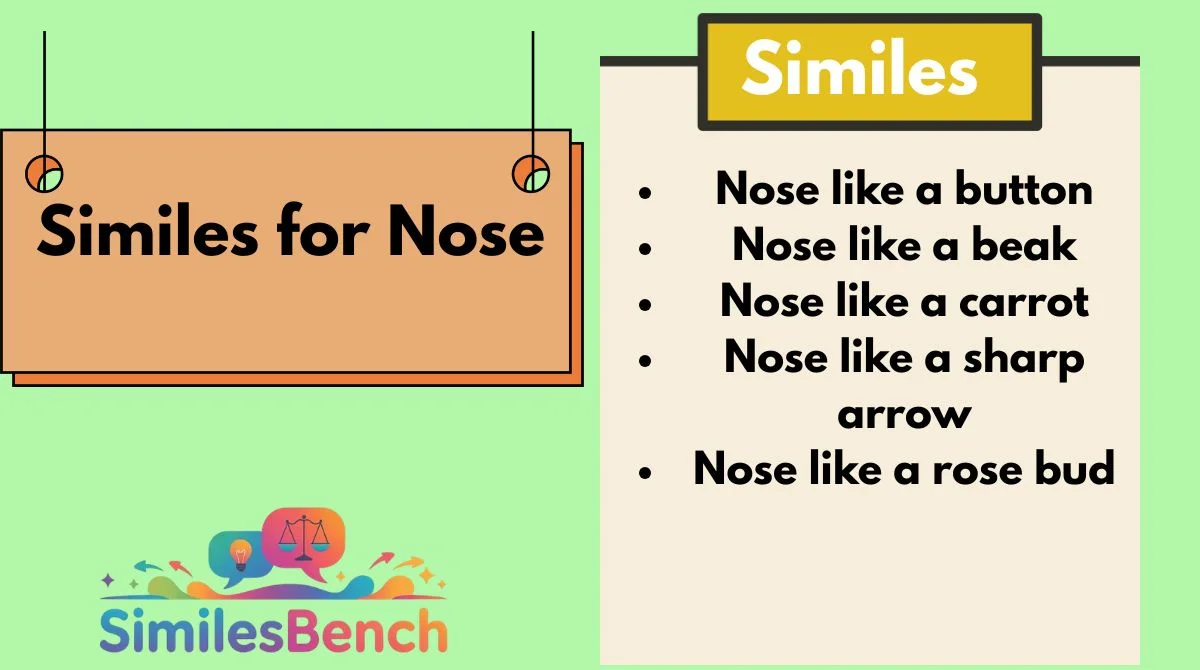
- Nose like a button
- Nose like a beak
- Nose like a carrot
- Nose like a sharp arrow
- Nose like a rose bud
- Nose like a mountain peak
- Nose like a piglet’s snout
- Nose like a marble statue
- Nose like a bent twig
- Nose like a soft peach
- Nose like a shiny cherry
- Nose like a hawk’s beak
1. Nose like a button
Meaning: Small, round, and cute
Explanation:
This simile is often used to describe a sweet or youthful nose.
Examples:
Her nose was like a button, making her smile look even brighter.
The baby giggled, his button-like nose wrinkling with joy.
2. Nose like a beak
Meaning: Long and curved
Explanation:
It compares a nose to a bird’s beak, often sharp in shape.
Examples:
The old man’s nose was like a beak, giving him a serious look.
She sketched a witch with a beak-like nose for her storybook.
3. Nose like a carrot
Meaning: Long and pointed
Explanation:
This simile is playful and often used in cartoons or children’s stories.
Examples:
The snowman had a nose like a carrot, standing proudly in the yard.
He laughed at his reflection, imagining his nose growing like a carrot.
4. Nose like a sharp arrow
Meaning: Very pointed and narrow
Explanation:
It shows a strong or striking nose shape.
Examples:
His nose was like a sharp arrow, giving his face a bold edge.
The hero’s arrow-like nose made him easy to recognize in the crowd.
5. Nose like a rose bud
Meaning: Small, soft, and delicate
Explanation:
This simile adds beauty and gentleness to description.
Examples:
Her nose was like a rose bud, gentle and perfectly shaped.
The painting showed a girl with a rose-bud nose glowing softly.
6. Nose like a mountain peak
Meaning: Tall and prominent
Explanation:
Used to describe a nose that stands out strongly.
Examples:
His nose rose like a mountain peak above his thin smile.
From the side, her mountain-peak nose gave her a proud profile.
7. Nose like a piglet’s snout
Meaning: Short and rounded
Explanation:
Often used in a funny or teasing way.
Examples:
He scrunched his piglet-like snout when he smelled the soup.
The cartoon character’s nose looked like a piglet’s snout, making kids laugh.
8. Nose like a marble statue
Meaning: Smooth and perfectly shaped
Explanation:
This simile suggests beauty and balance.
Examples:
Her nose was like a marble statue, calm and elegant.
The sculptor admired the statue’s nose, smooth like polished marble.
9. Nose like a bent twig
Meaning: Crooked or uneven
Explanation:
It gently describes an imperfect shape.
Examples:
After the accident, his nose looked like a bent twig.
The villain’s bent-twig nose added mystery to his face.
10. Nose like a soft peach
Meaning: Smooth and gentle
Explanation:
This simile focuses on texture rather than shape.
Examples:
The baby’s nose felt like a soft peach against her cheek.
She kissed his peach-soft nose and smiled.
11. Nose like a shiny cherry
Meaning: Red and round
Explanation:
Often used when someone is cold or embarrassed.
Examples:
After playing in the snow, his nose looked like a shiny cherry.
Her cherry-like nose glowed as she laughed nervously.
12. Nose like a hawk’s beak
Meaning: Strong, sharp, and curved
Explanation:
This simile shows power and sharpness.
Examples:
The warrior’s nose was like a hawk’s beak, proud and fearless.
His hawk-beak nose gave him a commanding presence.
Creative Writing Tips
Similes are powerful tools when used wisely. In stories, they help readers see characters clearly and feel emotions more deeply. In poems, similes add beauty and rhythm. Essays become more engaging when similes explain ideas simply. Even songs use similes to express feelings in a memorable way.
Choose similes that match the mood. A funny scene needs playful comparisons, while a serious moment needs gentle or strong ones. Don’t overload your writing—one good simile is better than many weak ones. Read your sentence aloud. If it sounds natural, you’re doing it right.
FAQs
What are similes used for?
Similes help describe things clearly and creatively by comparing them.
Are similes good for students?
Yes, they improve imagination, vocabulary, and writing skills.
Can similes be funny?
Absolutely. Many similes add humor and playfulness.
How are similes different from metaphors?
Similes use like or as. Metaphors do not.
Can I use similes in essays?
Yes, especially in descriptive or narrative essays.
Conclusion
Similes turn simple words into vivid pictures. Learning similes for the nose helps students and writers describe characters in creative ways.
When used naturally, similes make writing warmer and more memorable. Practice using them in your own stories and poems. With time, your writing will feel more alive, expressive, and fun to read.