Similes are one of the easiest and most fun tools in English. They help us explain ideas by comparing them to something familiar. When we talk about quick thinking, similes make that sharp, fast feeling come alive in the reader’s mind.
Whether you are a student, a storyteller, or just love words, learning these similes can make your writing clearer, brighter, and more exciting.
What Is a Simile?
A simile is a comparison using the words “like” or “as.”
It helps readers picture an idea by linking it to something they already know.
Full List of Similes (16)
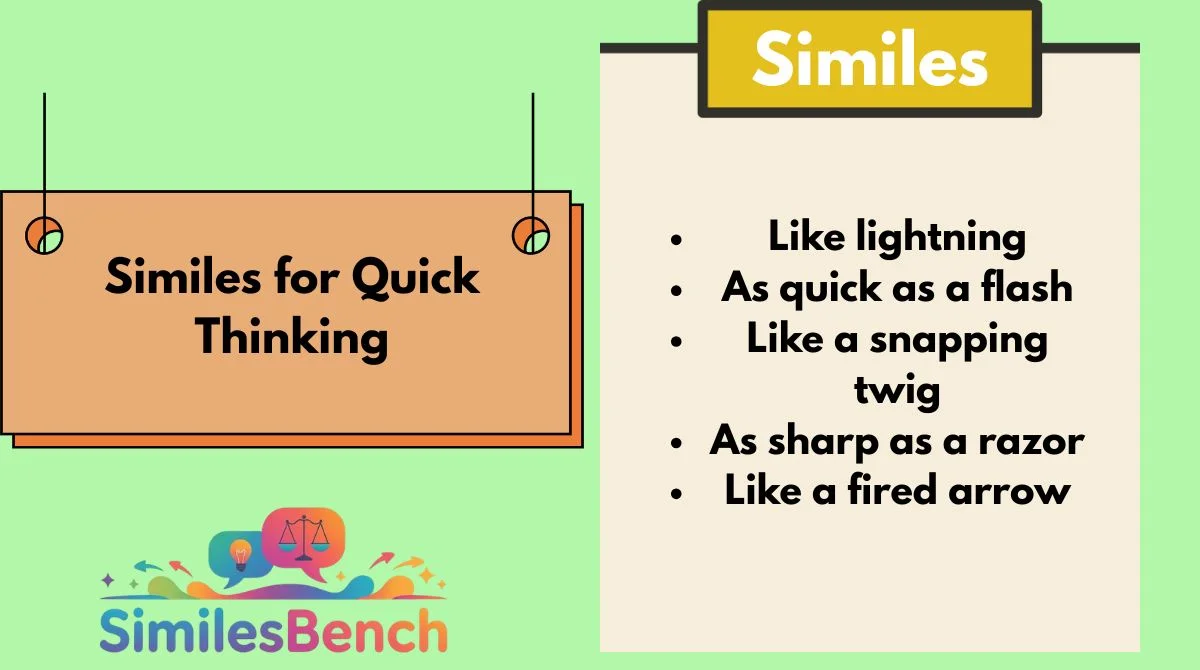
- Like lightning
- As quick as a flash
- Like a snapping twig
- As sharp as a razor
- Like a fired arrow
- As fast as a blink
- Like sparks from a fire
- As swift as a hawk
- Like a racing heartbeat
- As sharp as a needle
- Like a sudden clap of thunder
- As quick as thought
- Like a bouncing ball
- As alert as a guard dog
- Like flipping a switch
- As speedy as a startled cat
1. Like lightning
Meaning: Extremely fast thinking.
Explanation: The mind reacts instantly, with no pause.
Example sentences:
She solved the puzzle like lightning and surprised everyone in the room.
His ideas came like lightning when the team felt stuck.
2. As quick as a flash
Meaning: Thinking that happens in a split second.
Explanation: The answer appears almost immediately.
Example sentences:
As quick as a flash, she knew what the teacher was about to ask.
The memory returned as quick as a flash when he heard the song.
3. Like a snapping twig
Meaning: Fast and sudden thinking.
Explanation: The reaction is sharp and unexpected.
Example sentences:
His reply came like a snapping twig, short but smart.
The idea broke through her mind like a snapping twig.
4. As sharp as a razor
Meaning: Very clear and smart thinking.
Explanation: The mind cuts through confusion easily.
Example sentences:
Even when tired, her thinking stayed as sharp as a razor.
He gave an answer as sharp as a razor during the debate.
5. Like a fired arrow
Meaning: Direct and fast thinking.
Explanation: Thoughts move straight to the point.
Example sentences:
His plan shot out like a fired arrow during the meeting.
She responded like a fired arrow, confident and focused.
6. As fast as a blink
Meaning: Almost instant thinking.
Explanation: There is hardly any delay.
Example sentences:
The solution came to him as fast as a blink.
As fast as a blink, she chose the right door.
7. Like sparks from a fire
Meaning: Many quick ideas at once.
Explanation: Thoughts jump rapidly and creatively.
Example sentences:
Ideas flew like sparks from a fire during the brainstorm.
His mind worked like sparks from a fire when writing stories.
8. As swift as a hawk
Meaning: Fast and watchful thinking.
Explanation: The mind notices and reacts quickly.
Example sentences:
She caught the mistake as swift as a hawk.
His thinking stayed as swift as a hawk under pressure.
9. Like a racing heartbeat
Meaning: Quick thinking caused by excitement or stress.
Explanation: Thoughts speed up with emotion.
Example sentences:
Ideas rushed through her mind like a racing heartbeat.
Under pressure, his thinking moved like a racing heartbeat.
10. As sharp as a needle
Meaning: Precise and fast thinking.
Explanation: The mind focuses on small details quickly.
Example sentences:
Her answer was as sharp as a needle and very accurate.
He noticed the clue with a mind as sharp as a needle.
11. Like a sudden clap of thunder
Meaning: Quick and powerful thinking.
Explanation: The idea arrives with force.
Example sentences:
The solution hit him like a sudden clap of thunder.
Her quick thought landed like a sudden clap of thunder.
12. As quick as thought
Meaning: Thinking without effort or delay.
Explanation: The mind moves naturally and fast.
Example sentences:
As quick as thought, he understood the problem.
Her decision came as quick as thought.
13. Like a bouncing ball
Meaning: Lively and fast-moving thinking.
Explanation: Ideas jump from one to another.
Example sentences:
His thoughts bounced like a bouncing ball during the game.
Creative ideas moved like a bouncing ball in her head.
14. As alert as a guard dog
Meaning: Fast thinking with awareness.
Explanation: The mind stays ready and watchful.
Example sentences:
During the quiz, she stayed as alert as a guard dog.
His quick thinking came from being as alert as a guard dog.
15. Like flipping a switch
Meaning: Instant change in thinking.
Explanation: The mind turns on quickly.
Example sentences:
The answer appeared like flipping a switch.
He focused like flipping a switch when the timer started.
16. As speedy as a startled cat
Meaning: Very fast reaction thinking.
Explanation: Thoughts move suddenly and sharply.
Example sentences:
She reacted as speedy as a startled cat.
His thinking turned as speedy as a startled cat in danger.
Creative Writing Tips
Similes are powerful, but only when used with care. In poems, similes add emotion and rhythm, helping readers feel speed and energy. In essays, one well-placed simile can make an idea clearer and more memorable. Even in songs, similes create strong images that stay in the listener’s mind. Choose similes that match the mood, and avoid using too many at once.
FAQs
What are similes used for in writing?
Similes help explain ideas by comparing them to familiar things. They make writing clearer and more interesting.
Are similes and metaphors the same?
No. Similes use “like” or “as.” Metaphors compare directly without those words.
Can students use similes in essays?
Yes. When used carefully, similes can make essays stronger and easier to understand.
How do similes improve creative writing?
They add images and feelings, helping readers picture scenes and emotions.
How many similes should I use in one piece?
A few strong similes are better than many weak ones. Use them where they matter most.
Conclusion
Similes turn simple ideas into vivid pictures. When describing quick thinking, they help readers feel speed, sharpness, and energy. By learning and practicing these similes, students and writers can make their words more alive and expressive.
Try adding one or two to your next piece of writing, and notice how your ideas suddenly feel clearer and more powerful.