Similes make writing colorful and alive. They help readers see and feel what words are trying to describe. The color red is especially fun because it connects to strong emotions like love, anger, heat, and excitement.
In this guide, you’ll explore clear, creative similes for red that students and writers can actually use. Whether you’re writing a story, poem, or school essay, these examples will spark ideas.
What Is a Simile?
A simile is a comparison using the words “like” or “as.”
It helps explain something by comparing it to something familiar.
Similes make writing more interesting and easier to imagine.
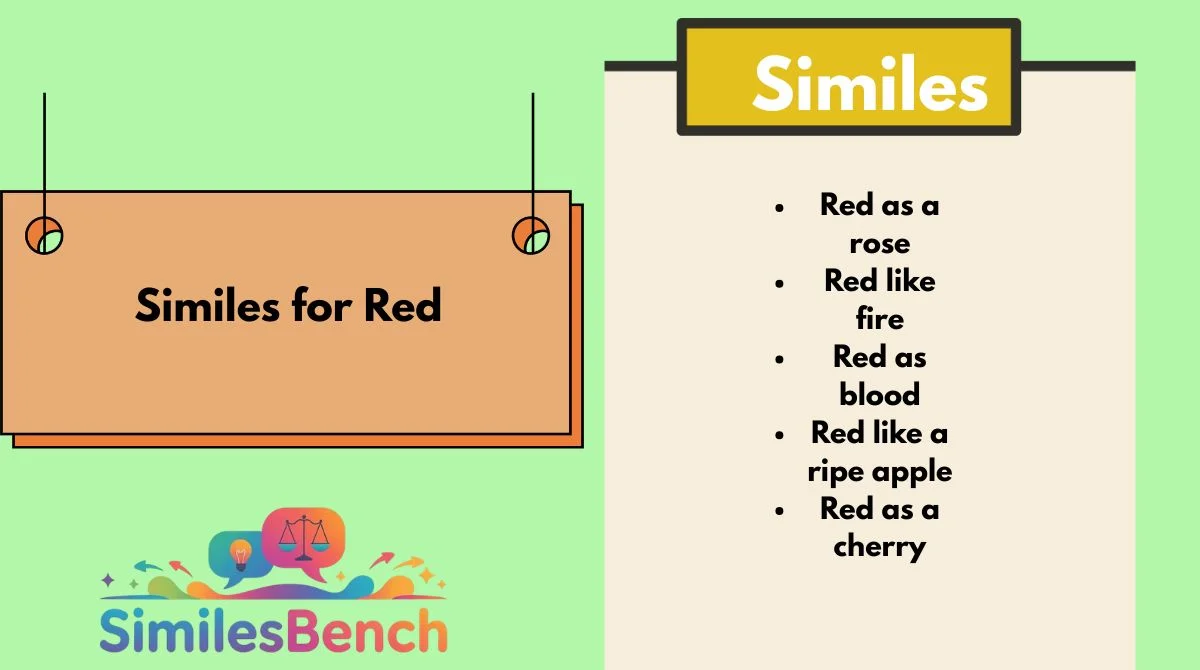
Full List of Similes for Red
- Red as a rose
- Red like fire
- Red as blood
- Red like a ripe apple
- Red as a cherry
- Red like a stop sign
- Red as a sunset
- Red like a blazing flame
- Red as a ruby
- Red like a lobster
- Red as a heart
- Red like hot coals
- Red as a strawberry
- Red like a warning light
- Red as autumn leaves
- Red like lava
- Red as a ripe tomato
- Red like a burning ember
- Red as lipstick
- Red like a painted barn
1. Red as a rose
Meaning: A soft, beautiful red.
Explanation: Often used to describe gentle beauty or love.
Her cheeks were red as a rose when she smiled at him.
The garden bloomed with flowers red as a rose under the morning sun.
2. Red like fire
Meaning: A bright, intense red.
Explanation: Shows strong heat or emotion.
Anger flashed red like fire in his eyes.
The sky turned red like fire just before the storm.
3. Red as blood
Meaning: A deep, dark red.
Explanation: Used for serious or dramatic moments.
The stain was red as blood on the white shirt.
Her hands felt cold, but her face burned red as blood with fear.
4. Red like a ripe apple
Meaning: Fresh and healthy red.
Explanation: Often used for cheeks or fruit.
After running, his face was red like a ripe apple.
She picked a fruit red like a ripe apple from the tree.
5. Red as a cherry
Meaning: Small, bright red.
Explanation: Common for lips or cheeks.
Her lips were red as a cherry in the photo.
The little button shone red as a cherry on his coat.
6. Red like a stop sign
Meaning: Sharp, attention-grabbing red.
Explanation: Suggests warning or importance.
His face went red like a stop sign when he was caught.
The poster stood out red like a stop sign on the wall.
7. Red as a sunset
Meaning: Warm, glowing red.
Explanation: Often used for skies or light.
The clouds burned red as a sunset that evening.
Her scarf glowed red as a sunset in the fading light.
8. Red like a blazing flame
Meaning: Fierce and powerful red.
Explanation: Shows energy or passion.
His temper flared red like a blazing flame.
The torch shone red like a blazing flame in the dark cave.
9. Red as a ruby
Meaning: Rich, shiny red.
Explanation: Used for jewels or elegant things.
The ring sparkled red as a ruby.
Her dress looked red as a ruby under the lights.
10. Red like a lobster
Meaning: Bright red from heat or embarrassment.
Explanation: Often used humorously.
After the beach, his skin was red like a lobster.
She laughed when she turned red like a lobster.
11. Red as a heart
Meaning: Warm, loving red.
Explanation: Connected to love and emotion.
The balloon floated red as a heart above them.
Her sweater felt cozy and red as a heart.
12. Red like hot coals
Meaning: Dark, glowing red.
Explanation: Shows heat beneath the surface.
His anger stayed red like hot coals inside him.
The fire pit glowed red like hot coals at night.
13. Red as a strawberry
Meaning: Bright and sweet-looking red.
Explanation: Often playful and light.
Her nose turned red as a strawberry in the cold.
The dress looked fresh and red as a strawberry.
14. Red like a warning light
Meaning: Sharp red that signals danger.
Explanation: Suggests caution or trouble.
His face flashed red like a warning light.
The dashboard blinked red like a warning light.
15. Red as autumn leaves
Meaning: Warm, natural red.
Explanation: Often calm and peaceful.
The forest glowed red as autumn leaves.
Her shawl felt soft and red as autumn leaves.
16. Red like lava
Meaning: Thick, glowing red.
Explanation: Shows heat and danger.
Anger flowed red like lava through him.
The cracks glowed red like lava at night.
17. Red as a ripe tomato
Meaning: Bright red from embarrassment.
Explanation: Common in everyday speech.
He went red as a ripe tomato when teased.
Her cheeks burned red as a ripe tomato.
18. Red like a burning ember
Meaning: Soft but glowing red.
Explanation: Shows quiet intensity.
Hope stayed red like a burning ember in her heart.
The fire faded red like a burning ember.
19. Red as lipstick
Meaning: Bold, stylish red.
Explanation: Used for fashion or beauty.
Her smile looked red as lipstick in the mirror.
The poster popped red as lipstick on white paper.
20. Red like a painted barn
Meaning: Strong, classic red.
Explanation: Often rural or nostalgic.
The house stood red like a painted barn.
His jacket was red like a painted barn against the snow.
Creative Writing Tips
Similes work best when they feel natural. In stories, use them to show feelings instead of explaining them. Instead of saying “she was embarrassed,” show it with a simile. In poems, similes add music and pictures. Keep them short and clear. For essays, use similes carefully to explain ideas, not distract. In songs, similes help listeners feel emotions quickly. Always choose comparisons your reader knows well.
FAQs
What is a simile in simple words?
A simile compares two things using “like” or “as” to make descriptions clearer.
Why are similes important in writing?
They help readers imagine scenes and understand feelings better.
Can students use similes in essays?
Yes, similes can make essays more engaging when used wisely.
What is the difference between a simile and a metaphor?
A simile uses “like” or “as.” A metaphor does not.
How can I make my own similes?
Think about color, feeling, or shape, then compare it to something familiar.
Conclusion
Similes bring color and emotion into writing, especially when describing red. They help readers picture scenes and feel moments more deeply.
By learning and practicing these similes, students and writers can make their work stronger and more enjoyable. Try using one or two in your next piece of writing and notice how your words come alive.