Have you ever tried to describe something warm but felt stuck using the same old words? That’s where similes come in.
Similes help writers paint clear pictures using simple comparisons. They make writing feel alive and emotional. In this article, you’ll learn easy, beautiful similes for warm, explained in a way students and writers can truly understand and enjoy.
What Is a Simile?
A simile is a comparison between two things using the words “like” or “as.”
It helps readers imagine feelings, sights, or ideas more clearly.
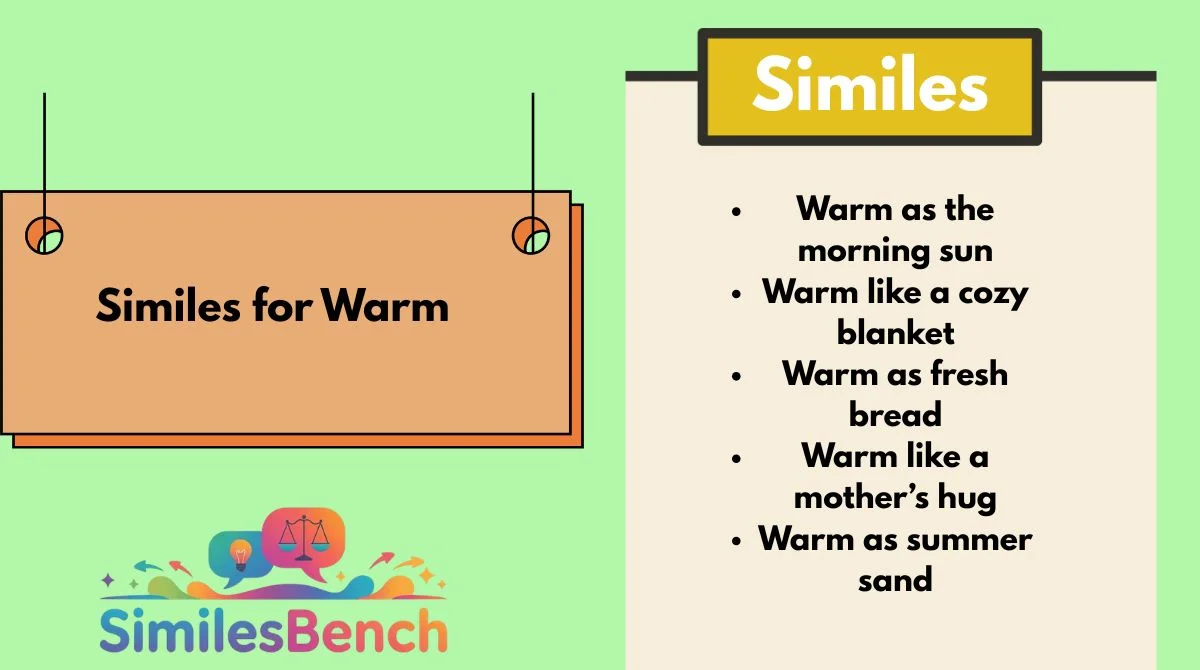
Full List of Similes for Warm
- Warm as the morning sun
- Warm like a cozy blanket
- Warm as fresh bread
- Warm like a mother’s hug
- Warm as summer sand
- Warm like melted butter
- Warm as a cup of tea
- Warm like a crackling fire
- Warm as a smiling face
- Warm like sunlight on skin
- Warm as a baby’s hand
- Warm like a soft sweater
- Warm as home
- Warm like honey
- Warm as a gentle breeze
- Warm like a friendly smile
- Warm as fresh laundry
- Warm like a campfire glow
1. Warm as the morning sun
Meaning: Gentle and comforting warmth
Explanation: This simile shows a soft, pleasant warmth that feels peaceful.
Example 1: Her voice was warm as the morning sun, calm and kind.
Example 2: The classroom felt warm as the morning sun after winter break.
2. Warm like a cozy blanket
Meaning: Safe and comforting warmth
Explanation: It describes warmth that makes you feel protected.
Example 1: His words wrapped around me like a cozy blanket.
Example 2: The room felt warm like a cozy blanket on a cold night.
3. Warm as fresh bread
Meaning: Inviting and pleasant warmth
Explanation: This simile connects warmth with comfort and happiness.
Example 1: The kitchen felt warm as fresh bread from the oven.
Example 2: Her laugh was warm as fresh bread, filling the room.
4. Warm like a mother’s hug
Meaning: Loving and emotional warmth
Explanation: It shows warmth that feels caring and personal.
Example 1: The welcome felt warm like a mother’s hug.
Example 2: His smile was warm like a mother’s hug after a long day.
5. Warm as summer sand
Meaning: Natural, outdoor warmth
Explanation: This simile brings a sunny, relaxed feeling.
Example 1: The beach felt warm as summer sand under my feet.
Example 2: Her memory stayed warm as summer sand in my mind.
6. Warm like melted butter
Meaning: Soft and smooth warmth
Explanation: It suggests gentle warmth that spreads easily.
Example 1: The pancakes stayed warm like melted butter.
Example 2: His kindness felt warm like melted butter on toast.
7. Warm as a cup of tea
Meaning: Calm and soothing warmth
Explanation: This simile connects warmth with peace and comfort.
Example 1: The letter felt warm as a cup of tea in winter.
Example 2: Her words were warm as a cup of tea on a quiet night.
8. Warm like a crackling fire
Meaning: Strong, lively warmth
Explanation: It describes warmth that feels alive and powerful.
Example 1: The cabin stayed warm like a crackling fire.
Example 2: His laughter spread warm like a crackling fire.
9. Warm as a smiling face
Meaning: Friendly emotional warmth
Explanation: This simile shows warmth through kindness and joy.
Example 1: The greeting felt warm as a smiling face.
Example 2: Her welcome was warm as a smiling face at the door.
10. Warm like sunlight on skin
Meaning: Pleasant and gentle warmth
Explanation: It describes warmth that feels natural and happy.
Example 1: The afternoon felt warm like sunlight on skin.
Example 2: His encouragement stayed warm like sunlight on skin.
11. Warm as a baby’s hand
Meaning: Soft and gentle warmth
Explanation: This simile shows pure and delicate warmth.
Example 1: The kitten felt warm as a baby’s hand.
Example 2: Her touch was warm as a baby’s hand.
12. Warm like a soft sweater
Meaning: Comfortable warmth
Explanation: It describes warmth that makes you relax.
Example 1: The sweater kept me warm like a soft sweater should.
Example 2: His voice felt warm like a soft sweater on a cold day.
13. Warm as home
Meaning: Deep emotional comfort
Explanation: This simile connects warmth to belonging.
Example 1: The welcome felt warm as home.
Example 2: Her cooking made the house warm as home again.
14. Warm like honey
Meaning: Sweet and gentle warmth
Explanation: It suggests warmth mixed with kindness.
Example 1: Her tone was warm like honey.
Example 2: The sunset glowed warm like honey.
15. Warm as a gentle breeze
Meaning: Light and pleasant warmth
Explanation: This simile shows warmth that feels refreshing.
Example 1: The evening felt warm as a gentle breeze.
Example 2: His words moved warm as a gentle breeze.
16. Warm like a friendly smile
Meaning: Emotional friendliness
Explanation: It describes warmth shown through kindness.
Example 1: The welcome felt warm like a friendly smile.
Example 2: Her kindness stayed warm like a friendly smile.
17. Warm as fresh laundry
Meaning: Clean and comforting warmth
Explanation: This simile reminds us of home comfort.
Example 1: The clothes felt warm as fresh laundry.
Example 2: The room smelled warm as fresh laundry.
18. Warm like a campfire glow
Meaning: Cozy and inviting warmth
Explanation: It shows warmth that brings people together.
Example 1: The night stayed warm like a campfire glow.
Example 2: Their friendship felt warm like a campfire glow.
Creative Writing Tips
Similes can make writing more colorful and emotional when used carefully.
In essays, simple similes help ideas feel clear and relatable.
In songs, warm similes add emotion that listeners remember.
Tip for students: Don’t force similes into every sentence. Use them where feelings matter most. Always ask, “Does this help my reader imagine better?”
FAQs
What are similes used for?
Similes help explain ideas by comparing them to familiar things.
What words are used in similes?
Most similes use “like” or “as.”
Can similes show feelings?
Yes. Similes are great for showing emotions like warmth, joy, or sadness.
Are similes only for poems?
No. Similes work in stories, essays, songs, and everyday writing.
How do I make my own simile?
Think of how something feels, then compare it to something familiar.
Conclusion
Similes help words feel alive. They turn simple ideas into pictures readers can feel. Learning different ways to describe warmth gives writers more creative power.
Whether you’re writing a story, poem, or school essay, these similes can make your work stronger and more emotional. Keep practicing, and soon your writing will feel warm, natural, and full of life.