Have you ever tried to describe snow and felt stuck using the same old words? That’s where similes come in. Similes help us paint pictures with language by comparing one thing to another in a gentle, creative way.
Snow is perfect for this because it feels magical, quiet, cold, and soft all at once. In this guide, you’ll explore simple, beautiful snow similes that make writing clearer, warmer, and more alive.
What Is a Simile?
A simile is a comparison that uses the words “like” or “as.”
It helps readers imagine something more clearly by linking it to something familiar.
Full List of Snow Similes
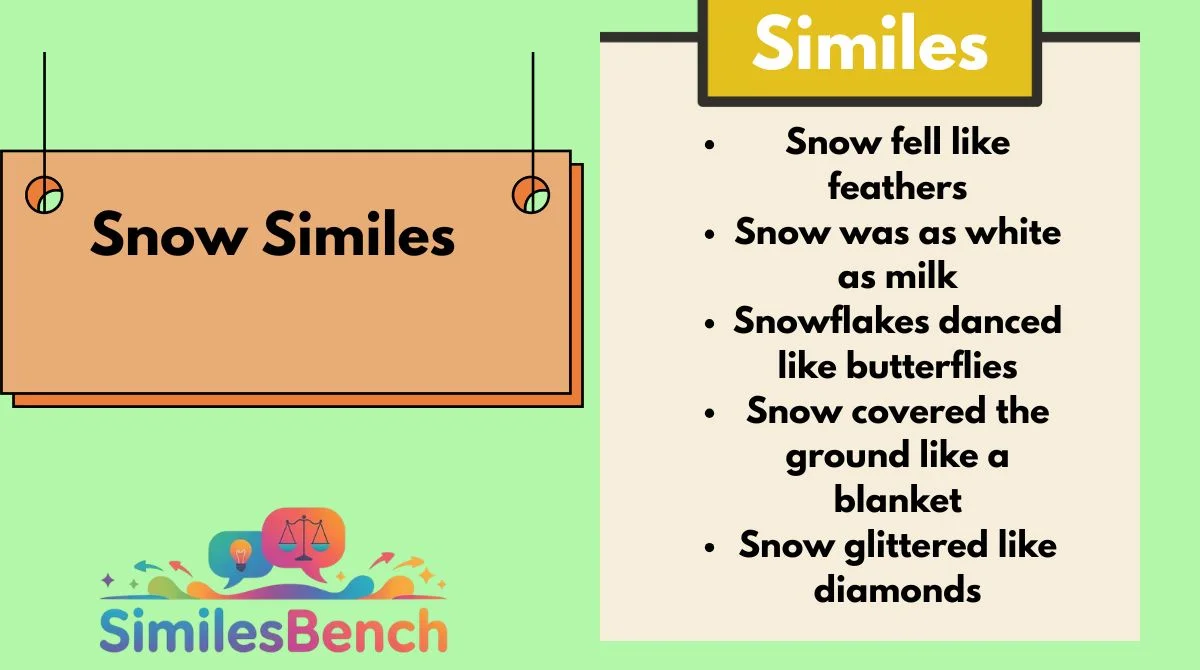
- Snow fell like feathers
- Snow was as white as milk
- Snowflakes danced like butterflies
- Snow covered the ground like a blanket
- Snow glittered like diamonds
- Snow was as soft as cotton
- Snow drifted like smoke
- Snow sparkled like sugar
- Snow lay silent like a sleeping child
- Snow fell like quiet tears
- Snow was as cold as ice
- Snow clung to trees like frosting
- Snow moved like a slow river
- Snow shone like a silver sheet
1. Snow fell like feathers
Meaning: Snow falls gently and softly.
Explanation: This simile shows how light and calm the snowfall feels.
Example sentences:
The snow fell like feathers, barely making a sound on the empty street.
I watched the flakes drift past my window, falling like feathers from the sky.
2. Snow was as white as milk
Meaning: The snow is very bright and clean.
Explanation: It compares the color of snow to something pure and familiar.
Example sentences:
The field looked as white as milk after the night storm.
Her boots disappeared into snow that was as white as milk.
3. Snowflakes danced like butterflies
Meaning: Snowflakes move lightly and playfully.
Explanation: This simile gives snow a joyful, lively feeling.
Example sentences:
Snowflakes danced like butterflies in the cold winter air.
The children laughed as flakes danced like butterflies around them.
4. Snow covered the ground like a blanket
Meaning: Snow spreads evenly and protects the ground.
Explanation: A blanket suggests warmth, softness, and comfort.
Example sentences:
By morning, snow covered the ground like a blanket.
The town felt quiet and safe under snow that lay like a blanket.
5. Snow glittered like diamonds
Meaning: Snow shines brightly in the light.
Explanation: This simile shows beauty and sparkle.
Example sentences:
In the sunlight, the snow glittered like diamonds.
She stopped to stare as the frozen field glittered like diamonds.
6. Snow was as soft as cotton
Meaning: Snow feels gentle and light.
Explanation: Cotton is soft to touch, just like fresh snow.
Example sentences:
The snow felt as soft as cotton under my gloves.
Fresh snow piled up, looking as soft as cotton candy.
7. Snow drifted like smoke
Meaning: Snow moves slowly through the air.
Explanation: Smoke floats calmly, creating a peaceful image.
Example sentences:
Snow drifted like smoke across the frozen lake.
I watched flakes drift like smoke past the streetlights.
8. Snow sparkled like sugar
Meaning: Snow shines in tiny, bright points.
Explanation: Sugar crystals reflect light, just like snow.
Example sentences:
The yard sparkled like sugar in the early morning light.
Snow sparkled like sugar on the branches of the trees.
9. Snow lay silent like a sleeping child
Meaning: Everything is very quiet and still.
Explanation: This simile creates a calm, peaceful mood.
Example sentences:
The snow lay silent like a sleeping child at dawn.
The village felt calm, with snow resting silent like a sleeping child.
10. Snow fell like quiet tears
Meaning: Snow falls gently and sadly.
Explanation: This simile adds emotion to the scene.
Example sentences:
Snow fell like quiet tears on the empty road.
That evening, the sky cried snow like quiet tears.
11. Snow was as cold as ice
Meaning: Snow is extremely cold.
Explanation: This is a clear and easy comparison.
Example sentences:
The snow was as cold as ice against my hands.
His breath fogged the air as he stepped onto snow as cold as ice.
12. Snow clung to trees like frosting
Meaning: Snow sticks thickly to branches.
Explanation: Frosting makes things look sweet and covered.
Example sentences:
Snow clung to trees like frosting on a cake.
The forest looked magical with snow clinging like frosting.
13. Snow moved like a slow river
Meaning: Snow drifts steadily and calmly.
Explanation: A slow river suggests smooth, gentle motion.
Example sentences:
Snow moved like a slow river across the open field.
The wind pushed the snow like a slow river through the valley.
14. Snow shone like a silver sheet
Meaning: Snow reflects light smoothly.
Explanation: Silver gives a bright, clean image.
Example sentences:
Under the moon, the snow shone like a silver sheet.
The road gleamed, snow shining like a silver sheet at night.
Creative Writing Tips
Similes work best when they feel natural, not forced. In stories, use snow similes to set the mood—peaceful, lonely, joyful, or mysterious. In poems, focus on emotion and sound. Choose similes that match the feeling you want readers to feel.
For essays, similes should support your ideas, not distract from them. Keep them simple and clear. In songs, rhythm matters, so short similes work best.
A good rule: if a simile helps the reader see or feel something more clearly, it belongs in your writing.
FAQs
What is a simile in simple words?
A simile compares two things using “like” or “as” to help readers understand better.
Why are snow similes useful?
They make winter scenes more interesting and emotional instead of plain.
Can students use similes in school essays?
Yes. Simple similes can make essays clearer and more engaging.
What’s the difference between a simile and a metaphor?
A simile uses “like” or “as.” A metaphor does not.
How many similes should I use in one piece of writing?
Only a few. Too many can make writing feel crowded.
Conclusion
Similes turn ordinary descriptions into vivid pictures. Snow similes, especially, help writers show beauty, silence, cold, and emotion in a gentle way.
Whether you’re a student learning to write or a creative writer shaping a story, these comparisons can bring your words to life. Try using one or two in your next piece and see how your writing begins to shine.