In today’s digital world, slang evolves rapidly, and one word that has gained widespread popularity is “tea.” If you’ve seen phrases like “spill the tea” or “what’s the tea?” online, you’re not alone in wondering what it actually means. This slang term has become especially common on social media platforms, messaging apps, and casual conversations.
People search for this term to better understand online interactions, decode conversations, or simply stay updated with modern language trends. While it may seem simple, “tea” carries layers of meaning depending on context, tone, and cultural background. Understanding it can help you communicate more effectively and avoid misunderstandings.
This article breaks down the meaning, origin, and usage of “tea” in slang, along with practical examples and tips to use it correctly.
Definition & Meaning
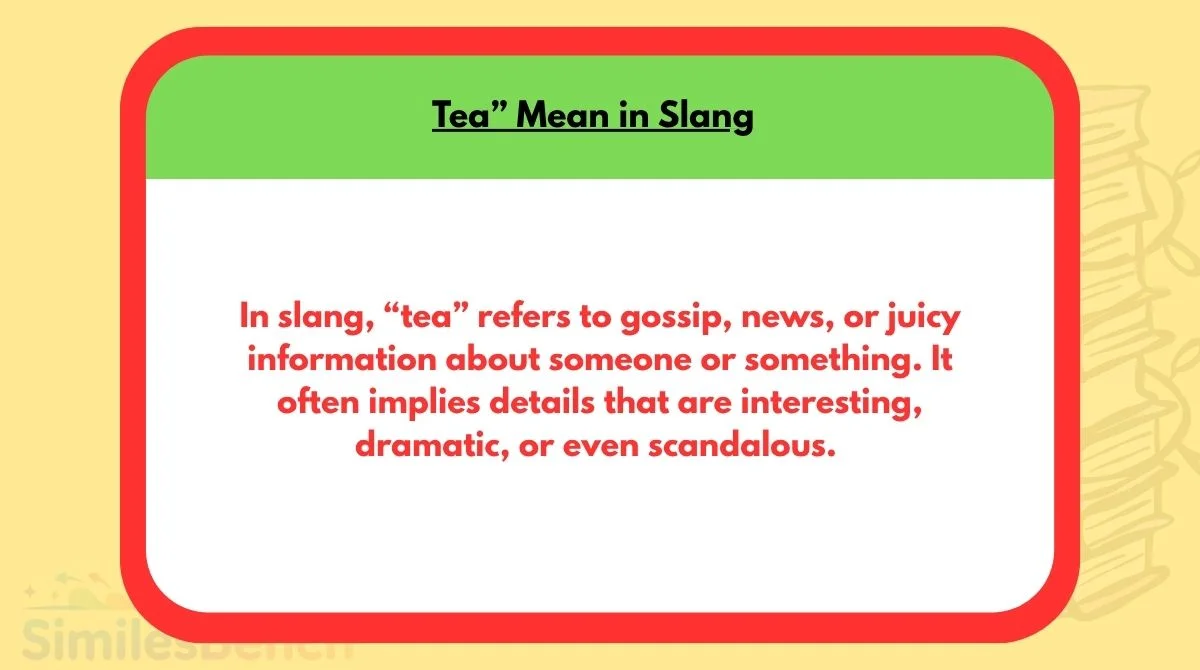
In slang, “tea” refers to gossip, news, or juicy information about someone or something. It often implies details that are interesting, dramatic, or even scandalous. When someone says, “spill the tea,” they are asking for the full story or inside information.
The word doesn’t necessarily have a negative meaning. It can refer to harmless updates, personal stories, or entertaining details. However, it often carries a sense of curiosity or excitement, especially when the information is unexpected or revealing.
For example:
- “What’s the tea?” means “What’s going on?”
- “She spilled the tea” means “She revealed the details.”
In some contexts, “tea” can also mean truth. When someone says, “That’s the tea,” they are emphasizing that something is factual or real.
Overall, the meaning depends heavily on tone and situation, but it almost always revolves around sharing or seeking information.
Background & History
The slang term “tea” has its roots in African American Vernacular English (AAVE). It originally appeared as “T,” short for “truth.” Over time, it evolved into “tea” and gained popularity in drag culture, particularly in the ballroom scene.
In the late 20th century, members of the LGBTQ+ community used the phrase “spill the T” to mean sharing the truth or revealing secrets. This usage was later popularized through media, especially reality TV shows and online platforms.
A major boost in its popularity came from drag culture becoming mainstream, with shows like RuPaul’s Drag Race introducing phrases like “spill the tea” to a global audience. Social media platforms such as Twitter, TikTok, and Instagram further amplified its use, making it part of everyday internet language.
Today, “tea” is widely used across different cultures and age groups, though its origins are important to acknowledge and respect.
Usage in Various Contexts
“Tea” is highly flexible and can be used in different situations. In casual conversations, it often refers to personal updates or gossip. For example, friends might say, “I have tea to tell you,” when sharing something interesting.
On social media, it’s commonly used in captions, comments, and memes. People might write, “Spill the tea!” to encourage someone to share more details. Influencers and content creators also use it to tease stories or updates.
In entertainment contexts, “tea” often refers to celebrity gossip or behind-the-scenes information. For example, fans might discuss the “tea” about a movie, show, or public figure.
In texting, it’s used informally and usually among friends or peers. It adds a playful tone to conversations and makes sharing information feel more engaging.
Common Misconceptions & Clarifications
One common misconception is that “tea” always refers to negative gossip. While it can involve drama, it doesn’t have to be harmful or mean-spirited. It can simply be interesting or surprising information.
Another misunderstanding is that it is appropriate in all situations. In reality, “tea” is informal slang and should be used carefully depending on the setting.
Some people also assume it literally relates to the beverage tea, which can lead to confusion for those unfamiliar with slang. Context usually clarifies the meaning, but it’s important to recognize the difference.
Lastly, many people use the term without knowing its cultural origins, which can lead to unintentional misuse or lack of appreciation for its background.
Similar Terms & Alternatives
There are several slang terms similar to “tea,” each with slightly different nuances. Words like “gossip,” “news,” and “updates” are more traditional alternatives.
Other slang terms include “drama,” “dirt,” or “scoop,” which also refer to interesting or revealing information. “Spill the beans” is a classic idiom with a similar meaning.
Modern alternatives might include phrases like “what’s the update?” or “what’s going on?” These are more neutral and suitable for broader audiences.
While these terms overlap, “tea” stands out because of its playful tone and cultural significance.
How to Respond to This Term
When someone uses “tea,” your response depends on the context.
If someone says, “I have tea,” you might reply with curiosity, such as “Tell me!” or “What happened?” This keeps the conversation engaging.
If the topic seems sensitive or inappropriate, it’s okay to respond neutrally or change the subject. Not all “tea” needs to be shared or discussed.
Understanding tone is key. A lighthearted response works best in casual settings, while a more reserved response may be better in mixed or unfamiliar groups.
Regional or Cultural Differences
The meaning of “tea” is fairly consistent globally, especially in online spaces. However, its usage and popularity can vary by region.
In Western countries, particularly the United States and the UK, the term is widely recognized and commonly used. In other regions, including parts of Asia and the Middle East, it may be less familiar or used mainly by younger, internet-savvy audiences.
Cultural context also matters. In some places, discussing gossip openly may be frowned upon, which can affect how the term is perceived.
Despite these differences, social media continues to spread the term across cultures, making it increasingly universal.
Comparison with Similar Terms
Compared to traditional words like “gossip,” “tea” feels more modern and less formal. It often carries a playful or humorous tone rather than a serious or judgmental one.
Unlike “news,” which implies factual and verified information, “tea” can include rumors or personal stories. It doesn’t require confirmation to be shared.
Compared to “drama,” which focuses on conflict or tension, “tea” is broader and can include any interesting detail, not just conflict.
This flexibility is what makes “tea” unique and widely used.
Usage in Online Communities & Dating Apps
In online communities, “tea” is often used to spark engagement. People share “tea” to attract attention, start discussions, or entertain others.
On dating apps, it might be used humorously or casually. For example, someone might write, “Ask me for the tea,” to invite conversation or show personality.
It can also be used in group chats, forums, and comment sections to keep interactions lively. However, users should be mindful of boundaries and avoid sharing sensitive or private information.
Hidden or Offensive Meanings
While “tea” is generally harmless, it can sometimes lead to negative situations if used to spread rumors or invade privacy. Sharing “tea” about someone without their consent can be disrespectful.
In certain contexts, it may also be seen as encouraging gossip, which not everyone appreciates. Tone and intent play a major role in how it is received.
Being mindful of these aspects helps ensure respectful communication.
Suitability for Professional Communication
“Tea” is not suitable for professional or formal communication. It is considered informal slang and may come across as unprofessional in workplace settings.
Instead, use neutral terms like “update,” “information,” or “details” in professional contexts. This maintains clarity and respect.
Using slang like “tea” is best reserved for casual conversations with friends or informal online interactions.
FAQs
What does “spill the tea” mean?
It means to share gossip or reveal details.
Is “tea” always about gossip?
No, it can also mean general news or truth.
Can I use “tea” in formal writing?
No, it is informal slang.
Where did the slang “tea” come from?
It originated from AAVE and drag culture.
Is using “tea” offensive?
Not usually, but context matters.
What is a polite alternative to “tea”?
Use “information” or “update.”
Conclusion
The slang term “tea” has evolved from a niche cultural expression into a widely recognized part of modern language. It represents more than just gossip—it reflects how people share stories, connect, and engage in conversations today. While it is fun and expressive, understanding its meaning, origins, and appropriate usage is essential for clear and respectful communication. Whether you’re chatting with friends or browsing social media, knowing what “tea” means helps you stay informed and connected.