The internet constantly introduces new slang terms that quickly become popular in everyday conversations, social media posts, and online communities. One term that has recently gained attention is “unc.” Many people search for unc meaning slang because they encounter it in comments, memes, texting, or platforms like TikTok and Twitter but are unsure what it actually means.
Understanding modern slang is important because language evolves rapidly online. A word that originally had a simple meaning may develop a completely different tone or implication depending on how people use it. The term “unc” is a perfect example of this shift. In some situations it is playful and humorous, while in others it may carry a teasing or slightly disrespectful tone.
This article explains the meaning of “unc” in slang, where it came from, how people use it in different contexts, and how to respond when someone calls you “unc.” By the end, you will clearly understand whether the term is friendly, sarcastic, or potentially offensive depending on the situation.
Definition & Meaning
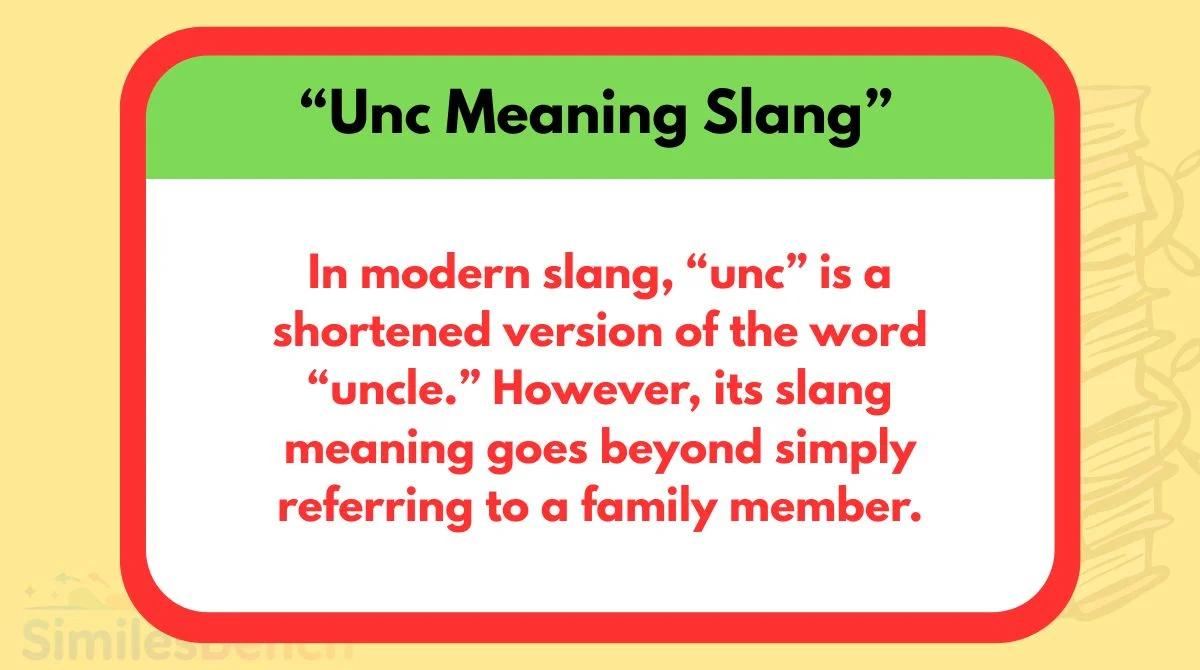
In modern slang, “unc” is a shortened version of the word “uncle.” However, its slang meaning goes beyond simply referring to a family member.
When people use “unc” online or in casual conversation, they are usually referring to an older man, someone who seems older than the group, or someone behaving like an older person. The term is often used humorously, especially among younger generations.
For example, if a young person dresses in an old-fashioned way, gives serious life advice, or behaves in a calm and mature manner, others might jokingly call him “unc.”
Common slang meanings include:
- A man who appears older than others in a group
- Someone acting mature or “old-school”
- A playful nickname for an older friend
- A teasing term for someone with “uncle energy”
For example:
- “Why you talking like that, unc?”
- “Relax, unc, it’s not that serious.”
- “Unc trying to give life advice again.”
The tone of the word usually depends on the context. Among friends it is often used jokingly. However, if used toward someone sensitive about age, it could sound slightly disrespectful.
In short, “unc” slang typically refers to an older male figure or someone acting older than the group, often used humorously or playfully.
Background & History
The slang use of “unc” developed from the informal abbreviation of “uncle.” Abbreviations like this are common in texting culture because people prefer shorter, faster ways to communicate.
The transition from family term → slang nickname happened gradually through urban slang and internet culture. In many communities, calling someone “unc” became a casual way of addressing an older man who is not necessarily related to you.
Over time, the internet accelerated the popularity of the word. Platforms such as TikTok, Instagram, and Twitter helped spread the slang rapidly, especially through memes and humorous videos.
Younger generations often use humor that exaggerates age differences. Calling someone “unc” became a funny way to tease friends who:
- Act too serious
- Dress in a “dad” style
- Give advice like an older relative
- Prefer older music or habits
Memes also contributed to its growth. In many viral clips, people jokingly label someone acting old-fashioned as “unc.”
The word also gained traction through African American Vernacular English (AAVE) and hip-hop culture, where shortened forms of family titles are commonly used as friendly nicknames.
Today, the slang appears across many online communities worldwide, especially among Gen Z users who enjoy playful and sarcastic language.
Usage in Various Contexts
The meaning of “unc” can change slightly depending on where and how it is used.
1. Among Friends
Among friends, “unc” is usually playful teasing.
Example:
- “Unc already tired and it’s only 9 PM.”
Here it jokingly suggests someone behaves older than their age.
2. Social Media Comments
On social media, the term often appears in meme culture.
Example:
- “Unc trying to keep up with the kids.”
It may describe someone who seems out of place among younger people.
3. Gaming Communities
In gaming chats, players sometimes call someone “unc” if they seem older or overly serious.
Example:
- “Relax unc, it’s just a game.”
4. Casual Nickname
Sometimes the term is used respectfully for an older person in a community, similar to how people say “uncle.”
5. Humorous Self-Reference
Some people jokingly refer to themselves as “unc” when they feel old compared to younger users.
Example:
- “Guess I’m unc now.”
Common Misconceptions & Clarifications
Because slang spreads quickly online, many misunderstandings about “unc” exist.
Misconception 1: It Always Means Someone Is Old
Not necessarily. Often the term is used for someone who acts older, not someone who actually is old.
Misconception 2: It Is Always Disrespectful
In most cases it is playful teasing among friends. Tone and context matter.
Misconception 3: It Only Refers to Family Members
Although it comes from “uncle,” the slang version usually has no family connection.
Misconception 4: It Is a Formal Title
It is strictly informal slang and rarely appropriate in professional settings.
Understanding these clarifications helps avoid misunderstanding the intent behind the word.
Similar Terms & Alternatives
Several slang terms carry a similar playful meaning to “unc.”
Examples include:
1. OG
Used to refer to someone experienced or older in a group.
2. Old head
Common slang for someone older or more traditional.
3. Big bro
A friendly nickname for someone slightly older.
4. Pops / Dad
Sometimes used humorously for someone acting like a father figure.
5. Grandpa jokes
Used jokingly when someone makes outdated jokes.
Each term varies in tone. Some are respectful, while others are playful teasing.
How to Respond to This Term
If someone calls you “unc,” your response depends on the tone.
1. Friendly Response
If it is clearly a joke, you can laugh along.
Example:
“Guess I’m the wise unc then.”
2. Playful Comeback
Some people respond with humor.
Example:
“At least unc knows what he’s doing.”
3. Ignore It
If the comment is harmless teasing, ignoring it is perfectly fine.
4. Address It Directly
If the tone feels disrespectful, politely clarify.
Example:
“Don’t call me unc like that.”
The best reaction depends on the relationship and situation.
Regional or Cultural Differences
The slang use of “unc” appears more frequently in certain cultural communities and online spaces.
In some communities, calling an older man “unc” can be a sign of familiarity or casual respect.
However, in other contexts it may simply be internet humor without deeper cultural meaning.
Global social media has spread the term beyond its original communities. As a result, people worldwide now use it in memes and online jokes even if they are unfamiliar with its cultural origins.
Because of these differences, interpretation may vary depending on the audience.
Comparison with Similar Terms
Comparing “unc” with similar slang terms helps clarify its tone.
| Term | Meaning | Tone |
|---|---|---|
| Unc | Older guy or someone acting older | Playful |
| OG | Original or respected veteran | Respectful |
| Old head | Older person in a group | Neutral/teasing |
| Dad | Someone acting responsible | Humorous |
Among these, “unc” is typically lighter and more casual than many alternatives.
Usage in Online Communities & Dating Apps
The slang “unc” frequently appears in online environments.
Social Media
TikTok, Twitter, and Instagram comments often use the term when someone seems older than the audience.
Gaming Platforms
Gamers sometimes use it jokingly for players who seem more serious or experienced.
Dating Apps
Occasionally, users may describe someone as “unc vibes” if they appear older or overly serious compared to others.
However, the word is not extremely common in dating profiles and usually appears in casual conversation rather than descriptions.
Hidden or Offensive Meanings
Although the term is often playful, it can become offensive depending on tone.
Situations where it might feel disrespectful include:
- Mocking someone’s age
- Using it sarcastically toward strangers
- Repeatedly labeling someone as old
If used aggressively, it may imply someone is outdated, boring, or out of touch.
Therefore, context and intent determine whether the slang feels friendly or insulting.
Suitability for Professional Communication
The slang “unc” is not appropriate for professional communication.
Reasons include:
- It is highly informal
- It may sound disrespectful
- Many people may not understand the slang meaning
In workplaces, emails, or professional messages, it is better to use respectful titles such as:
- Mr.
- Sir
- Mentor
- Colleague
Slang like “unc” should remain in casual conversations among friends or informal online communities.
FAQs
What does “unc” mean in slang?
It is a short form of “uncle” used jokingly to refer to an older man or someone acting older than others.
Is calling someone “unc” rude?
Usually it is playful teasing, but it can feel disrespectful depending on tone.
Where did “unc” slang come from?
It developed from informal speech and internet culture, spreading through memes and social media.
Do people use “unc” seriously?
Sometimes it is used respectfully for older community members, but most uses are humorous.
Is “unc” used worldwide?
Yes, social media has spread the slang globally, although its meaning may vary slightly by culture.
Conclusion
The slang term “unc” shows how language evolves in online communities and youth culture. Originally a simple abbreviation for “uncle,” the word has transformed into a humorous way to describe someone who seems older, wiser, or more serious than others in a group.
Most of the time, the term is used playfully among friends, especially on social media and gaming platforms. However, context and tone are important because it can also come across as teasing or slightly disrespectful if used incorrectly.
Understanding modern slang like “unc” helps people interpret online conversations more accurately and avoid misunderstandings. As with many internet expressions, the meaning continues to evolve as new generations adopt and adapt the term in different ways.