Have you ever tried to describe the weather but felt your words sounded flat or boring? That’s where similes come in. Similes help us paint pictures with words by comparing one thing to another.
Learning weather similes is fun, useful, and perfect for students, storytellers, and poets. Once you understand them, your writing feels more alive, emotional, and real—just like the weather itself.
What Is a Simile?
A simile compares two different things using the words “like” or “as.”
It helps readers imagine something more clearly.
Similes make writing colorful and easy to understand.
Full List of Weather Similes (14)
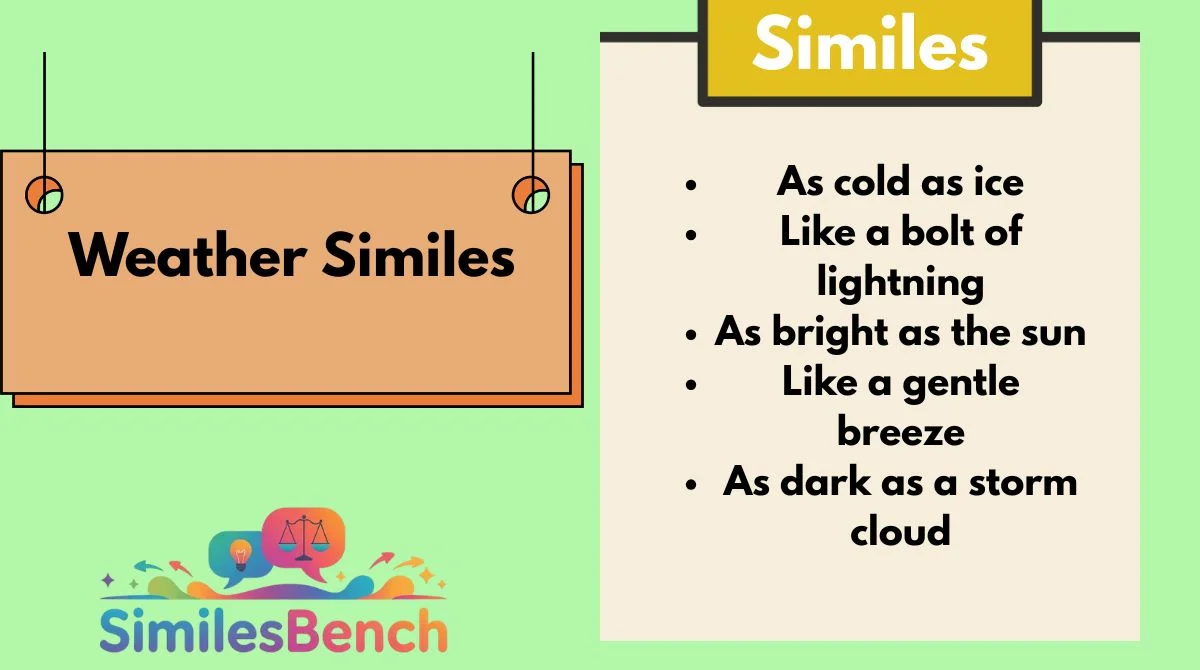
- As cold as ice
- Like a bolt of lightning
- As bright as the sun
- Like a gentle breeze
- As dark as a storm cloud
- Like rain on a tin roof
- As hot as fire
- Like thunder in the distance
- As quiet as falling snow
- Like a foggy morning
- As wild as a hurricane
- Like sunshine after rain
- As heavy as storm rain
- Like a cloudless sky
1. As cold as ice
Meaning: Extremely cold
Explanation: This simile is used when something feels freezing to the touch.
Example sentences:
The water was as cold as ice, and I pulled my hand back fast.
Her fingers felt as cold as ice after waiting outside all morning.
2. Like a bolt of lightning
Meaning: Very fast or sudden
Explanation: This simile compares speed or surprise to lightning.
Example sentences:
The news hit him like a bolt of lightning.
She ran across the field like a bolt of lightning when it started raining.
3. As bright as the sun
Meaning: Very bright or cheerful
Explanation: Often used for light, smiles, or happy moods.
Example sentences:
Her smile was as bright as the sun on a summer day.
The room felt warmer when his laugh shone as bright as the sun.
4. Like a gentle breeze
Meaning: Soft and calming
Explanation: This simile describes something light and peaceful.
Example sentences:
Her voice moved through the room like a gentle breeze.
The music felt like a gentle breeze after a long, tiring day.
5. As dark as a storm cloud
Meaning: Very dark or gloomy
Explanation: Used for skies, moods, or serious moments.
Example sentences:
His mood was as dark as a storm cloud before the test.
The sky turned as dark as a storm cloud by evening.
6. Like rain on a tin roof
Meaning: Loud and steady
Explanation: This simile describes strong, nonstop sound.
Example sentences:
The rain tapped like rain on a tin roof all night.
Her thoughts fell fast, like rain on a tin roof.
7. As hot as fire
Meaning: Extremely hot
Explanation: Used to describe heat you can almost feel.
Example sentences:
The sand was as hot as fire under my feet.
His face felt as hot as fire when he realized his mistake.
8. Like thunder in the distance
Meaning: Loud but far away
Explanation: Often used for sounds or warnings.
Example sentences:
His voice rolled like thunder in the distance.
The trouble felt close, yet quiet, like thunder in the distance.
9. As quiet as falling snow
Meaning: Very silent and calm
Explanation: This simile creates a peaceful picture.
Example sentences:
The classroom was as quiet as falling snow.
The night felt as quiet as falling snow outside my window.
10. Like a foggy morning
Meaning: Confusing or unclear
Explanation: Used when thoughts or situations feel blurry.
Example sentences:
My mind felt like a foggy morning before coffee.
The future seemed like a foggy morning after graduation.
11. As wild as a hurricane
Meaning: Very strong or uncontrollable
Explanation: Used for people, emotions, or events.
Example sentences:
The crowd grew as wild as a hurricane.
Her excitement was as wild as a hurricane at the concert.
12. Like sunshine after rain
Meaning: Hopeful or happy after sadness
Explanation: This simile shows emotional change.
Example sentences:
His smile felt like sunshine after rain.
The good news arrived like sunshine after rain.
13. As heavy as storm rain
Meaning: Very heavy or serious
Explanation: Used for weight or emotional pressure.
Example sentences:
The air felt as heavy as storm rain before the storm.
The silence hung as heavy as storm rain.
14. Like a cloudless sky
Meaning: Clear and peaceful
Explanation: Describes calm thoughts or smooth situations.
Example sentences:
Her mind felt clear like a cloudless sky.
The day passed like a cloudless sky, calm and bright.
Creative Writing Tips
Similes are powerful tools when used with care. In stories, they help readers see and feel scenes more clearly. Instead of saying “it was cold,” try a simile that shows the cold. In poems, similes add rhythm and emotion, making lines more memorable. For essays, a well-placed simile can explain an idea simply and clearly. Even in songs, similes help feelings connect with listeners.
A good tip is to choose similes that match the mood. Sad scenes need soft or dark comparisons, while happy moments shine with light and warmth. Don’t use too many at once. One strong simile is better than five weak ones.
FAQs
What is a weather simile?
A weather simile compares weather to something else using “like” or “as.” It helps describe feelings, scenes, or moods clearly.
Why are similes important in writing?
Similes make writing more interesting. They help readers imagine things instead of just reading plain facts.
Are similes and metaphors the same?
No. Similes use “like” or “as.” Metaphors compare without those words.
Can students use similes in school essays?
Yes. When used carefully, similes can improve essays by making ideas clearer and more engaging.
How do I create my own similes?
Think about how something feels, looks, or sounds. Then compare it to something familiar using “like” or “as.”
Conclusion
Weather similes turn simple words into vivid pictures. They help students explain ideas, writers express feelings, and readers stay interested.
By learning and practicing these similes, your writing becomes warmer, clearer, and more powerful. Try adding one weather simile to your next story or essay and watch your words come alive.