Winter has a special way of making us feel things deeply—quiet mornings, sharp cold air, cozy evenings indoors. One of the best ways to describe those feelings in writing is through similes.
Similes help words come alive by comparing one thing to another in a simple, relatable way. Whether you’re a student, teacher, or writer, learning winter similes can make your writing clearer, warmer, and more memorable.
What Is a Simile?
A simile is a comparison that uses the words “like” or “as.”
It helps readers picture something more clearly by comparing it to something familiar.
Full List of Winter Similes (12)
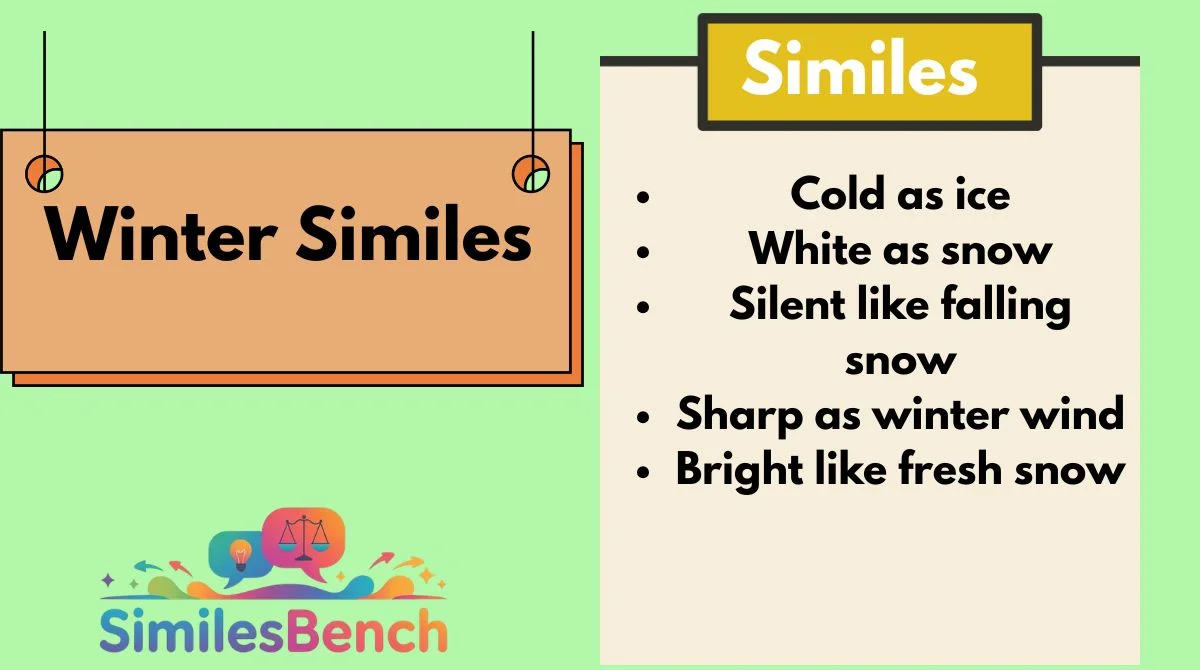
- Cold as ice
- White as snow
- Silent like falling snow
- Sharp as winter wind
- Bright like fresh snow
- Slow as a winter morning
- Still as a frozen lake
- Soft as snowflakes
- Dark as a winter night
- Heavy like winter clouds
- Crisp as frosty air
- Calm like a snowy evening
1. Cold as ice
Meaning: Extremely cold
Explanation: Used to describe very low temperatures or cold feelings.
Example sentences:
- The playground felt cold as ice, and my fingers went numb in minutes.
- His hands were cold as ice after waiting for the bus too long.
2. White as snow
Meaning: Very white or clean
Explanation: Often used for color or purity.
Example sentences:
- The fields were white as snow after the overnight storm.
- Her scarf looked white as snow against her dark coat.
3. Silent like falling snow
Meaning: Very quiet
Explanation: Describes peaceful, gentle silence.
Example sentences:
- The town was silent like falling snow early in the morning.
- We stood still, the room silent like falling snow as we waited.
4. Sharp as winter wind
Meaning: Strong and biting
Explanation: Often used for cold air or sudden feelings.
Example sentences:
- The air felt sharp as winter wind against my face.
- Her words were sharp as winter wind, surprising everyone.
5. Bright like fresh snow
Meaning: Very bright or shining
Explanation: Used for light, hope, or clean beauty.
Example sentences:
- The yard looked bright like fresh snow under the sun.
- His smile was bright like fresh snow, even on a gloomy day.
6. Slow as a winter morning
Meaning: Moving slowly
Explanation: Describes quiet, lazy movement.
Example sentences:
- The day started slow as a winter morning.
- Traffic moved slow as a winter morning through town.
7. Still as a frozen lake
Meaning: Completely still
Explanation: Used for silence or lack of movement.
Example sentences:
- The room stayed still as a frozen lake during the test.
- The forest was still as a frozen lake at dusk.
8. Soft as snowflakes
Meaning: Gentle or light
Explanation: Describes texture, touch, or emotions.
Example sentences:
- Her voice sounded soft as snowflakes.
- The blanket felt soft as snowflakes on my skin.
9. Dark as a winter night
Meaning: Very dark
Explanation: Used for night scenes or moods.
Example sentences:
- The sky grew dark as a winter night before dinner.
- His thoughts felt dark as a winter night that evening.
10. Heavy like winter clouds
Meaning: Full or burdened
Explanation: Describes feelings or skies ready for snow.
Example sentences:
- The sky hung heavy like winter clouds.
- Her heart felt heavy like winter clouds after the news.
11. Crisp as frosty air
Meaning: Fresh and sharp
Explanation: Often used for weather or clean feelings.
Example sentences:
- The morning was crisp as frosty air.
- His writing felt crisp as frosty air, clear and strong.
12. Calm like a snowy evening
Meaning: Peaceful and relaxed
Explanation: Used for quiet moments or feelings.
Example sentences:
- The house felt calm like a snowy evening.
- She stayed calm like a snowy evening, even under pressure.
Creative Writing Tips
Similes are powerful tools when used with care. In stories, they help readers picture scenes and feel emotions. Instead of saying “it was cold,” a simile shows how cold it felt.
In poems, similes add rhythm and emotion without long explanations. Essays become more interesting when ideas are compared to real-life images.
Even songs use similes to express feelings in a simple, memorable way. Choose similes that match the mood, and don’t overuse them. One strong simile can say more than five plain sentences.
FAQs
What is a simile in simple words?
A simile compares two things using “like” or “as” to help describe something better.
Why are winter similes useful?
They help describe cold weather, feelings, and scenes in a clear and creative way.
Can students use similes in school writing?
Yes. Teachers often encourage similes in stories, poems, and essays.
What is the difference between a simile and a metaphor?
A simile uses “like” or “as.” A metaphor does not.
How many similes should I use in one piece?
Use a few strong ones. Too many can make writing confusing.
Conclusion
Winter similes turn simple sentences into vivid pictures. They help readers feel the cold air, see the snowy ground, and understand emotions more clearly.
By learning and using these comparisons, students and writers can improve their storytelling and expression. Try adding one winter simile to your next piece of writing and notice how much more alive your words feel.