Language constantly evolves, especially in online spaces where new slang appears almost daily. One word that has recently gained attention across social media and casual conversations is “zesty.” Many people search for the zesty meaning in slang because they encounter it in memes, comments, or videos and are unsure what it implies. While the word originally described flavors and energy, its slang interpretation has developed a slightly different tone depending on the context and community using it.
Understanding modern slang helps people interpret conversations accurately and avoid misunderstandings. Some slang words carry playful meanings, while others may include hidden implications or cultural nuances. “Zesty” is a great example of a word that seems harmless but can sometimes carry subtle social meanings online.
In this article, we will explore the slang meaning of “zesty,” its origins, how it is used in different contexts, and the misunderstandings that often surround it. By the end, you’ll have a clear understanding of what people mean when they call someone “zesty” and how to respond appropriately.
Definition & Meaning
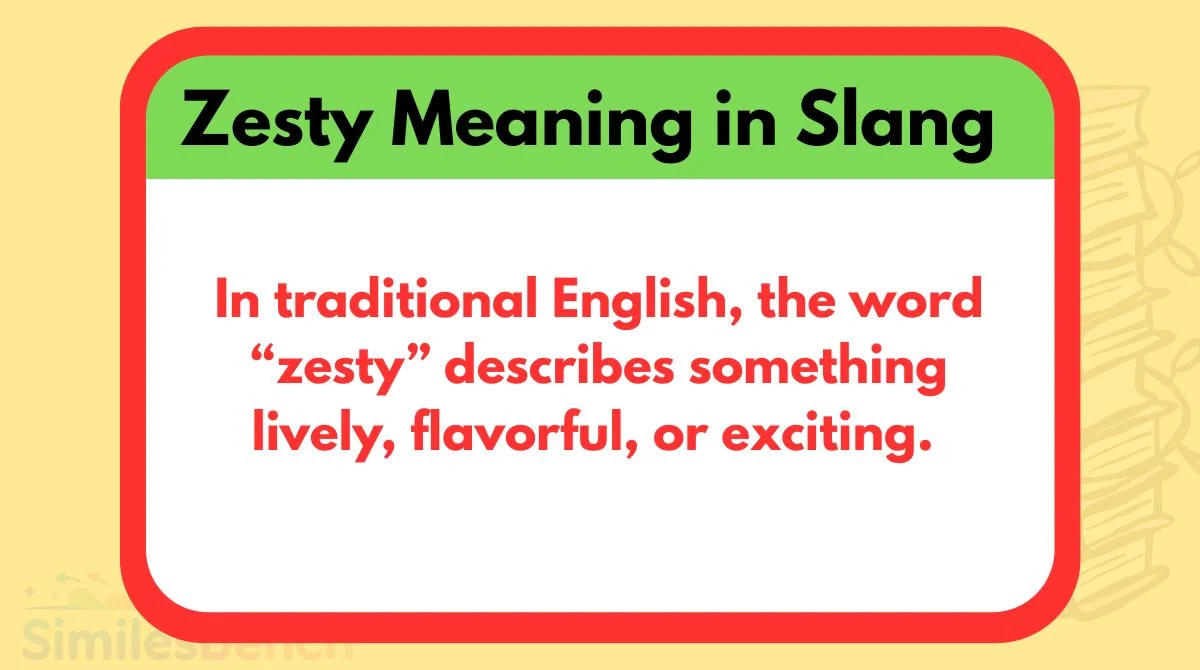
In traditional English, the word “zesty” describes something lively, flavorful, or exciting. It is commonly used to talk about food with a strong, refreshing taste, such as citrus-based dishes or spicy meals. However, in modern slang, the word has taken on a more social meaning.
When used in slang, “zesty” often refers to someone behaving in a slightly flamboyant, energetic, or playful way. In many internet contexts, it can be used jokingly to describe someone who is acting dramatic, expressive, or overly stylish in their behavior.
For example, someone might comment on a video and say, “He’s acting a little zesty today.” In this case, the speaker may simply be pointing out that the person is being extra expressive or dramatic.
However, slang meaning depends heavily on context. In certain communities, “zesty” may also be used humorously to hint that someone’s mannerisms seem slightly feminine or flamboyant. Often this is done jokingly among friends, though it can sometimes be interpreted differently depending on tone.
Because slang words shift meaning quickly, “zesty” can carry several interpretations at once:
- Energetic or lively personality
- Dramatic or expressive behavior
- Playful teasing about someone’s mannerisms
The key thing to remember is that slang rarely has a single fixed meaning. Instead, its interpretation depends on the relationship between speakers and the environment in which the word is used.
Background & History
The original word “zesty” comes from the noun “zest,” which historically refers to the peel of citrus fruits such as lemons or oranges. Citrus peel has a strong flavor, so the word eventually came to symbolize something exciting, flavorful, or full of energy.
Over time, English speakers started using “zesty” metaphorically. Instead of only describing food, people began applying the term to personalities, conversations, and experiences. For example, someone might describe a lively speech as “zesty” or call an energetic person “full of zest.”
The transformation into slang happened much later, largely through internet culture. Platforms like TikTok, Twitter, and gaming communities played a major role in spreading the word in humorous ways. Online users often exaggerate language for comedic effect, and “zesty” became one of those playful descriptors.
Short videos, memes, and comment sections helped the slang meaning spread rapidly. Content creators began jokingly labeling certain expressive behaviors as “zesty,” especially when someone appeared dramatic or overly confident in a humorous way.
Like many slang expressions, the word evolved through repetition and shared humor rather than formal definition. Each online community adapted the term slightly differently, which explains why people sometimes disagree about its exact meaning.
Usage in Various Contexts
The slang version of “zesty” appears in several everyday situations, especially in digital communication. Understanding the context is essential because the tone often determines whether it is meant as praise, humor, or mild teasing.
Social Media
On platforms like TikTok or Instagram, the term frequently appears in comments describing someone’s expressive behavior. A creator dancing dramatically or speaking in an exaggerated style might be described as “zesty.”
Friend Groups
Among friends, calling someone “zesty” can simply be playful teasing. It may highlight someone’s dramatic gestures, fashion choices, or confident personality.
Entertainment & Pop Culture
Fans sometimes use the word when discussing celebrities or fictional characters who behave flamboyantly or energetically.
Gaming Communities
In gaming chats, slang tends to be exaggerated and humorous. Players may jokingly call another player “zesty” for celebrating a victory dramatically.
In all these contexts, the word is typically used casually rather than seriously.
Common Misconceptions & Clarifications
One common misunderstanding is that “zesty” always has a negative meaning. In reality, it is often used jokingly and not intended as an insult.
Another misconception is that it always refers to someone’s identity or orientation. While some online jokes may hint at flamboyant behavior, the term itself does not automatically carry that meaning.
People also assume the slang definition completely replaces the traditional meaning. This is not true. In many situations, “zesty” still simply describes something energetic or flavorful.
Clarifying tone and intent helps prevent confusion when encountering this word.
Similar Terms & Alternatives
Several slang expressions carry similar tones to “zesty.” These words may be used interchangeably depending on the conversation.
Common alternatives include:
- Extra
- Dramatic
- Energetic
- Flamboyant
- Stylish
- Bold
Each term highlights slightly different personality traits, but they all convey strong or expressive behavior.
How to Respond to This Term
If someone calls you “zesty,” the best response depends on the situation.
If the comment is friendly or humorous, you can respond casually or laugh it off. Many people even embrace the label as a compliment for having personality.
If the tone feels sarcastic or uncomfortable, you can calmly clarify what the person meant or redirect the conversation.
The key is to interpret the tone before reacting.
Regional or Cultural Differences
Slang often develops differently depending on location. In some English-speaking communities, “zesty” still mainly refers to energetic personality traits.
In certain online communities, however, the word has developed humorous undertones related to flamboyant behavior.
Because internet slang spreads globally, people from different regions may interpret the word differently.
Comparison with Similar Terms
Compared with words like “extra” or “dramatic,” “zesty” tends to sound lighter and more playful. While “extra” often suggests someone is doing too much, “zesty” can simply imply lively personality.
Similarly, “flamboyant” is more formal and descriptive, while “zesty” feels more casual and humorous.
These subtle differences explain why people choose one term over another depending on tone.
Usage in Online Communities & Dating Apps
Online communities play a major role in shaping slang meaning. In comment sections, the word often appears as a playful observation about someone’s behavior.
On dating apps, the term might occasionally appear in profiles or jokes describing someone with a bold personality. However, it is less common in serious introductions because slang can sometimes create misunderstandings.
Digital communication tends to amplify humorous slang expressions, which is why words like “zesty” spread quickly.
Hidden or Offensive Meanings
In some situations, the word may carry teasing implications about someone’s mannerisms. While it is usually intended humorously, it can sometimes feel uncomfortable if used toward strangers.
Because of this, people should be mindful about using slang labels when they do not know how others will interpret them.
Intent and context matter greatly when deciding whether the term is appropriate.
Suitability for Professional Communication
In professional environments, slang like “zesty” is generally not appropriate. Business communication typically values clarity and professionalism, and slang terms can appear informal or confusing.
Instead of using slang, it is better to describe behavior with clear adjectives such as “enthusiastic,” “energetic,” or “creative.”
Keeping professional communication straightforward helps maintain a respectful tone.
FAQs
What does “zesty” mean in slang?
In slang, it usually describes someone acting expressive, energetic, dramatic, or flamboyant in a playful way.
Is calling someone “zesty” an insult?
Not necessarily. It is often used jokingly, though tone and context can change how it feels.
Where did the slang term come from?
The slang meaning spread mainly through social media platforms and online communities.
Does “zesty” still mean flavorful?
Yes. The traditional meaning still refers to something lively, spicy, or flavorful.
Should I use this word at work?
It is better to avoid slang in professional settings and choose clearer, more formal language.
Conclusion
The slang meaning of “zesty” shows how language evolves through humor, internet culture, and everyday conversations. While the word originally described flavorful food and lively experiences, modern slang has adapted it to describe expressive or dramatic behavior. Its tone is usually playful and lighthearted, though context always determines how it is received.
Understanding slang terms like “zesty” helps people navigate online discussions more confidently and avoid misinterpretations. As with any casual expression, awareness of tone, audience, and environment is important. When used appropriately among friends or in informal spaces, the term can simply highlight personality and humor.