In the fast-moving world of internet slang, new terms appear almost daily—and one that has recently caught attention is “mewing.” While it originally started as a technique related to facial structure and posture, its meaning has evolved in online conversations, especially among younger audiences.
Many people search for “mewing meaning slang” because they encounter it in memes, social media comments, or dating apps and feel confused about its intent.
Understanding this term is important because slang often carries subtle meanings that can change depending on context. What might seem like a harmless word could signal confidence, humor, or even sarcasm. This article breaks down the slang meaning of “mewing,” its origins, how it’s used across platforms, and what you should know before using or responding to it.
Definition & Meaning
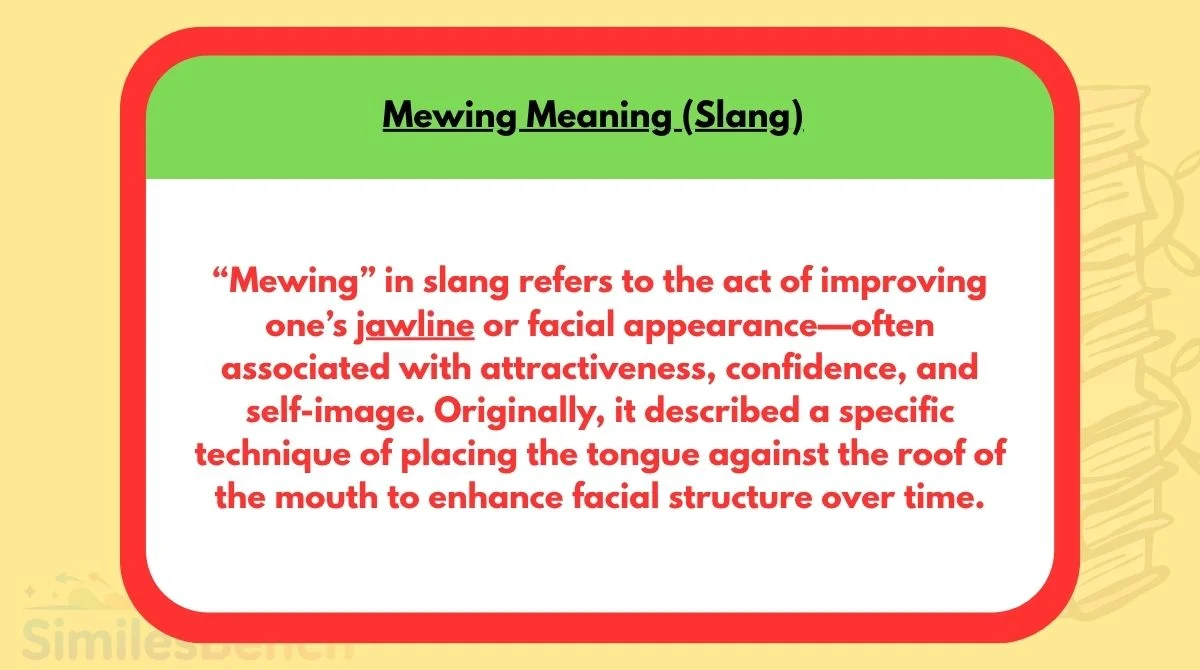
“Mewing” in slang refers to the act of improving one’s jawline or facial appearance—often associated with attractiveness, confidence, and self-image. Originally, it described a specific technique of placing the tongue against the roof of the mouth to enhance facial structure over time.
However, in slang usage, the meaning has shifted. Today, “mewing” is often used humorously or ironically to describe someone who is trying to look more attractive, especially by emphasizing their jawline in photos or videos. For example, someone might comment, “Bro is mewing hard,” suggesting that the person is consciously posing or trying to appear more defined.
In some contexts, it can also imply self-improvement or an obsession with looks. It may carry a slightly teasing tone, depending on how it’s used.
Background & History
The term “mewing” comes from a real concept developed by orthodontists who promoted facial posture techniques for better alignment. Initially, it had nothing to do with slang or internet culture. It was simply a health-related practice.
Over time, the idea gained traction online, particularly in forums and video platforms where people discussed appearance, self-improvement, and attractiveness. As it spread, the concept became simplified and sometimes exaggerated.
Eventually, social media users turned “mewing” into a meme. It began appearing in short videos, jokes, and comments—often detached from its original scientific intent. This shift from a technical term to a slang expression reflects how internet culture transforms niche ideas into mainstream humor.
Usage in Various Contexts
“Mewing” appears in different contexts, and its meaning can vary slightly depending on where it’s used:
- Social Media Comments: Often used to tease or compliment someone’s jawline or appearance.
- Memes: Frequently exaggerated, showing people dramatically posing or trying to look attractive.
- Dating Apps: Can suggest someone is putting effort into their looks or trying to appear more appealing.
- Casual Conversations: Sometimes used jokingly among friends.
For example:
- “He’s been mewing since 2020.” (Joking about long-term self-improvement)
- “Stop mewing in every photo.” (Playful teasing)
The tone is usually lighthearted but can sometimes be sarcastic.
Common Misconceptions & Clarifications
One major misconception is that “mewing” always refers to the actual technique. In slang, it rarely does. Most people using the term are not talking about tongue posture—they’re referring to appearance or posing.
Another misunderstanding is that it guarantees physical changes. In reality, the slang version has little to do with scientific accuracy. It’s more about perception than results.
Some also assume it’s always positive. While it can be a compliment, it may also carry a mocking tone, especially if someone is seen as trying too hard.
Similar Terms & Alternatives
Several slang terms overlap with “mewing” in meaning:
- Glow-up: Refers to an overall improvement in appearance.
- Looksmaxxing: Focuses on maximizing physical attractiveness.
- Jawline check: Highlighting facial structure in photos.
- Thirst trap: Posting content to attract attention.
These terms share a focus on appearance but differ in tone and usage. “Mewing” is more niche and often tied to humor or memes.
How to Respond to This Term
If someone uses “mewing” in conversation, your response depends on context:
- Playful Tone: Respond with humor or acknowledgment.
- Compliment: Accept it casually, like “Haha, just good angles.”
- Teasing: Join in or brush it off lightly.
Avoid overthinking it—most uses are not serious. The key is to match the tone of the conversation.
Regional or Cultural Differences
“Mewing” is primarily used in English-speaking online communities, but it has spread globally through social media. In regions where English slang is commonly adopted, such as South Asia, it may appear in mixed-language conversations.
However, understanding can vary. Some users may interpret it literally, while others recognize its meme-based meaning. Cultural context plays a role in whether it’s seen as humorous or confusing.
Comparison with Similar Terms
Compared to other slang terms:
- More specific than “glow-up” (focuses on jawline/face)
- Less intense than “looksmaxxing” (often used jokingly)
- More meme-driven than “thirst trap”
“Mewing” sits somewhere between self-improvement and satire. It’s both a concept and a joke.
Usage in Online Communities & Dating Apps
Online platforms have played a major role in spreading this term. In comment sections, it’s often used to point out someone’s attempt to look attractive. On dating apps, it may describe someone who carefully curates their appearance.
It’s commonly used in short-form videos where visual presentation matters. The term adds a layer of humor, making interactions more casual and less serious.
Hidden or Offensive Meanings
“Mewing” is generally harmless, but context matters. In some cases, it can subtly criticize someone for being overly focused on their looks. It may also reinforce unrealistic beauty standards.
While not offensive by default, repeated or sarcastic use could feel judgmental. Being aware of tone helps avoid misunderstandings.
Suitability for Professional Communication
This term is not suitable for formal or professional settings. It belongs to informal, internet-driven language and may confuse people unfamiliar with slang.
In professional communication, it’s better to use clear and standard language. “Mewing” is best reserved for casual conversations and social media.
FAQs
What does “mewing” mean in slang?
It refers to trying to improve or highlight one’s facial appearance, often humorously.
Is “mewing” always serious?
No, it’s usually used jokingly or sarcastically.
Does it relate to a real technique?
Yes, but slang usage rarely focuses on the actual method.
Can it be a compliment?
Yes, but sometimes it can also be teasing.
Where is it commonly used?
Mostly on social media, memes, and dating apps.
Should I use it in formal settings?
No, it’s informal and not appropriate for professional use.
Conclusion
“Mewing” has evolved from a technical concept into a widely recognized slang term shaped by internet culture. While its original meaning focused on facial posture, today it’s more about appearance, humor, and social perception.
Understanding how it’s used helps you interpret conversations accurately and respond appropriately. Like many slang terms, its meaning depends heavily on context, tone, and platform. By recognizing these nuances, you can navigate modern communication more confidently and avoid confusion.