The phrase “rain check” is commonly heard in everyday conversations, especially when plans change or someone needs to postpone something. While it originally had a literal meaning, today it’s widely used as slang in both casual and semi-formal communication. People often search for its meaning because it can sound confusing if taken literally—after all, it has nothing to do with weather most of the time.
Understanding this expression helps avoid miscommunication, especially in social situations, dating, and online chats. Whether someone says, “I’ll take a rain check,” or you’re unsure how to respond, knowing the intent behind it can make interactions smoother. This article explores the meaning, history, and modern usage of the phrase in a clear and engaging way.
Definition & Meaning
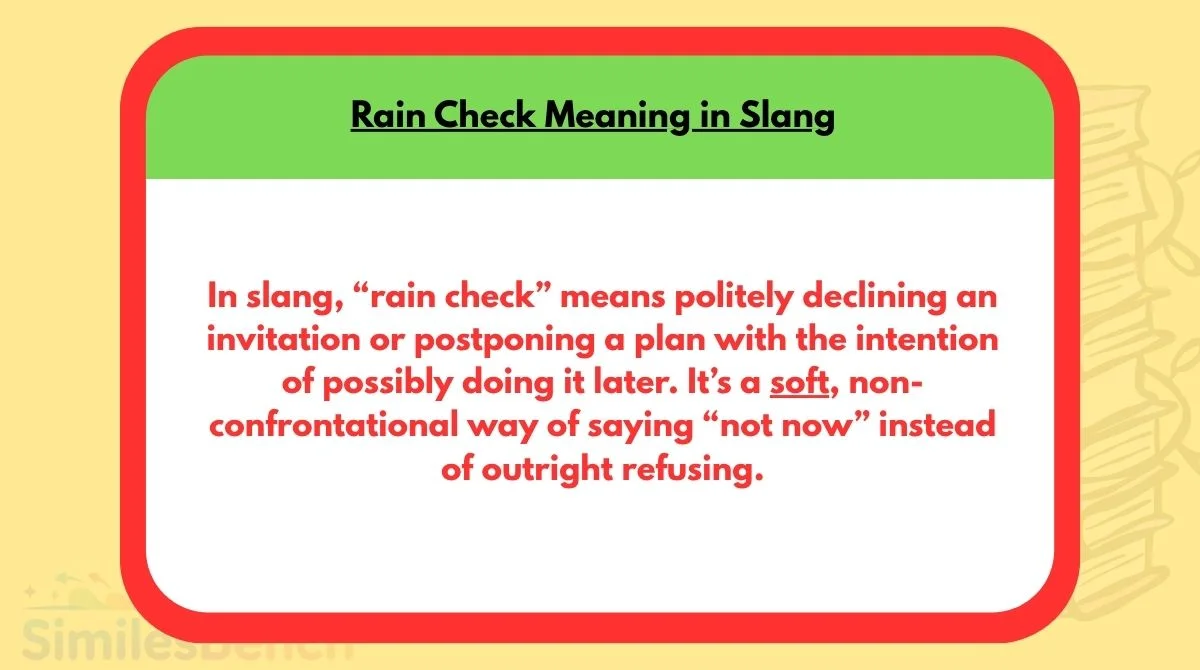
In slang, “rain check” means politely declining an invitation or postponing a plan with the intention of possibly doing it later. It’s a soft, non-confrontational way of saying “not now” instead of outright refusing.
For example, if someone invites you to hang out and you say, “Can I take a rain check?”, you’re indicating that you’re unavailable at the moment but might be open to it in the future. The phrase often carries a tone of courtesy and consideration.
However, the intention behind it can vary. Sometimes it genuinely means rescheduling, while other times it may be a polite way to avoid committing without directly rejecting someone. Context, tone, and relationship between speakers play a big role in interpreting it.
In modern slang, especially in texting or online communication, it can also imply hesitation or low interest, depending on how it’s used. That’s why understanding nuance is important—what sounds polite on the surface may not always signal a real plan for later.
Background & History
The phrase “rain check” originated in the United States during the 19th century, particularly in baseball culture. When a game was canceled due to rain, spectators were often given a “rain check”—a ticket that allowed them to attend a future game instead.
Over time, this literal concept evolved into a metaphor. Instead of referring to an actual ticket, it came to represent the idea of postponing something with the option to revisit it later.
By the early 20th century, the expression had moved beyond sports and entered everyday language. People began using it in social situations, especially when declining invitations. Its popularity grew because it offered a polite alternative to direct refusal.
Today, the phrase is widely recognized across English-speaking regions and has become a staple of conversational slang. Despite its old origins, it remains relevant, especially in modern digital communication where politeness and ambiguity often coexist.
Usage in Various Contexts
“Rain check” is versatile and can be used in many situations. In social settings, it’s commonly used when someone cannot attend an event or meeting. For example, “I can’t make dinner tonight, but I’ll take a rain check.”
In professional environments, it may be used to postpone meetings or calls, although it tends to sound slightly informal. A workplace version might be: “Let’s take a rain check and reschedule for next week.”
In dating scenarios, the phrase appears frequently. Someone might use it to delay meeting up, which can sometimes signal genuine busyness—or a lack of strong interest. Context and follow-up actions (or lack thereof) reveal the true intent.
Online and in texting culture, “rain check” is often shortened or implied without explanation. Its meaning remains consistent, but tone becomes harder to interpret without voice or facial cues.
Overall, the phrase works as a flexible, polite way to delay plans without closing the door completely.
Common Misconceptions & Clarifications
One common misconception is that “rain check” always means a definite future plan. In reality, it often leaves things open-ended. It does not guarantee that the postponed activity will actually happen.
Another misunderstanding is taking it too literally. Many people unfamiliar with the phrase might think it relates to weather, which can lead to confusion. In slang, it has nothing to do with rain.
Some also assume it’s always polite and positive. While it is generally courteous, it can sometimes be used to avoid confrontation or to indirectly decline an invitation.
Lastly, people may believe it’s appropriate in all settings. While widely accepted, it can feel too casual in highly formal or professional communication. Choosing the right tone based on context is important.
Similar Terms & Alternatives
Several expressions convey a similar meaning to “rain check.” Phrases like “maybe another time,” “let’s reschedule,” or “not today” offer comparable ways to postpone plans.
“Catch up later” is another alternative, often used in casual conversations. It implies future interaction without committing to a specific time.
In more direct communication, people might say “I can’t make it” or “I’m unavailable,” which removes the ambiguity of future plans. These alternatives are clearer but less soft than “rain check.”
Each phrase carries a slightly different tone. “Rain check” stands out because it balances politeness and flexibility, making it a popular choice in everyday speech.
How to Respond to This Term
When someone says “rain check,” your response depends on the situation and your relationship with them. A simple reply like “Sure, no problem” or “Sounds good” is usually appropriate.
If you genuinely want to meet later, you can follow up with a suggestion such as “Let me know when you’re free.” This keeps the conversation open and proactive.
On the other hand, if you sense the phrase is being used to avoid commitment, it’s okay to accept it at face value without pushing further. Overanalyzing can lead to unnecessary confusion.
A balanced response shows understanding while leaving room for future interaction if both parties are interested.
Regional or Cultural Differences
While “rain check” is widely used in American English, it is also understood in many other English-speaking regions. However, its frequency and tone may vary.
In British English, similar phrases like “maybe another time” are more commonly used, though “rain check” is still recognized.
Understanding these differences can help avoid misinterpretation, especially in cross-cultural communication.
Comparison with Similar Terms
Compared to phrases like “cancel” or “decline,” “rain check” feels softer and more polite. It suggests postponement rather than rejection.
Unlike “reschedule,” which implies a definite future plan, “rain check” is more flexible and non-committal.
When compared to “ghosting” (ignoring someone completely), “rain check” is far more respectful because it acknowledges the invitation instead of avoiding it.
This balance of politeness and ambiguity is what makes the phrase unique and widely used.
Usage in Online Communities & Dating Apps
In online spaces and dating apps, “rain check” is commonly used when someone wants to delay meeting. It can signal genuine scheduling conflicts or uncertainty about interest.
Because digital communication lacks tone, the phrase can sometimes feel vague. If someone repeatedly asks for a rain check without suggesting a new time, it may indicate low interest.
However, when followed by clear rescheduling, it shows sincerity. For example, “Can I take a rain check? How about Saturday instead?” demonstrates real intent.
Understanding this nuance helps users navigate online interactions more effectively.
Hidden or Offensive Meanings
“Rain check” is generally neutral and not offensive. However, its hidden meaning can sometimes be passive avoidance.
In certain contexts, repeated use without follow-up may come across as dismissive or insincere. While not offensive, it can create frustration if used excessively.
The key is intent and consistency. When used honestly, it remains a polite and respectful expression.
Suitability for Professional Communication
In professional settings, “rain check” can be acceptable but should be used carefully. It works best in informal workplace communication or among colleagues with a friendly rapport.
For formal emails or business interactions, phrases like “reschedule” or “postpone” may sound more appropriate.
Using “rain check” in the wrong context can make communication seem too casual. Adjusting language based on the situation ensures clarity and professionalism.
FAQs
What does “rain check” mean in slang?
It means postponing or declining something politely with the possibility of doing it later.
Is “rain check” a rejection?
Not always. It can be polite postponement, but sometimes it implies low interest.
Can I use “rain check” in formal situations?
It’s better suited for casual or semi-formal contexts.
Does “rain check” guarantee future plans?
No, it often leaves plans open without commitment.
How should I reply to a rain check?
Respond politely and optionally suggest another time.
Is “rain check” rude?
No, but repeated use without follow-up can feel dismissive.
Conclusion
“Rain check” is a simple yet powerful slang expression that helps people navigate social situations with politeness and flexibility. While it originally came from sports, it has evolved into a widely used phrase in everyday communication. Its meaning depends heavily on context, tone, and follow-through, making it both useful and occasionally ambiguous.
Understanding how and when to use it—and how to interpret it—can improve communication in personal, professional, and online interactions. Like many slang terms, its true impact lies not just in the words themselves but in the intention behind them.