Slang evolves quickly, and one word can carry multiple meanings depending on context, culture, and platform. The term “ash” is a great example of this linguistic flexibility. Many people search for its slang meaning because they encounter it in texts, social media, or conversations and aren’t sure what it implies. Unlike standard dictionary definitions, slang often shifts based on tone, region, and even personal expression.
Understanding slang like “ash” helps you communicate more naturally and avoid confusion or misinterpretation. Whether you’re scrolling through TikTok comments, chatting with friends, or trying to decode a message, knowing what “ash” means can make interactions smoother and more engaging. This article breaks down its meaning, origin, uses, and variations in a clear, structured way so you can confidently recognize and use it in everyday communication.
Definition & Meaning
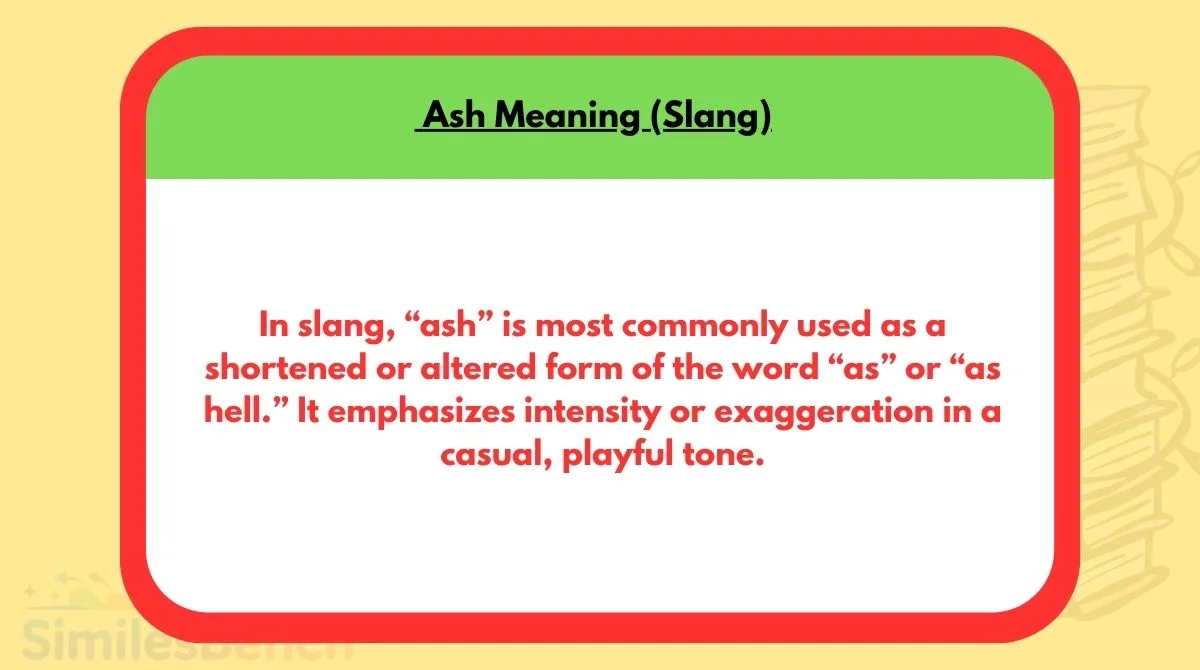
In slang, “ash” is most commonly used as a shortened or altered form of the word “as” or “as hell.” It emphasizes intensity or exaggeration in a casual, playful tone.
For example:
- “I’m tired ash” → “I’m very tired”
- “That’s funny ash” → “That’s extremely funny”
Here, “ash” acts as an intensifier, similar to words like “very,” “super,” or “extremely,” but with a more informal and expressive vibe.
In some cases, “ash” may also appear as a stylistic spelling variation influenced by accents or typing habits. It’s often used deliberately to give a relaxed, conversational feel to a sentence.
Outside slang, “ash” literally refers to the powdery residue left after something burns, but this meaning is entirely separate from its modern informal usage.
Background & History
The slang usage of “ash” originates from phonetic spelling trends in digital communication. As texting and social media became dominant, users began modifying words to reflect how they sound in casual speech. “As hell” was commonly shortened to “as h*ll,” then further simplified to “ash.”
This transformation reflects a broader pattern in internet language where speed, creativity, and personality matter more than strict grammar. Platforms like Twitter, TikTok, and Snapchat played a significant role in popularizing such shorthand expressions.
The rise of meme culture and short-form content also contributed to its spread. People began using “ash” not only for brevity but also for stylistic effect, making their messages feel more relatable or humorous.
Over time, the term became widely understood among younger audiences, especially in online communities where informal language dominates.
Usage in Various Contexts
“Ash” appears in many everyday situations, particularly in informal communication. Its meaning stays consistent—intensifying a statement—but its tone can vary.
In casual conversations:
- “I’m bored ash” conveys frustration or exaggeration.
- “That movie was good ash” expresses strong approval.
On social media:
Users often use “ash” in captions, comments, or memes to add personality. It helps make statements feel more expressive and less formal.
In texting:
It’s commonly used among friends as a quick, easy way to emphasize feelings without typing longer phrases.
In humor:
“Ash” can enhance comedic timing by exaggerating reactions, making statements sound more dramatic or relatable.
Despite its versatility, it remains informal and is best suited for relaxed environments rather than formal communication.
Common Misconceptions & Clarifications
One common misunderstanding is that “ash” has a completely different meaning from “as hell.” In reality, it’s just a variation or abbreviation, not a new concept.
Another misconception is that it’s universally understood. While popular among younger users, some people—especially older audiences—may not recognize it.
Some also assume it’s inappropriate or offensive. While it originates from a phrase containing mild profanity, the slang form “ash” is generally considered less explicit and more socially acceptable in casual contexts.
However, context still matters. In professional or unfamiliar settings, it can come across as too informal or unclear.
Similar Terms & Alternatives
Several slang terms serve a similar purpose to “ash,” offering emphasis or exaggeration:
- “AF” (as f*) – stronger and more explicit
- “Very” – neutral and formal
- “Super” – casual but widely accepted
- “Mad” (e.g., “mad funny”) – regional slang
- “So” – simple intensifier
Each alternative varies in tone and appropriateness. “Ash” sits in the middle—casual but not overly offensive—making it a popular choice for everyday use among peers.
How to Respond to This Term
Responding to “ash” depends on the context and tone of the conversation.
If someone says:
- “I’m tired ash” → You might reply, “Same, I need rest too.”
- “That’s funny ash” → You could respond, “Right? I couldn’t stop laughing.”
The key is to match the informal tone. You can either use “ash” yourself or reply in standard language, depending on your comfort level.
If you don’t understand the context, it’s perfectly fine to ask for clarification. Most users will explain without issue.
Regional or Cultural Differences
The use of “ash” is more common in English-speaking online communities, particularly in the United States and among younger demographics. However, it has spread globally through social media platforms.
In regions where English is a second language, users may adopt “ash” as part of internet slang without fully understanding its origin. This can lead to slight variations in usage.
Cultural context also influences how acceptable it is. In some communities, it’s seen as trendy and expressive, while in others it may be viewed as informal or unnecessary.
Comparison with Similar Terms
Compared to “AF,” “ash” is softer and less explicit, making it more acceptable in mixed company. While “AF” carries stronger emphasis, it may be considered inappropriate in certain settings.
Compared to “very” or “extremely,” “ash” is far more casual and expressive. Those standard words are better suited for formal writing, while “ash” thrives in conversational language.
Compared to “so,” “ash” adds a stylistic, modern edge. It reflects personality and tone rather than just meaning.
Usage in Online Communities & Dating Apps
On platforms like TikTok, Instagram, and Snapchat, “ash” is widely used to enhance relatability. It helps users sound more natural and less scripted.
In dating apps, it may appear in bios or chats:
- “Funny ash” suggests a playful personality
- “Busy ash lately” indicates lifestyle and mood
Using slang like this can make profiles feel more authentic, but overuse may come across as immature to some users. Balance is key.
Hidden or Offensive Meanings
“Ash” itself is not inherently offensive, but its origin from “as hell” gives it a slightly edgy tone. Most people consider it mild and acceptable in casual contexts.
However, tone and audience matter. In sensitive situations, even mild slang can be misunderstood. It’s always best to consider who you’re communicating with before using it.
Suitability for Professional Communication
“Ash” is not suitable for professional or formal communication. Emails, reports, and workplace conversations require clear and standard language.
Using slang like “ash” in such settings can appear unprofessional or unclear. Instead, opt for words like “very,” “extremely,” or “highly.”
In casual workplace chats, it might be acceptable among close colleagues, but caution is still advised.
FAQs
What does “ash” mean in slang?
It means “very” or “extremely,” often replacing “as hell.”
Is “ash” offensive?
No, it’s generally mild and informal.
Where is “ash” commonly used?
Mostly in texting, social media, and casual conversations.
Can I use “ash” in professional settings?
No, it’s too informal for professional communication.
Is “ash” the same as “AF”?
Similar, but “AF” is stronger and more explicit.
Why do people use “ash” instead of “as”?
For style, emphasis, and a more casual tone.
Conclusion
The slang term “ash” highlights how language evolves in digital spaces. It’s a simple yet expressive way to add emphasis, making conversations feel more relaxed and engaging. While it’s widely understood in informal contexts, it’s important to use it appropriately based on your audience and setting.
By understanding its meaning, origins, and usage, you can confidently recognize and use “ash” without confusion. Like most slang, it’s best used sparingly and in the right context to keep communication clear and effective.