Sad Similes is a feeling everyone experiences at some point. Sometimes, however, it can be hard to describe exactly how sadness feels. That is where similes become helpful. A good simile compares one thing to another and creates a clear picture in the reader’s mind.
Whether you are writing a story, poem, essay, or song, sad similes can make your emotions feel more real and powerful. Moreover, they help readers connect with your words on a deeper level. In this article, you will discover 12 meaningful sad similes, their meanings, and examples that you can easily use in your own writing.
What Is a Simile?
A simile is a figure of speech that compares two different things using the words “like” or “as.”
It helps readers imagine feelings, actions, or situations more clearly. As a result, writing becomes more vivid and engaging.
Full List of Sad Similes
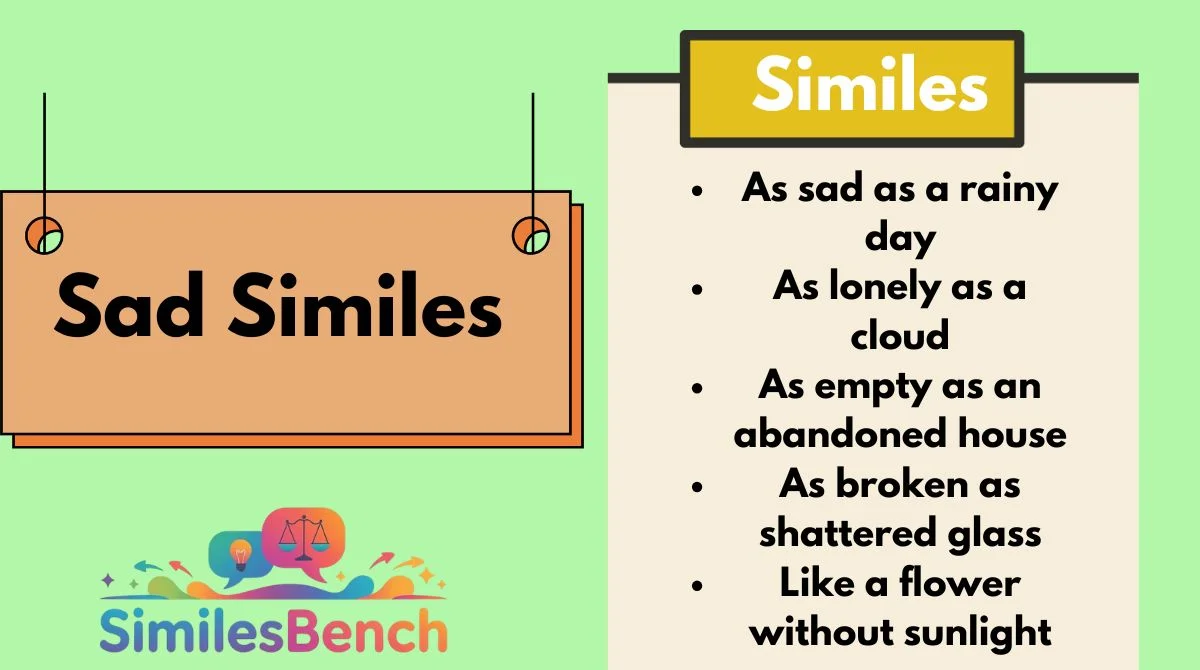
- As sad as a rainy day
- As lonely as a cloud
- As empty as an abandoned house
- As broken as shattered glass
- Like a flower without sunlight
- As quiet as a forgotten grave
- Like a bird with a broken wing
- As cold as winter rain
- Like a candle fading in the dark
- As heavy as a stone in the heart
- Like a leaf drifting away
- As lost as a ship without a compass
1. As sad as a rainy day
Meaning: Feeling deeply unhappy.
Explanation: Rainy days are often linked with gloomy moods and emotional moments.
Examples:
- After her best friend moved away, she felt as sad as a rainy day.
- He looked as sad as a rainy day when the team lost the final match.
2. As lonely as a cloud
Meaning: Feeling completely alone.
Explanation: A single cloud floating across the sky can symbolize isolation.
Examples:
- During the holidays, she felt as lonely as a cloud.
- He sat quietly in the cafeteria, as lonely as a cloud.
3. As empty as an abandoned house
Meaning: Feeling emotionally hollow.
Explanation: An abandoned house often seems lifeless and deserted.
Examples:
- After hearing the news, her heart felt as empty as an abandoned house.
- The room seemed as empty as an abandoned house once everyone had left.
4. As broken as shattered glass
Meaning: Emotionally hurt or devastated.
Explanation: Shattered glass cannot easily be put back together, much like a broken heart.
Examples:
- She felt as broken as shattered glass after the argument.
- His voice sounded as broken as shattered glass when he shared the story.
5. Like a flower without sunlight
Meaning: Feeling weak, unhappy, or hopeless.
Explanation: Flowers need sunlight to grow. Without it, they begin to fade.
Examples:
- Without her family’s support, she felt like a flower without sunlight.
- He seemed like a flower without sunlight after months of disappointment.
6. As quiet as a forgotten grave
Meaning: Deeply sad and silent.
Explanation: This simile creates a strong image of loneliness and stillness.
Examples:
- The old house was as quiet as a forgotten grave after the funeral.
- She became as quiet as a forgotten grave when the conversation ended.
7. Like a bird with a broken wing
Meaning: Unable to move forward emotionally.
Explanation: A bird with a broken wing struggles to fly, just as sadness can hold people back.
Examples:
- He felt like a bird with a broken wing after failing the exam.
- Following the loss, she moved through each day like a bird with a broken wing.
8. As cold as winter rain
Meaning: Feeling emotionally distant or unhappy.
Explanation: Winter rain often feels harsh, chilly, and uncomfortable.
Examples:
- His reply was as cold as winter rain.
- The atmosphere became as cold as winter rain after the disagreement.
9. Like a candle fading in the dark
Meaning: Slowly losing hope.
Explanation: A fading candle suggests weakness and disappearing light.
Examples:
- Her confidence felt like a candle fading in the dark.
- As time passed, his hope seemed like a candle fading in the dark.
10. As heavy as a stone in the heart
Meaning: Carrying emotional pain or sorrow.
Explanation: Sad feelings can sometimes feel physically heavy.
Examples:
- The bad news sat as heavy as a stone in her heart.
- He walked home with a feeling as heavy as a stone in the heart.
11. Like a leaf drifting away
Meaning: Feeling disconnected or forgotten.
Explanation: A drifting leaf moves without direction or control.
Examples:
- After changing schools, she felt like a leaf drifting away.
- He watched the crowd pass by and felt like a leaf drifting away.
12. As lost as a ship without a compass
Meaning: Feeling confused and uncertain.
Explanation: A ship without guidance can easily lose its way.
Examples:
- After graduation, she felt as lost as a ship without a compass.
- He seemed as lost as a ship without a compass after leaving his job.
Creative Writing Tips
Sad similes can make writing more emotional and memorable. However, they work best when used naturally.
In Stories
Use sad similes to show how a character feels instead of simply saying they are sad.
For instance, writing “She felt like a flower without sunlight” creates a stronger image than just saying “She was unhappy.”
In Poems
Poetry often relies on imagery. Therefore, similes can help readers feel emotions more deeply.
Choose comparisons that match the mood of the poem and keep them simple.
In Essays
Creative essays become more engaging when they include descriptive language.
However, do not overuse similes. One or two strong comparisons are usually enough.
In Songs
Many songwriters use similes because they create emotional connections.
For example, comparing sadness to rain, darkness, or fading light can make lyrics more powerful.
Practical Tips for Better Similes
- Choose comparisons readers can easily understand.
- Match the simile to the emotion you want to show.
- Keep your comparisons fresh and meaningful.
- Avoid using too many similes in one paragraph.
- Read your sentence aloud to see if it sounds natural.
Consequently, your writing will feel smoother and more expressive.
Frequently Asked Questions
What are sad similes?
Sad similes are comparisons that help describe feelings of sadness using the words “like” or “as.”
Why do writers use sad similes?
Writers use them to create stronger emotions and clearer images for readers.
Can students use similes in school essays?
Yes. Similes can make essays more descriptive and interesting when used correctly.
What is the difference between a simile and a metaphor?
A simile uses “like” or “as” to compare things, whereas a metaphor makes a direct comparison without those words.
How can I create my own sad similes?
Think about things that remind you of sadness, loneliness, or loss. Then compare those images to the feeling you want to describe.
Conclusion
Sad similes are a simple yet powerful way to express emotions. They help readers picture feelings that might otherwise be difficult to explain. Furthermore, they can improve stories, poems, essays, and songs by adding depth and emotion. As you continue writing, try using these sad similes in your work. With practice, your descriptions will become more vivid, meaningful, and memorable.